
Sustainable travel
Travelling sustainably does not mean giving up holidays. What matters is how you arrive at the destination, which accommodation you choose, how long you stay and how you move around on site. With some well planned Decisions can better combine nature, climate, regional economy and your own holiday wishes.
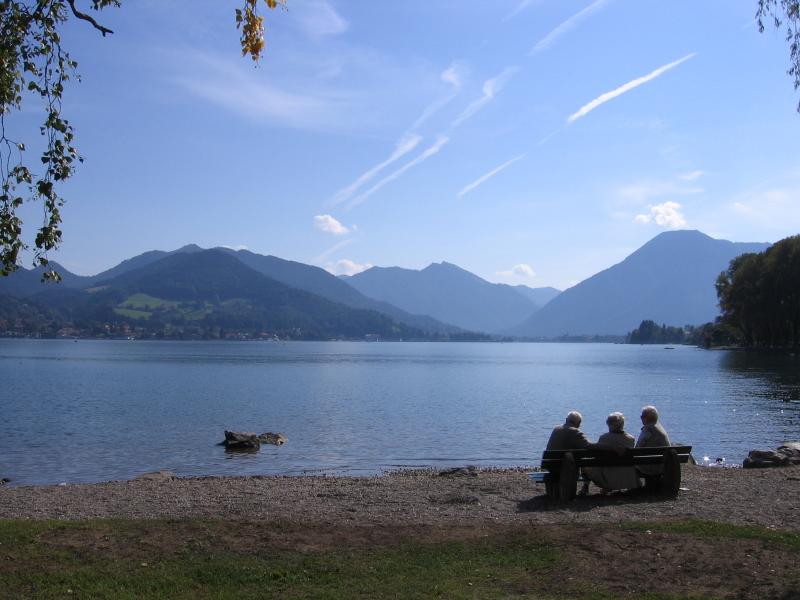 Three people sit on a bench on the lakeshore and look at a mountain landscape; Symbolic image for quiet and deliberately planned travel.
Photo: Rainer Lenk
Three people sit on a bench on the lakeshore and look at a mountain landscape; Symbolic image for quiet and deliberately planned travel.
Photo: Rainer Lenk
Brief facts on the subject
- Arrival:Train, bus, carpool and the most direct route possible can be a good alternative to the flight at suitable distances.
- Residence:A longer stay can justify the arrival better than many short trips with frequent changes of means of transport.
- Accommodation:Location, energy consumption, heating, water, waste, shopping and the routes to excursion destinations count in the selection.
- On site:Public transport, bicycle, footpaths and regional offers often make the holiday more varied and reduce short car trips.
- Food:Regional, seasonal and as little packaged food as possible can be planned especially in a holiday apartment.
- Principle:Sustainability is a balance. A suitable solution depends on the destination, distance, travel group, health, luggage and available transport services.
Planning with as few detours as possible
The journey has a great influence on the character of a journey. Check the entire route first, and not just the price of the first ticket. A direct rail connection can be pleasant for many destinations, while at remote places a train to the nearest city and a regional bus or ferry can be combined wisely. In the case of Arrival and departure planning switching times, luggage, risks of delay and the distance from the stop to the accommodation should also be taken into account.
For families, people with reduced mobility or travelers with lots of luggage, the theoretically shortest connection is not automatically the best. Few switches, accessible platforms, a reliable connection and accommodation close to public transport can make the holiday more relaxing. Those who travel by car can go through a longer stay, carpooling and a realistic day stage. avoid unnecessary empty journeys. For the concrete planning, the current schedules and conditions of the respective providers always apply.
Flights cannot be avoided at every destination. Then a connection as direct as possible, a longer stay and the decision against additional short distances on site help. Sustainable travel does not require a blanket solution for all people, but a comprehensible choice that fits the track and your own situation.
Choose a holiday accommodation according to location and equipment
The situation often decides more about daily mobility than individual equipment features. Accommodation near train station, bus stop, town centre, beach, hiking trails or shopping can be short Car journeys are superfluous. Therefore, before booking, check the actual distances on a map and make sure that the walk or bicycle with luggage and children is realistic.
The size and equipment of the accommodation are also part of the planning. A suitable holiday apartment with a kitchen can help to prepare meals yourself and buy regional products. But that only makes sense. if kitchen, refrigerator, shopping and the desired equipment are really available. The Checking the holiday accommodation before booking Therefore, in addition to price and pictures, should also include location, energy supply, waste separation, water consumption, house rules and travel.
Those who travel with a larger group should not look for the maximum number of beds alone. A suitable room layout can prevent that an accommodation is changed only because of lack of retreat possibilities. For special requirements, such as strollers, wheelchairs or allergies, specific dimensions and equipment must be clarified directly with the provider. Information on: barrier-poor holiday accommodation support this examination, but do not replace individual demand.
Choose travel time, length of stay and destination consciously
A trip outside of busy times can be quieter and improve the choice of accommodation and arrival. Whether this makes sense depends on the weather, school holidays, personal obligations and Opening hours at the destination. The Travel time Therefore, should be chosen according to the desired holiday experience: nature experiences, bathing, cycling, hiking, cultural visits and events each have other favorable periods.
A longer stay can combine several advantages: The arrival is spread over more holiday days, there is time for a slower rhythm and regional offers are more accessible. This means: Not that every trip has to be as long as possible. Even a short stay can be useful if the destination, means of transport and program fit well together and no unnecessary additional routes arise.
When choosing the destination, it is worth taking a look at the existing infrastructure. Places with rail connection, a reliable bus network, routes for bicycles and accessible basic offers are for a holiday without a daily car Often easier. A secluded holiday home, on the other hand, can be just the right thing for peace and nature if the arrival, shopping and excursions are realistically planned.
On-site without unnecessary roads
Before departure, find out about the network of lines, bicycle rentals, footpaths, call buses and regional excursion options. A day plan with one focus can be more pleasant and resource-efficient than several Distant goals in a day. For excursions are often circular routes, regional bus connections or combinations of train and bicycle. For natural areas, visitors should see marked paths, protection rules and Observe seasonal restrictions.
Purchases can also be built into the daily routine. Weekly markets, farm shops and regional shops are interesting if they are accessible from the holiday destination and the products offered fit your own planning. In the holiday apartment, a shopping plan, reusable bags and the use of existing supplies help to avoid unnecessarily multiplying food and packaging. It is important not to buy anything that ends up The stay cannot be consumed.
Water and energy are used in a holiday home as well as at home. Heating and air conditioning should not run when windows are open, towels do not need to be changed after each use and Devices can be switched off on departure. Such measures are particularly useful if they comply with the house rules and the technical equipment of the accommodation.
Sustainable travel with children, animals and special requirements
For families, a sustainable holiday is especially practical if the paths are short, breaks are possible and excursions are flexible. An accommodation with kitchen, safe outdoor areas and accessible play or Nature offers can reduce daily trips. The selection of an Apartment with children Therefore, in addition to the equipment, should also include the environment and the way from the means of transport to the house.
Anyone travelling with a dog or cat should clarify house rules, veterinary care, routes and transport early. Accommodation from which walks are directly possible can make everyday life easier. The instructions for Travelling with animals Help with documents, accommodation and arrival. For people with health restrictions, safety, reliable accessibility and necessary support take precedence over an idealized Idea of sustainability.
Compare costs and booking conditions realistically
Sustainable decisions do not automatically have to be more expensive. Accommodation with kitchen, a longer stay or travel by train and regional transport may vary depending on the route and travel group different effects. Compare the total price including travel, transfers, parking, final cleaning, bedding, energy, tourist tax and possible additional services. In Costs and additional costs You should assess the offers not only on the basis of the overnight price.
Cancellation conditions and changes also belong in the comparison. A seemingly cheap offer can be less suitable for a necessary rebooking or a complicated journey. Before booking should Contractual partners, payment periods, deposit, house rules and the conditions for changes can be documented in an understandable manner. So the accommodation can be based on its actual benefit and not only on an individual Select pricing.
Sustainable planning: five practical decisions
Start with the route and purpose of the trip. The Arrival is rated by total distance, time, luggage, safety and last kilometer. Then check them out.Accommodation by location, size, consumption and supply.
| Decision | Specific audit question |
|---|---|
| 1. Arrival | How can the entire route be handled with reasonable effort? |
| 2. Accommodation | Does the location, size and equipment match the group, budget and length of stay? |
| 3. Nature | Which rules, routes and travel times protect the planned destination? |
| 4. Everyday on site | Which Regional and fair offers Are they achievable? |
| 5. Travel Form | Applies Ecotourism, Volunteering Or another form of travel to destination and responsibility? |
For one Nature holidays protection rules and resilience of the area are part of the planning. Families complement the Family check. The UN Sustainable Development Goals in Tourism provide a global framework, but do not replace specific information about the individual offer.
Frequent questions about sustainable travel
What does sustainable travel mean?
This means travel planning that balances environmental and climate impacts with the needs of travelers and the region. This includes travel, length of stay, accommodation, mobility, food and a respectful treatment of nature and people on site.
Is a holiday apartment more sustainable than a hotel?
That cannot be said in general terms. Decisive factors include location, size, energy supply, utilization, arrival and behavior of guests. A holiday apartment can be benefited by kitchen and longer stay When used appropriately.
How can I go on holiday without a car?
Choose a destination with a train or bus connection and check the last section to the accommodation. A walking centre, accessible shopping and regional excursion connections are more important as a remote location as possible.
Are short trips basically not sustainable?
Not every short trip is to be evaluated equally. Decisive are distance, means of transport, number of switches and the benefit of the stay. Many additional short trips with long journeys can be less favorable than An easily accessible short holiday.
How do I recognize a suitable accommodation?
Pay attention to location, energy and heating information, equipment, waste regulations, shopping opportunities, public transport and actual routes on site. Unclear information should be requested directly from the provider before booking.
Where can I find reliable information about mobility?
For general information on sustainable mobility, the Federal Environment Agency An official orientation. For the specific journey, the current information of the train, bus, ferry, accommodation and transport association are also relevant.
