
Regional and fair travel
Traveling regionally and fairly means spending money, time and attention more consciously at the holiday destination. Guests can buy local groceries, use small shops, book regional guided tours and a vacation rental Choose one that is well integrated into the community. A label such as regional or fair is not enough. Origin, price, performance, working conditions and actual benefits for local people should remain comprehensible. Your own needs and the available budget are also part of an honest decision.
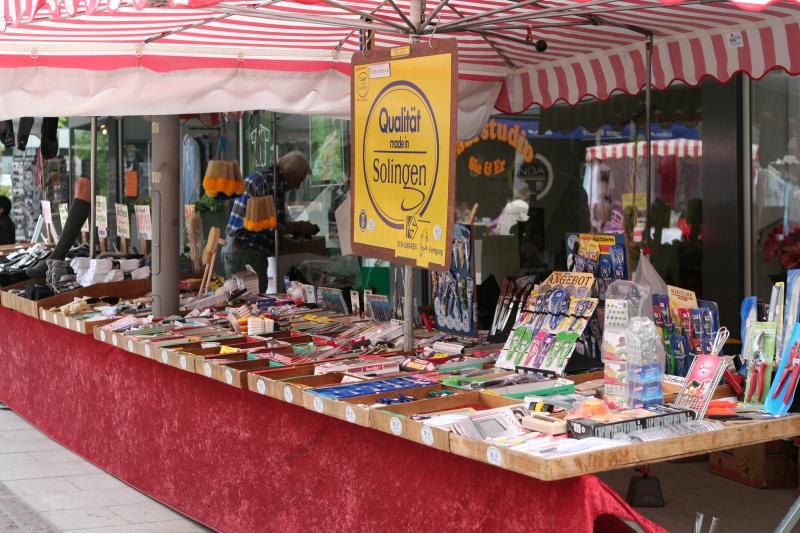 Market stand with handmade goods under a red and white awning and the sign “quality made in Solingen”.
Photo: Sabine Wiedamann
Market stand with handmade goods under a red and white awning and the sign “quality made in Solingen”.
Photo: Sabine Wiedamann
Brief facts on the subject
- Origin:Check if food, crafts or excursions are actually from the region.
- Price:Fair does not mean cheap; Compare performance, quality and workload.
- Accommodation:A local holiday apartment can combine local knowledge and regional added value.
- Purchasing:Markets, farm shops, bakeries and small shops often fit the daily routine better than long shopping trips.
- Services:Guided tours, bicycle rentals, crafts and transport can support local jobs.
- Limits:Regional products are not automatically ecological or suitable for every travel group.
What regional holidays actually mean
Regionally, a food can come from the place, from the county or from a larger landscape. With a craft product, manufacturing can be local, while the material comes from outside. Ask them for markets and farm shops by origin and season. The Federal Ministry of Food and Agriculture provides general information on food and nutrition; the specific origin must be traceable at the point of sale.
In a holiday apartment, travelers can integrate regional products well into the daily routine. A purchase at the weekly market is especially worthwhile if the crowd fits the stay. Whoever arrives for only two days, should not buy large supplies that are later disposed of. The Basics of sustainable travel combine food, length of stay and arrival to a realistic planning.
Choose local shops, markets and gastronomy
Small shops, bakeries, fishing businesses, farm shops and restaurants often provide insights into the region. This does not mean that all local advertising should be adopted unchecked. Pay attention to opening hours, Prices, origin and the question of whether the offer fits the travel group. A market can take place seasonally or only on a weekday.
Those who cook themselves should check the equipment of the accommodation. The Choosing sustainable accommodation considers kitchen, refrigerator, shopping, waste separation and location. For families, short distances and flexible meals can be more important than a distant specialty market. The instructions for Sustainable travel with children help to plan regional experiences without unnecessary stress.
Fair services and excursions
Regional guided tours, bicycle rentals, boat trips, museums and craft offerings can keep income locally. When booking, performance, duration, meeting point, group size, cancellation and price should be clear. Fairness It also affects employees and the environment. An offer that harasses animals, exhibits people for photos or disregards protective rules does not fit a responsible holiday.
Special caution is needed for a voluntary project. In the case of Volunteering You should have ownership, duties, costs and protection. Those who visit natural regions can Ecotourism examine how nature experience and support from regional providers fit together. Crucially, the activity does not take more from the place than it returns.
Compare fair prices and costs comprehensibly
A higher price is not automatically unfair, and a lower price is not automatically sustainable. Compare scope of work, quality, materials, transportation, season and the number of people involved. In the case of a Apartments include Rental price and additional costs in the overall comparison. In addition, check whether cleaning, energy, tourist tax, parking and fees are clearly indicated.
Fair travel can also mean getting out of peak season, staying longer and better distributing demand. The Travel time influences opening hours, prices, harvest times, events and the load of the place. A longer stay offers more opportunity for repeated shopping in the area and less hectic excursions.
Arrival and paths at the holiday location
Local added value is weakened when guests have to do every purchase in a remote mall or use the car for short distances. The Sustainable travel shows how transport, location and last kilometres fit together. Local footpaths, bus, bicycle or regional transfers can be a good addition.
A suitable accommodation is not necessarily in the center. Important are reachable shops, stops and offers. For remote houses, the supply should be planned in advance. Those who travel with pets will find in the instructions for Travelling with animals supplementary questions about accommodation, routes and supplies.
Respect for people and everyday life on site
Fairness also shows in behavior. Observe rest periods, private areas, traffic, waste and local rules. Don’t photograph people unasked and treat markets, festivals and religious places with Consideration. Overcrowded hotspots can be relieved by visiting less frequented times or by other destinations.
When looking for accommodation, the benefit to the community should not be played against the quality of life of the residents. The Pre-booking check should include house rules, location, parking and the actual environment. Regional and fair travel means being a guest and not reshaping the entire place according to your own habits.
Compare origin, performance and price comprehensibly
“Regional” can mean something different depending on the provider. For food, crafts, souvenirs and guided tours, ask about the origin, manufacture, season and the actual location of the establishment. A visible Place of sale is not automatically proof that a product comes from the environment.
Fair prices cannot be seen on the lowest amount alone. Compare scope, quality, working time, material, season and the conditions of the people involved. For holiday accommodation should cleaning, laundry, energy, taxes and additional services are also clearly indicated.
Incorporate local offers well into the holiday
A longer stay outside busy hours gives more opportunity for repeated purchases, regional tours and visits to small businesses. The journey and routes on site should fit in. A market, which can only be reached with a long drive is not automatically the best choice.
Respect is also evident in everyday life: rest periods, private areas, traffic, waste, photography and religious places deserve attention. The Protection rules for natural objectives Nature-friendly excursion is also part of this. Families can learn on small regional experiences and support the place without needing a crowded program.
The basics of sustainable travel arrange costs, routes and accommodation together. The UN Sustainable Development Goals cite decent work and responsible consumption as global goals; However, they are not a blanket proof of the quality of an individual offer.
Frequent questions about regional and fair travel
What does regional travel mean?
What is meant is to consciously use offers and products from the target region. The origin and scope should be comprehensible, because regional can be differently broad.
Is regional automatically sustainable?
No. Transport, production, packaging, water, season and working conditions must be considered in addition.
How do I recognize fair prices?
Compare performance, quality, working time, material and season. A very low price can be at the expense of other parties involved.
How can I support local providers?
Buy at traceable regional shops, use local guided tours and book services with clear performance and fair conditions.
Are farm shops always open?
No. Opening hours and sales days are often seasonal. Check them before the trip and only buy quantities that you can consume.
How does a holiday home fit?
A kitchen can facilitate regional purchases. Location, equipment, garbage, arrival and size must also fit.
What should I consider for souvenirs?
Ask about origin, material, manufacturing and fair pay. Products made from protected animals, plants or archaeological finds should be avoided.
Can I travel fairly on a small budget?
Yes. Take advantage of markets, footpaths, regional buses, free nature offers and accommodation with cuisine. What matters is the specific choice, not a certain price level.
