
Sustainable travel
The right journey is not the same for all destinations and travel groups. A railway connection can be very convenient on a main route, while for a secluded holiday home a rental car or a transfer on the The last section is needed. Families, people with reduced mobility, travelers with pets and groups with lots of luggage need different solutions than solo travelers. Sustainable planning therefore means that View the entire route to the accommodation and weigh time, cost, comfort and impact together.
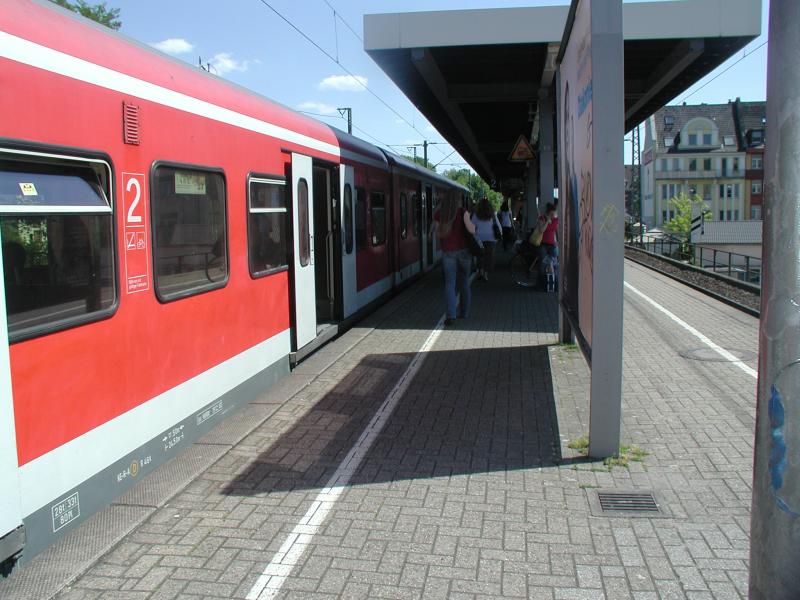 Red regional train stops at a platform while passengers board and disembark; Symbolic image for travelling by train.
Photo: Markus Lenk
Red regional train stops at a platform while passengers board and disembark; Symbolic image for travelling by train.
Photo: Markus Lenk
Brief facts on the subject
- Total distance:Not only the main ticket, but also transfers, transfers and the last kilometer count.
- Train and bus:They are particularly suitable for destinations with good connections and little baggage change.
- Car:For remote places, families or groups it can be practical; Carpooling and longer stays improve occupancy.
- Ferry:Timetable, car take, cabin, weather and port distance must match.
- Flight:For long distances, the direct connection usually makes more sense than additional short flights.
- On site:Accommodation near the center, stop, shopping or excursion can avoid many short journeys.
Check the entire route to the holiday home
Start with the address of the accommodation and not with a single means of transport. Check how to get from the train station, bus station, airport or ferry port to the holiday apartment. A cheap ticket loses its advantage if in the end an expensive transfer, a long walk with luggage or an additional overnight stay is necessary. The general Arrival and departure planning Helps with key handover, parking, delay and departure time.
Also, compare the number of switches and the consequences of a delay. For children, elderly travellers or people with mobility restrictions, an accessible platform, an elevator and a seat can be More important than a theoretically shorter driving time. The instructions for barrier-poor holiday accommodation should be linked to the accessibility of the building and the path.
Train and bus for well-connected destinations
The train is particularly attractive if the destination is connected to a direct or manageable connection. Luggage can be stowed while driving, and time is often better spent than driving. Before booking, check whether bicycles, strollers or pets are allowed and which reservations are necessary. For long-distance bus travel, baggage limits, stops and delay risks are often Unlike on the railway.
The last section often decides whether a trip without a car remains practical. Look for regional bus, call bus, taxi, transfer, bicycle rental or a pickup by the host. An accommodation in Close to shopping can make everyday life easier. The Checking the holiday accommodation before booking should therefore include location, stops, paths and actual equipment.
Weigh car, carpool and rental car
The car is often the most reliable solution for remote regions, several people, lots of luggage or special requirements. The decision becomes more sustainable if the vehicle is well utilized, the track is driven as directly as possible and long excursions are not necessary on site every day. For a carpool, the meeting point, luggage, breaks, costs and possible changes should be clarified in advance.
A rental car can make sense compared to your own long car journey if the main route is covered by train or flight. Compare pickup location, insurance, fuel control, child seat, deposit and return. In Costs and additional costs Parking fees, tolls, ferry, transfers and fuel are also included in the overall comparison.
Plan ferries and island destinations realistically
For a ferry trip, port distance, departure time and check-in period count. Who drives with the car, should specify the vehicle length and height correctly. On foot travelers must check how the port is accessible and whether waiting at the destination bus, taxi or accommodation transfer. Weather can affect schedules; Therefore, arrival time, key handover and a possible delay should be planned together.
For island holidays, a longer stay is worthwhile, so that the arrival does not only take place for a few nights. The Travel time It also affects timetables, prices and the opening up of regional offers. For natural destinations, protection rules and seasonal restrictions are just as important as the connection to the port.
Judge flights only in the entire travel plan
For very long distances or poorly accessible destinations, a flight can be practical. Then compare a connection as direct as possible with alternatives and consider the route to the airport, waiting times, Luggage, transfers and mobility on site. An additional short-haul flight or multiple transfers can make the itinerary more complicated. A longer stay can make the long journey better for the holiday experience Let it fit.
The Basics of Sustainable Travel show why transport, length of stay and accommodation belong together. The Federal Environment Agency informs about sustainable mobility; for the specific connection, current timetables and conditions of the providers also apply.
With children, animals and lots of luggage on the way
Families need well-planned breaks, safe transfers and accommodation that works even in bad weather. The selection of an Apartment with children Therefore, should be associated with the arrival. For pets, transport rules, breaks, vaccination and entry documents and house rules are important; This is the guidance for the Travelling with animals.
In the case of wheelchairs, strollers, medical luggage or bicycles, dimensions and travel rules must be checked directly. Allow sufficient time for switches and keep important documents, medicines and Contact details at hand. A supposedly environmentally friendly connection is not a good choice if it is unsafe or unfeasible for the travel group.
Compare means of transport according to the entire route
| Option | Special checks |
|---|---|
| Train or bus | Direct connection, change time, luggage, seats, accessibility and last connection. |
| Cargo | Route, breaks, parking, occupancy, carpooling and on-site paths. |
| Ferry | Port arrival, timetable, cabin, vehicle transport, weather and transfer. |
| Flight | Direct connection, airport transfer, length of stay and additional routes at the destination. |
The table does not replace individual travel planning. For families, people with reduced mobility, lots of luggage or remote destinations, another connection can be safer and more workable. The Federal Environment Agency generally classifies sustainable mobility; Current schedules and conditions of carriage come from the respective providers.
Solving the Last Kilometer Before
Check how you get to the accommodation from the train station, bus station, ferry port or airport. A seemingly inexpensive ticket helps little if an expensive transfer or a daily rental car is subsequently necessary. The Location of accommodation and the arrival and departure planning therefore belong together.
A direct connection with a longer stay can fit better than several short trips with scarce connections. Those who travel with children should Breaks, toilets and luggage plan. For a nature holiday, the View of marked paths and protection times, so that the transfer does not lead to unnecessary journeys.
Frequent questions about sustainable travel
Is the train always the most sustainable journey?
Not automatically. Decisive are the total distance, utilization, transfers, last kilometres and the specific travel group. However, a suitable connection can make many destinations easily reachable without your own car.
When does the car make sense?
For remote accommodation, multiple travelers, lots of luggage or special requirements, the car can make sense. Good utilization and longer stay improve the decision.
How do I plan the last kilometer?
Check regional buses, call bus, taxi, transfer, bicycle rental and walk from the stop. Ask the host in case of unclear availability before booking.
Are ferries more environmentally friendly than flights?
This depends on the route, the ship, the load, the vehicle and the connecting routes. Compare the full connection and not just the main means of transport.
What do I need to consider with children?
Plan breaks, seats, accessible toilets, short switches and accommodation with reliable arrival arrangements. Luggage and strollers should comply with the conditions of the provider.
How can I compare travel costs?
Calculate ticket, reservation, luggage, parking, toll, ferry, transfer, overnight and possible fees. The cheapest single card does not always show the cheapest overall path.
Is a longer stay more sustainable?
He can better justify the arrival and create more time for regional offers on site. Crucial remains the destination, distance and actual travel behavior.
Where can I find current timetable data?
Take advantage of the current information from rail, bus, ferry and airline companies as well as regional transport associations. Shortly before departure, you should re-examine changes and construction sites.
