
Chennai and Bangalore: a 2008 travel report
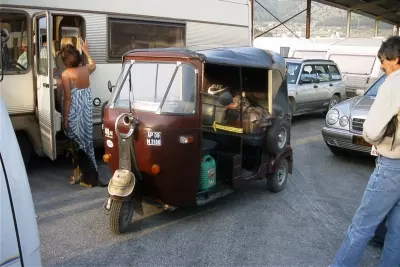 Auto rickshaws on a busy road in India.
This historical travel report records a journey through Chennai and Bangalore in April 2008. It describes the writer’s personal impressions of airports, traffic, accommodation, city life, food, climate and conversations. Prices, transport, entry requirements, health advice and hotel conditions have changed since then and must be checked from current sources before travelling.
What the report covers
- Arrival in Chennai after a long journey via Colombo.
- Personal impressions of traffic, streets, markets, noise and the coastal climate.
- Visits and conversations in Chennai, including the Theosophical Society park and business contacts.
- The onward journey to Bangalore and the contrast between the two cities.
- A first-hand account written during the journey, not a current guide.
Chennai in April 2008
The report begins with the overnight journey from Frankfurt via Colombo and the arrival in Chennai. The airport transfer is remembered as hot, crowded and noisy, followed by a drive through heavy traffic towards the hotel. The writer describes auto rickshaws, motorcycles, buses, pedestrians, roadside stalls, dust and the constant use of horns. These observations belong to the city as it was experienced in 2008 and should not be read as a complete or representative description of Chennai today.
Further entries describe the heat and humidity, a visit to the coast and a swim in the sea, as well as the contrast between busy roads, palm trees, older buildings and modern offices. The account also records conversations with residents and business contacts, a dinner and an evening view over the city.
The historical narrative includes subjective judgements and language typical of its time. It is presented as a personal document rather than an objective assessment of Chennai, its residents or its culture.
From Chennai to Bangalore
The report then follows the journey to Bangalore. It describes a drier climate, large technology offices, older buildings, busy roads and another journey from the airport. The writer found Bangalore more orderly than Chennai in some respects, while still noting dense traffic and a lively street scene.
A walk through the city and further auto-rickshaw journeys form part of the account. Details about distances, roads, hotels, businesses and public services are historical observations. They should not be used to plan a current route without checking maps, transport information and local advice.
Using a historical travel report today
The account can help readers understand how one traveller experienced two South Indian cities at a particular moment. It may also prompt questions about the length of the stay, transfers between cities, accommodation location and the balance between planned visits and unstructured time.
For current planning, check travel preparations, the holiday checklist and guidance on safe rentals. Confirm current entry and health requirements, transport, accommodation, insurance and contact details separately.
Further reading includes travel reports, the Tignale experience report, holiday destinations, arrival and departure guidance and island holidays.
Frequently asked questions
Is this a current travel recommendation?
No. It is a personal account from 2008 and needs current sources for today’s decisions.
Which details are most likely to be outdated?
Prices, traffic patterns, opening times, entry requirements, transport services and the availability of individual businesses.
How should I plan accommodation today?
Compare current location, facilities, transfers, reviews and cancellation conditions with your own requirements.
Why read an old travel report?
It preserves a personal impression and may show how places, transport and travel habits change over time.
What should be checked before travelling?
Check documents, health and entry information, transfers, accommodation contact details, insurance and a realistic timetable.
Photo: Markus Lenk
