
Surfing and windsurfing holidays: choosing wind, waves and location
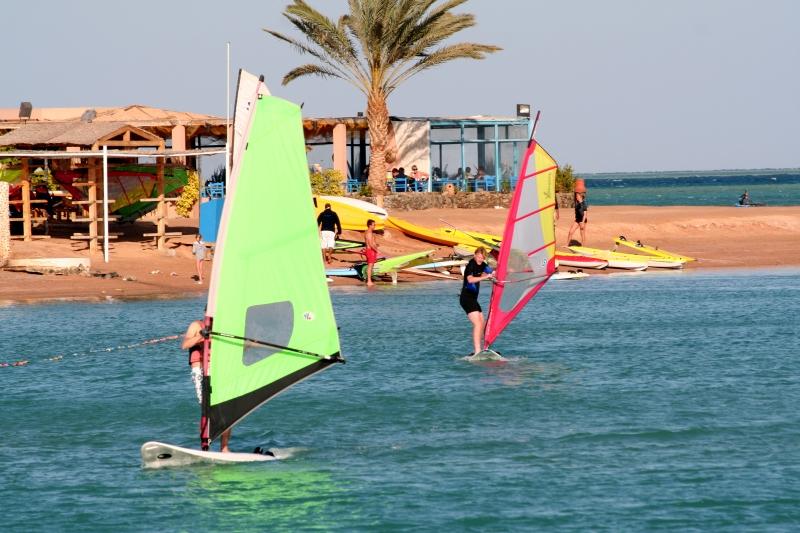 Windsurfers with colourful sails in a shallow lagoon in front of a sandy beach.
A successful surfing or windsurfing holiday starts with the right location. Surfing and windsurfing need different conditions, while beginners usually need easier access, reliable instruction and equipment hire. Wind direction, waves, tides, local rules and the distance from the accommodation to the beach all affect the day.
Key points when choosing a destination
- Surfing, windsurfing and kitesurfing place different demands on the water and wind.
- Beginners usually benefit from a surf school, shallow water and dependable equipment hire.
- Wind direction, tides, currents and protected areas can affect safety.
- Storage, drying space and the route to the beach should be checked before booking.
- Families and mixed groups need safe alternatives for days when conditions are unsuitable.
Surfing or windsurfing?
Beginners often find flat, sheltered water and a supervised launch area easier than an exposed beach. More experienced riders may prefer stronger winds, larger waves or a particular type of coast. Two beaches on the same coastline can have very different wind direction, currents and access conditions, so a general description of the region is not enough.
Before booking, check the location of the school, the level of instruction, the designated water areas and the equipment available. A quiet swimming day or diving holiday can provide a useful alternative when the wind or waves are unsuitable.
Choosing practical accommodation
Accommodation close to the beach can save time, but a property in the nearest town may be more practical if it offers equipment hire, shops, restaurants and public transport. Families should also consider sheltered outdoor space, safe water access and activities for people who are not surfing.
Guests bringing their own equipment need enough room for boards, sails, wetsuits and roof racks, as well as secure parking. Ask about entrance width, storage rules, drying facilities and whether wet equipment may be kept on the property. A house directly on the beach is not automatically the most convenient choice if training, shopping or parking are difficult.
Own equipment or local hire?
Taking equipment by car involves roof racks, luggage space, ferry arrangements, parking and safe storage. For air or train travel, local hire may be simpler. Confirm the condition of the equipment, what is included, insurance, collection and return arrangements before paying.
The arrival arrangements should include the journey from the station, airport or ferry, access to the beach and the time needed to collect or return equipment. Local water-sports rules should be checked before the first session.
Wind, waves and changing conditions
Seasonal information is only a guide. Wind, waves, water levels and local warnings can change quickly. Check the current forecast, warning services and designated areas before every session, and follow local instructions. Do not plan the entire holiday around one forecast.
For a calmer day, canoeing and kayaking, walking or a visit to a nearby town may work better. In strong winds or thunderstorms, staying on land is more important than keeping to the original plan.
Other options include diving, stand-up paddling, cycling and sailing. Each activity has its own equipment and safety requirements.
When comparing Germany, Austria and Italy, consider the season, training offer, beach access, travel time and the needs of everyone in the group. A suitable beach holiday and holiday home should be selected together with storage, arrival and bad-weather plans in mind.
Frequently asked questions
Is windsurfing suitable for beginners?
Yes, if the destination offers suitable instruction, manageable wind and shallow or sheltered water.
What is the difference between surfing and windsurfing?
Surfing uses the board and waves without a sail. Windsurfing uses a sail to drive the board across the water.
Does accommodation need to be directly on the beach?
No. A nearby town may offer better access to hire shops, training, food, transport and family activities.
Can I bring my own equipment?
Yes, provided that transport, storage, drying and beach access are confirmed in advance. Local hire may be easier when travelling by air or train.
What clothing is needed?
This depends on water temperature, wind and season. A suitable wetsuit, sun protection and spare dry clothing are common parts of the plan.
What can I do in unsuitable weather?
Choose a safe alternative such as walking, cycling, visiting a town or another water-based activity rather than forcing a session.
Photo: dago
