
Diving holidays: choosing a base, conditions and accommodation
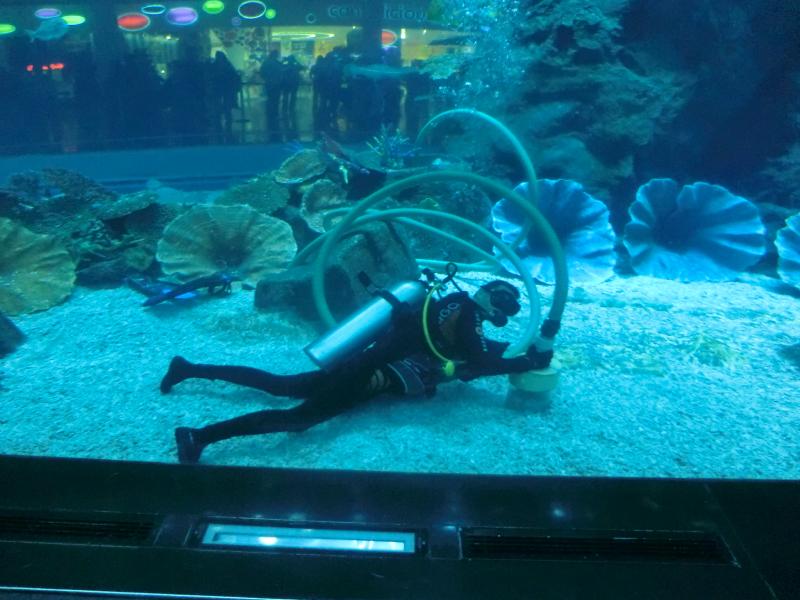 Diver with bottle and regulator in a large aquarium with corals and fish.
Diving holidays may involve a trial dive, a training course, organised trips or independent dives for certified divers. That choice determines the required qualification, dive site, base, equipment, transfers and accommodation. Confirm the current conditions and the base's requirements before booking.
Brief facts about diving holidays
- Coastal and inland sites differ in visibility, temperature, depth and access.
- Beginners need suitable instruction, equipment and an appropriate first dive site.
- Cylinders, suits and accessories need dry, secure storage.
- Weather, currents and local protection rules can change plans at short notice.
- Non-divers benefit from a property with beaches, walks or other excursions nearby.
Match the dive site to your experience
Reefs, rocks, wrecks and wildlife attract different divers. Lakes can be useful for training but have their own requirements for visibility, temperature, depth and entry. Choose the area by experience and the type of diving you want to do, not only by the name of a well-known resort.
Before booking, ask about the meeting point, opening hours, course language, equipment, qualification requirements, group size and transfer to the dive site. A trial dive is not a substitute for the training required for independent diving. Certified divers should also check insurance, depth limits and the base's current rules.
Allow enough time between diving days, the last dive and any flight. The base's surface-interval guidance and recognised safety rules take priority over a tight itinerary.
Choose practical accommodation
Accommodation near the base can save transfer time, but a shower, parking and a dry storage area may be more valuable than a direct waterfront location. A private shore access is not automatically a safe or permitted entry; check the surface, conditions and access arrangements with the local base.
A kitchen and washing machine are useful after long days, but they do not replace dive planning. Confirm where personal equipment may be stored and whether cylinders can be transported or kept at the property.
Plan transport and luggage
Diving luggage is heavy and bulky. Air travel, rail travel and car journeys each have different weight and storage requirements. Plan the transfer from the station or airport, key collection and the route to the base together.
Leave enough time after the final dive before travelling by air. If the weather prevents diving, a beach day, excursion, hiking holiday or sailing can provide a sensible alternative.
Check seasonal conditions
Water temperature, wind, currents and visibility vary with the season and can change quickly. The local base is best placed to assess the conditions on the day. Choose accommodation with shopping, places to eat and other activities if some members of the group are not diving.
A holiday home by the lake can work for an inland diving trip only when the entry, storage and local base arrangements are suitable.
Frequently asked questions
Do I need a diving qualification?
Independent dives normally require appropriate proof of training. Trial dives and courses have their own requirements, which should be confirmed with the provider.
Is lake diving more difficult than sea diving?
Not necessarily, but visibility, temperature, depth and entry conditions may differ. The training and dive site must match the diver's experience.
What accommodation suits divers?
Convenient features include reasonable access to the base, a shower, parking and a dry place for equipment. Confirm the rules for cylinders and personal gear.
Can diving be combined with a family holiday?
Yes, if the location also offers a beach, excursions and activities for non-divers. A varied programme reduces pressure on the diving schedule.
Photo: Tanja
