
Cycling holidays: routes, equipment and accommodation
Find accommodation
Cycling holidays can be planned in very different ways: a multi-day cycle route, a family-friendly circular ride or day trips from one holiday home. The right accommodation depends on the route, daily distance, transport arrangements and a secure place for the bicycles.
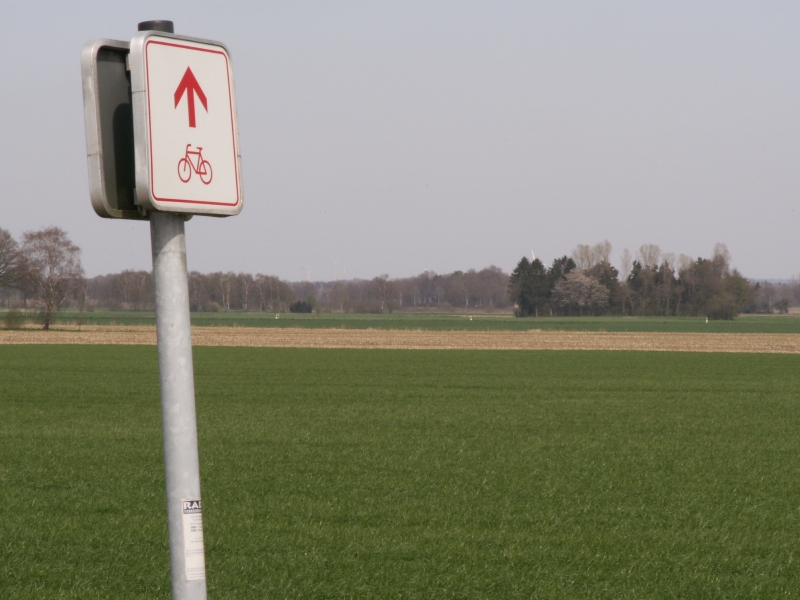 Bicycle path sign in front of a wide landscape with fields and tree rows.
Photo: Voyagemedia - RRinnau
Brief facts about cycling holidays
- Choose routes by distance, gradients, surface and the group's experience.
- E-bikes increase the possible range but need secure storage and a suitable charging arrangement.
- Families usually benefit from shorter stages, safe crossings and a realistic return option.
- Bike spaces on trains and regional transport rules should be checked before departure.
- A lockable, dry bike room is more useful than a general promise that a property is in a cycling region.
Choose routes for the group
Flat river paths and former railway lines can suit children and less experienced riders, while experienced cyclists may prefer longer climbs, passes or several demanding stages. A region with routes of different difficulty levels gives a mixed group more flexibility than a location with only one challenging ride.
Before booking, check the route entrance, daily distance, gradients, surface and the distance back to the accommodation. A detailed regional map is more helpful than the name of a cycling area alone. Families should also look for rest areas, safe road crossings and a short alternative route if the weather changes.
For a fixed base, ask how the group will return after a puncture, fatigue or heavy rain. A nearby bus or train connection, a cycle shuttle or several route options can make the holiday more relaxed. A stage trip needs a different plan, including luggage transport and the next overnight stop.
Bike storage and charging
A lockable, dry and easily accessible bike room is important, especially after wet rides. E-bike users should confirm where batteries may be charged and stored. Families may also need space for a trailer, a washing machine and a kitchen for flexible meals.
A quiet property a few kilometres from a route can be more practical than accommodation directly beside a busy road. Check the final approach, stairs, narrow access and the surface leading to the property. Do not assume that a garage, charging point or repair facility is available unless it is stated clearly.
Travel by car or train
Plan bicycle transport separately from the journey to the holiday home. Train reservations, car carriers and the route from the station to the property may each have different conditions. Batteries should be protected during car travel and bicycles should not be left unattended in an unsecured vehicle.
When arriving, clarify key collection, unloading, cleaning and safe overnight storage. A return service can make a longer one-way stage possible, but its operating days and booking conditions should be checked in advance.
Choose the travel season
Spring and early autumn often offer pleasant temperatures and quieter paths. In summer, shade, drinking water and an early start become more important. In the low season, ferries, bike hire, cafés and other services may operate less frequently, so the infrastructure matters as much as the weather.
Mixed groups can combine cycling with swimming, culture or short walks. Fishing holidays, sailing or a holiday home by the lake may provide useful alternatives for rest days.
Frequently asked questions
What accommodation is suitable for a cycling holiday?
Look for secure, dry bike storage, easy access and, for e-bikes, a confirmed charging option. Check the equipment with the host before booking.
Can bicycles be taken on the train?
This depends on the route, train type and regional rules. Many connections require a reservation, and international journeys may have additional conditions.
Are cycling holidays suitable for children?
Yes, if the distance, gradients and surface suit their age and ability. Short stages, regular breaks and a clear return option make planning easier.
Do I need an e-bike?
Not necessarily. An e-bike can widen the choice of routes in hilly regions, but range, charging and hire conditions should be checked first.
