
Stand-up paddleboarding holidays: calm water and safe access
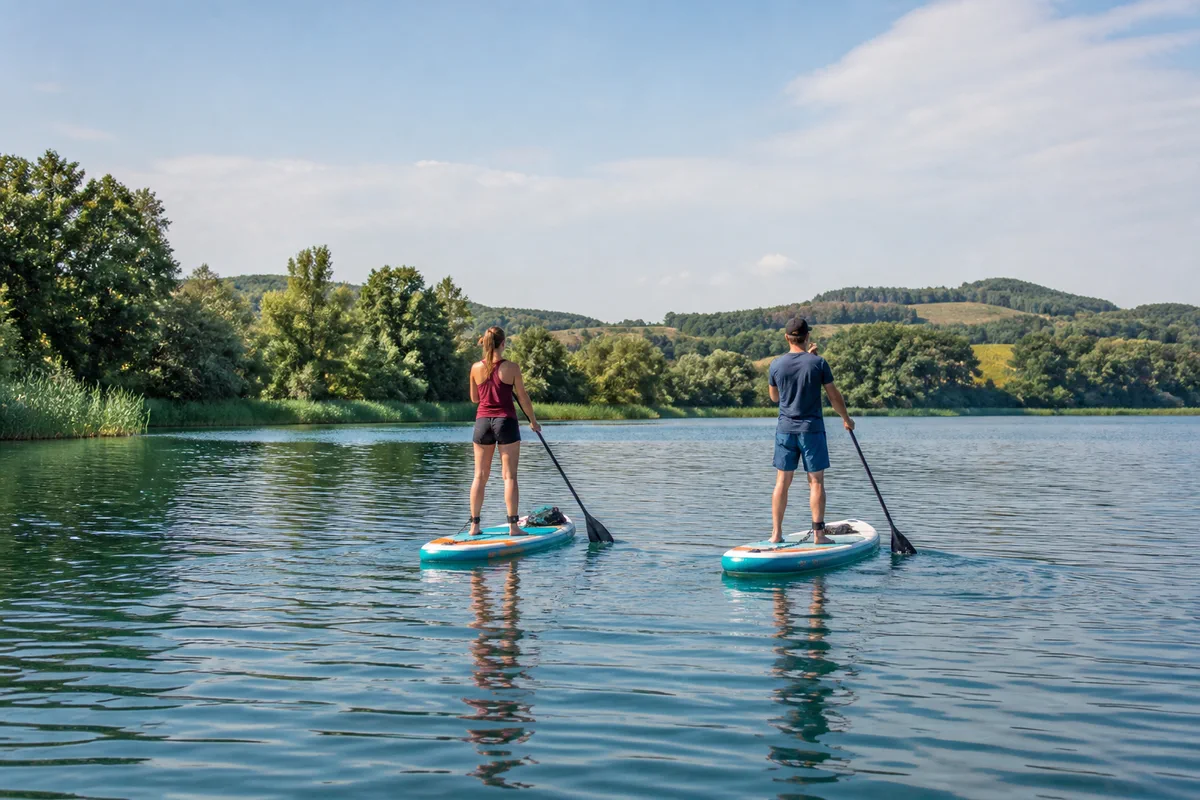 Two people stand on colorful stand-up paddleboards and paddle on a quiet lake in front of wooded hills.
Stand-up paddleboarding holidays work best when the water, access and accommodation match the group's experience. A quiet lake, a sheltered bay and a river have different wind, current, exit and safety requirements.
Brief facts about SUP holidays
- Calm lakes and sheltered coves are usually more suitable for beginners than open coasts.
- Wind direction, water temperature and exit points belong in the daily plan.
- Board hire and instruction can simplify the first session and reduce transport.
- Inflatable boards need dry storage and enough room to inflate.
- Nature reserves, bathing areas and shipping rules must be respected.
Choose calm water and a safe entry
A lake with several sheltered shore areas can be more versatile than an exposed coastline. Rivers are suitable only when the current, locks and exits match the group's ability. Families should look for a clear shallow area, a short return route and close supervision.
Before setting out, check board size, paddle, leash, buoyancy aid, storage and return times. A private shore access may be steep, slippery or restricted. A permitted public entry with a reputable rental service can be more useful than an advertised waterfront location without a safe launch point.
Store and transport the board
Inflatable boards need a pump, dry storage and space to inflate and dry. Hard boards require a suitable vehicle, carrier and access. Level access, a shower and a place to rinse equipment are useful after a session.
When travelling by train, check the route from the station to the water. When arriving at the property, plan key collection, parking, luggage and the route to the entry together. Canoeing and kayaking use different equipment and may have different access rules; see canoeing and kayaking holidays for comparison.
Check wind and water temperature
Calm morning conditions can change during the day. Check the wind, weather, water temperature, shoreline and return route before every session. In strong wind, thunderstorms or poor visibility, leave the board stored and choose a safer activity.
Swimming, cycling or a short excursion can keep the day enjoyable when paddling is not suitable. A holiday home by the lake is appropriate only when the access and storage arrangements are permitted and safe.
Frequently asked questions
Is SUP suitable for beginners?
Yes, on calm and clear water with suitable instruction. Wind, water temperature and the route back must be checked before each session.
Do I need accommodation directly on the lake?
No. A reputable rental or secure entry nearby can be more practical. Private shore access must be expressly permitted.
What should I do when the wind rises?
Use a protected exit and end the session early. Do not rely on a long return against the wind.
Can I transport an SUP by car?
Inflatable boards need a pump and dry storage. Hard boards require suitable carriers, enough space and a safe route to the water.
Is SUP suitable for children?
Yes, with calm water, suitable buoyancy aids, close supervision, short sessions and an easy exit.
Photo: MaxTD, KI-generiert
