
Bus travel: comfort, luggage and connections
Find accommodation
Bus travel can be a practical way to travel together when the boarding point, journey time, breaks, luggage and final connection all fit the trip. Before booking, establish whether the service is a scheduled route, transfer, organised tour or day trip, because the conditions and timetable may differ.
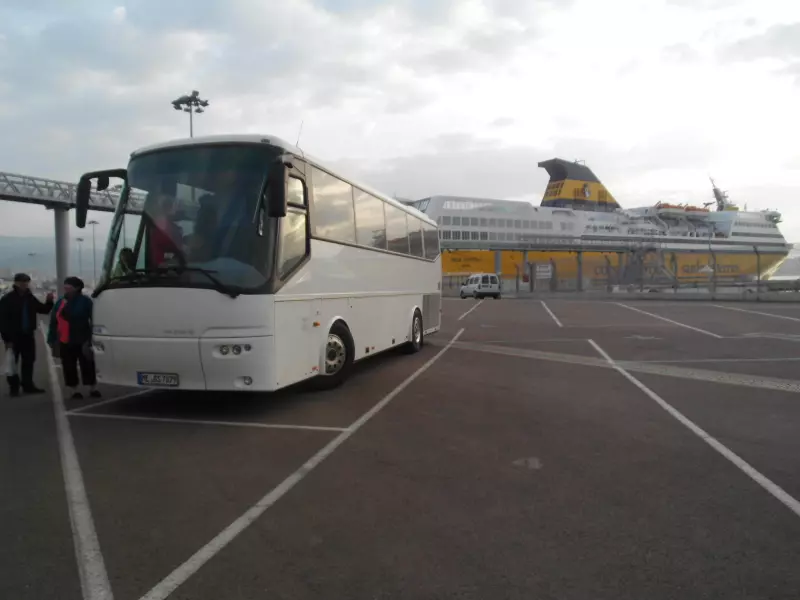 A coach stands in the ferry port in front of a large passenger ship.
Photo: Bernd Hermann, Neandertours.de
A coach stands in the ferry port in front of a large passenger ship.
Photo: Bernd Hermann, Neandertours.de
Key points before booking
- Confirm the boarding point, journey time, intermediate stops and any changes.
- Ask about seat allocation, legroom, toilet facilities and air conditioning.
- Check the number, size and weight of luggage and any special equipment.
- For a ferry crossing, clarify the time on board and where the group meets again.
- Plan the route from the final stop to the accommodation.
- For reduced mobility, confirm boarding assistance and how a rollator or wheelchair is carried.
- Keep the organiser’s contact and emergency information accessible.
Which type of bus trip fits?
A scheduled service offers a fixed connection and more freedom at the destination. A transfer links a departure point with accommodation or a port. An organised tour may include several overnight stops and a programme, while a day trip usually has a fixed return time. Check exactly what is included: transport, accommodation, meals, excursions, admission tickets or a guide.
For older travellers, a shared journey can be comfortable when the route, pace and programme allow enough time. Plans for an older-person’s holiday should match the actual breaks, walking distances and activities.
Boarding, seats and breaks
Check the distance to the boarding point, parking or public transport and the departure time. For an early departure, an overnight stay nearby may be more practical than a rushed connection. Keep the booking number, organiser’s telephone number, meeting point and contact person with you.
Comfort varies between vehicles. Ask about seat choice, steps, legroom, the onboard toilet and air conditioning. Journey times can change because of traffic, border controls or ferry connections. People travelling with children or medication needs should keep essential items and water within reach.
The guidance on arriving by train and bus can complement the transport provider’s own information.
Luggage and reduced mobility
Confirm the allowed dimensions, weight and number of bags before packing. Hand luggage should contain documents, medication, drinking water, glasses, a charger and an extra layer. A rollator or wheelchair needs suitable storage and may require a lift or loading platform. Describe the equipment and assistance needed in advance; the word “accessible” alone is not specific enough.
For accommodation planning, compare the guidance on holidays for people with disabilities with the actual facilities and the route from the bus stop.
Ferries and international connections
On a ferry, the bus may remain on the vehicle deck while passengers use a separate lounge. Ask about the crossing time, meeting point, access to the seats and whether medication or other essential items can be taken off the bus.
International journeys also require current identity-document and entry information. The European Union information on passenger rights for bus and coach transport gives a general framework; the organiser’s conditions and the competent authorities remain decisive for a specific disruption.
The final connection to the accommodation
A comfortable bus journey does not solve the last part of the route. Check whether the bus stops at the property or whether a taxi, shuttle, public transport or walk follows. Include key handover, arrival time, stairs, luggage transport and the first shopping trip in the plan.
The guidance on renting a holiday home and family holidays in a holiday home can help with the handover and the needs of different age groups.
Organised trips and suspicious offers
For an organised trip, check which excursions are mandatory, optional or charged separately. Ask about free time, walking distances, stairs and alternatives. Be cautious if a very cheap offer has no clear organiser, missing legal information, time pressure or a compulsory sales event. Verify the provider, payment terms, cancellation rules, insurance and total price before paying. The guidance on safe booking is also useful when accommodation is part of the service.
Travelling with several generations
Children, parents and grandparents may need different breaks and amounts of walking. Agree meeting points, responsibilities and a reachable telephone number. Snacks, movement and a safe place to stop help children, while older travellers may need more time for boarding and changes. A shared programme with free time is often more comfortable than a schedule with no flexibility.
For a longer tour, compare frequent packing and transfers with a smaller number of fixed bases. The route at the destination matters just as much as the bus journey itself.
Frequently asked questions
How often does a coach stop?
This depends on the route, traffic, provider and required breaks. Ask for the planned journey and expected stops before booking.
Can I take a rollator?
The provider must confirm this based on size, weight, storage space and boarding arrangements. Register the equipment early.
How much luggage is allowed?
The organiser or transport company sets the dimensions, weight and hand-luggage allowance. Obtain the conditions in writing.
What matters on a ferry crossing?
Ask about leaving the bus, the meeting point, routes on board and access to medication or personal items.
How should I choose the route?
Compare the distance to the boarding point, departure time, parking, public transport, seating and the final connection. A convenient connection may be more valuable than a small price difference.
What if I am late?
Keep the organiser’s emergency number and clarify who handles delays at a connection, transfer or check-in. Avoid tight private connections without a reserve.
Is bus travel suitable for people with disabilities?
It depends on the vehicle, boarding, equipment, breaks and programme. Have the specific requirements confirmed before booking.
