
Accessible Holidays: Plan Accommodation and Travel Carefully
Find accommodation
Key facts
An accessible holiday works best when the route, accommodation, transport and daily plans fit the traveller's actual requirements. Start with the points that are essential for a safe and comfortable stay, then check every stage from departure to return.
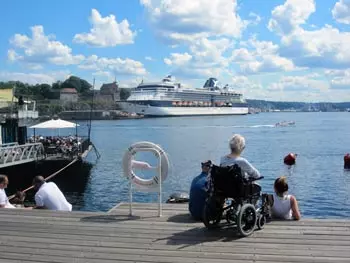 A person in a wheelchair looks at a cruise ship from a wooden harbor promenade.
Photo: Markus Lenk, www.reise-reporter.de
A person in a wheelchair looks at a cruise ship from a wooden harbor promenade.
Photo: Markus Lenk, www.reise-reporter.de
- Accessible travel depends on the complete journey, not only on the accommodation.
- Mobility aids, sensory needs, assistance animals and medical requirements should be defined before searching.
- Step-free access, door widths, turning space, bathroom layout and bed height need concrete confirmation.
- Transfers, parking, public transport, paths and daily activities can change whether a property is practical.
- Written answers, measurements, photos and a floor plan are more useful than a general accessibility label.
- A backup plan helps if a lift, transfer, rental aid or accessible room is unavailable.
Define requirements before you search
List the mobility aid, assistance-animal arrangements, sensory needs, medication, communication support and room features that matter. A powered wheelchair, folding wheelchair, rollator and walking aid require different clearances and storage. Note essential details such as step-free access, door width, turning space, a level shower, grab rails, bed height, kitchen access and parking close to the entrance.
Check the complete route
Include the station, airport, ferry, transfer, parking area, entrance, lift, corridor and accommodation door. Ask about steps, slopes, thresholds, surface quality, lighting and luggage handling. A suitable bedroom does not solve a route that ends at an inaccessible entrance or depends on an unsuitable transfer. If you are travelling without a car, compare the final connection with the car-free holiday-home checklist.
Verify the accommodation in writing
Ask for measurements and specific answers about doors, turning space, bathroom access, bed position, lift dimensions, kitchen use and equipment storage. A general accessibility label or one photograph cannot show every relevant detail. The accessible accommodation checklist can help you record the answers and compare properties.
Plan local services and activities
Check routes to shops, restaurants, medical care, public transport, beaches and planned activities. Cobblestones, steep paths, lowered kerbs, accessible toilets and bad-weather alternatives can affect the whole stay. For a coastal trip, compare the practical questions in accessible beach holidays. Families may also need to coordinate room layouts and safe routes for several generations.
Arrange support and keep evidence
Book transfers, equipment hire, personal assistance and assistance-animal arrangements early when needed. Keep provider contacts, written confirmations, measurements, photos, floor plans, the contract and payment record together. Before paying, compare the offer with the general holiday accommodation checklist and confirm what happens if a lift, transfer or rental aid is unavailable.
Questions before booking
Is an accessibility label enough?
No. Ask about the exact features and measurements that matter to the traveller.
Should I check the route as well as the room?
Yes. Transfers, parking, entrances, paths and local transport are part of the accessible holiday.
What should I request from the provider?
Request written answers, measurements, current photos, a floor plan where possible and clear information about support.
What if a requirement cannot be confirmed?
Treat it as an open risk, ask again or choose an offer with reliable evidence before paying.
