
Train and bus journeys
A holiday home can often be reached without a car if the entire route to the front door is planned. The long-distance connection is only part of the journey. Decisive are the way from the train station or bus station, the last connection in the evening, the amount of luggage and the question of whether the host can offer a pick-up. The Arrival and departure for holiday accommodation Therefore, should always be calculated until the actual entrance.
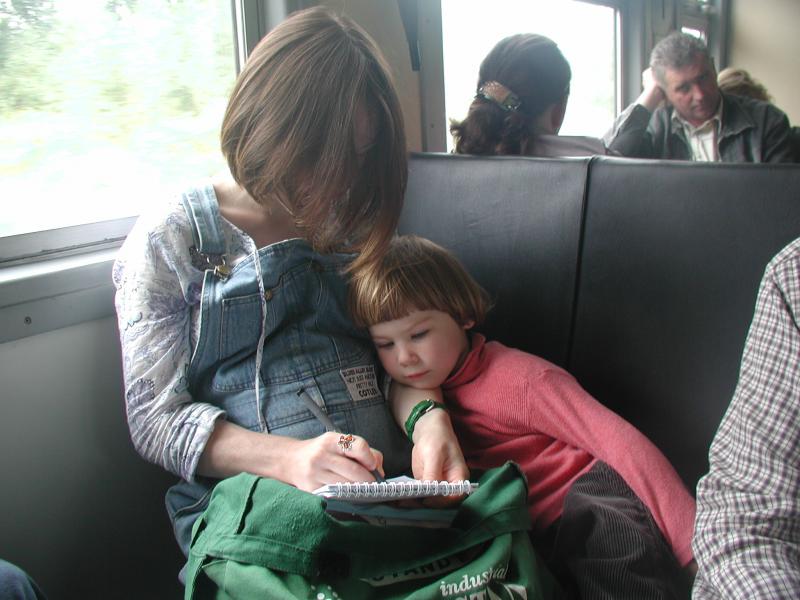 A mother and child sit together during a train ride and deal with a notebook.
Photo: Markus Lenk
A mother and child sit together during a train ride and deal with a notebook.
Photo: Markus Lenk
Brief facts on the subject
- A short train connection can become impractical due to a long or poorly lit footpath.
- Check the last port and an alternative before booking the property.
- Luggage, strollers, bicycles and animal transport influence the appropriate connection.
- A pick-up point should be clearly agreed and accessible in the event of delays.
- For international journeys, different ticket and take-away rules apply depending on the route.
- The actual arrival time should be communicated to the host, especially in the case of a late arrival.
Plan the entire route to the accommodation
Start not only with the start station, but with the address of the property. Find the nearest train station or bus station and then check the last section on foot, by local bus, taxi or pick-up service. A kilometer can be pleasant with light luggage, but with several suitcases, a stroller or in the rain become a serious hurdle. Inclines, stairs, cobblestones and missing walkways should also be considered.
In the case of Checking the holiday accommodation before booking The transport situation is therefore one of the practical issues. Ask which stop really makes sense, how far it takes to get to the house, and whether the accommodation is on a slope, in a traffic-calmed old town, or out of town. An exact address helps with planning, but does not replace checking the last connection.
Book connections with sufficient reserve
Multiple switches increase the likelihood that a small delay will change the entire plan. Plan enough reserve for platform changes, large stations, waiting times and the way to the bus. A connection with ten minutes transition can work on paper, but is often too scarce with children or heavy luggage. On the return trip, the departure time should also match the agreed check-out and key return.
Save the connections offline and record the main stops. When travelling internationally, the names and spellings of stations should be checked because place names can sound similar in different languages. The phone should be charged; A power bank, water and a small snack are helpful for longer waiting times. For the general Travel arrangements An alternative connection is also included in the documents.
Consider baggage, children and animals
When travelling by train and bus, less luggage is often a practical advantage. Heavy suitcases must be moved over stairs, into luggage compartments or through narrow entrances. Pack things for the first night, medications, chargers, and important documents into a small bag that remains accessible while driving. For an accommodation with a longer walk, a suitcase with rollers may be more suitable than several small bags.
For families, seating, breaks and toilet facilities should fit the route. Depending on the means of transport, a stroller needs a suitable parking space and must not block the passage unplanned. In the case of Arriving with children In addition, short distances and a reliable arrival time are valuable. Anyone travelling with an animal should check the conditions of the respective transport company and the Traveling with animals Vote with the host.
The last route and a pickup
A pickup can be useful if the accommodation is secluded, the last bus service ends early or the journey with luggage is difficult. Arrange the meeting point, time and telephone number clearly. A taxi should check whether the service is also available late in the evening and whether child seat, bicycle or animal can be transported. A driving service is not automatically an accommodation service; Therefore, clarify who orders and pays for it.
If no pick-up service is possible, the accommodation should call a realistic alternative. A short walk from a stop can be easy in daylight, but it can look different at night in snow or rain. For the appropriate Mobility planning on holiday You can compare public transport, taxi, bicycle and a rental car. The rental car is not always the cheapest solution, but can save time and energy in remote houses.
Delays and changes
In case of delay, you should inform the host as early as possible. Share the new expected arrival and the last reachable connection. The Passenger rights of Deutsche Bahn may be relevant for certain railway problems. However, they do not regulate whether a holiday accommodation can wait for a delayed arrival. This question must be clarified directly with the contact person.
Do not plan an overnight stay or a later pickup unchecked for an emergency. Check whether the booked accommodation remains reachable with a missed connection and whether a rebooking would be necessary. In case of a late arrival, a key box is helpful, provided that the access works safely beforehand. The notes on Later arrival and key transfer Complement this planning.
The Last Mile Decides
A good train connection is of little use if the way from the station to the holiday accommodation remains unclear. Check the last bus, a footpath with luggage, a taxi or an agreed Collection service. For children, wheelchairs or large suitcases, ask for elevators, entry heights and a realistic walking time.
Do not book switches too tightly and save replacement connections. For the return journey, the first connection should provide enough reserve to the station. If the destination is rarely served, a Rental car for individual days be the better supplement; A late arrival also requires a clarified Transfer of keys.
Frequent questions about train and bus travel
How do I find the best train station for accommodation?
Compare not only the distance, but also direct connections, final connections, footpaths, local buses and available taxis.
How much transfer time makes sense?
This depends on the train station, luggage and travel group. For large train stations, children or scarce evening connections, more reserve makes sense.
What do I do if the last bus fails?
Check taxi in advance, pick up or an earlier connection. Inform the host immediately if the arrival is postponed.
Can I travel with strollers and lots of luggage?
Yes, but pitches, stairs, platforms and the path from the station should be checked before booking.
Is a pickup by the host common?
This depends on the accommodation and should be explicitly agreed. Also clarify the meeting point, time and possible costs.
What should I store offline?
Address, booking number, tickets, changeovers, telephone numbers, access instructions and an alternative connection belong in the offline storage.
