
Pilgrimage Destinations in Europe
Find accommodation
European pilgrimage destinations can be planned in two different ways: as a multi-day route with changing accommodation or as a stay in one town with short visits to several religious sites. The Camino de Santiago, Via Francigena, Rome, Lourdes, Fátima, Assisi and Mariazell each require a different balance of walking, arrival time and rest.
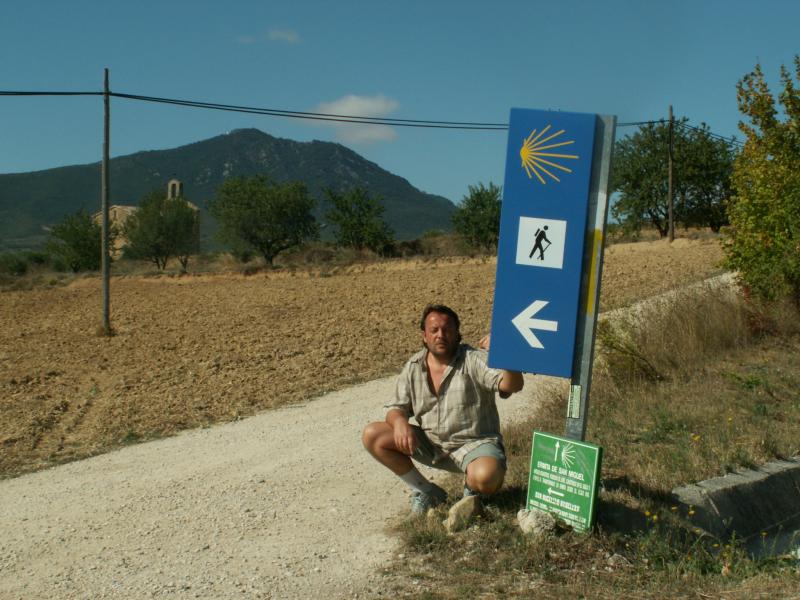 A pilgrim holds a blue road sign with scallop and arrow in front of a rural landscape with mountain.
Photo: Voyagemedia - RRinnau
A pilgrim holds a blue road sign with scallop and arrow in front of a rural landscape with mountain.
Photo: Voyagemedia - RRinnau
Route or fixed pilgrimage town?
On a route, daily distance, elevation, luggage and the return journey shape the plan. The Camino de Santiago can be walked in sections, with Santiago Cathedral at Praza do Obradoiro, s/n, 15704 Santiago de Compostela, Spain, as a possible destination. Test footwear, backpack and weather protection before setting out.
The Via Francigena to Rome also allows individual sections. For the final destination, St Peter's Basilica is at Piazza San Pietro, 00120 Città del Vaticano. Check route information and pilgrimage credentials with the official Via Francigena association and the relevant regional authorities before booking.
Those who prefer a fixed base can compare the pilgrimage cities in Germany and plan shorter routes without changing accommodation every day.
Rome, Lourdes and Fátima
Rome and Vatican City offer a high concentration of churches and historic sites, but they also require time for city travel, queues and possible reservations. The Rome and Vatican travel guide brings together addresses and practical planning. Two or three nights can provide a first focus; additional basilicas and museums require more time.
The sanctuary in Lourdes is at 1 Avenue Mgr Théas, 65108 Lourdes, France. Grottoes, basilicas and processional areas are relatively close together, but heat, slopes and the distance to the station matter when choosing accommodation. See the Lourdes travel guide for the main places and arrival planning.
For Fátima, Cova da Iria, 2495-908 Fátima, Portugal, is the central address of the sanctuary. Processions and major feast days can change crowd levels and transport needs. The Fátima guide helps with arrival, visits and overnight stays.
Assisi and Mariazell
Assisi suits travellers who want to combine religious sites, medieval streets and countryside. The Basilica di San Francesco is at Piazza Inferiore di San Francesco, 06081 Assisi PG, Italy. The Assisi travel guide also covers Santa Chiara, San Rufino, Porziuncola and Eremo delle Carceri. Slopes and cobbled streets make comfortable footwear important.
In Mariazell, the Basilica at Benedictusplatz 1, 8630 Mariazell, Austria, is the main reference point. Pilgrimage routes and mountain excursions can extend the stay, while altitude, weather and car-free access should be considered before booking. The Mariazell guide provides further details.
Plan accommodation and length of stay
For a long-distance route, choose accommodation close to the day's stage and confirm late-arrival arrangements. In a fixed pilgrimage town, a holiday home is useful for several nights, self-catering or a group. Compare distance, check-in, luggage storage, quiet space and the route to the sanctuary before booking. The travel checklist helps organise documents, clothing and transport.
Frequently asked questions
Which destination is suitable for a first pilgrimage?
A fixed site with two or three nights is often easier than a long-distance route. Lourdes, Fátima or Mariazell can be explored through shorter walks from one base.
How much time should you plan for Rome?
Two or three nights can cover a first selection of major sites. Add time for museums, several churches or a section of the Via Francigena.
Are routes and pilgrimage towns planned in the same way?
No. Routes depend on stages, weather, luggage and return travel. In a town, opening times, services, reservations and distances between sites are more important.
