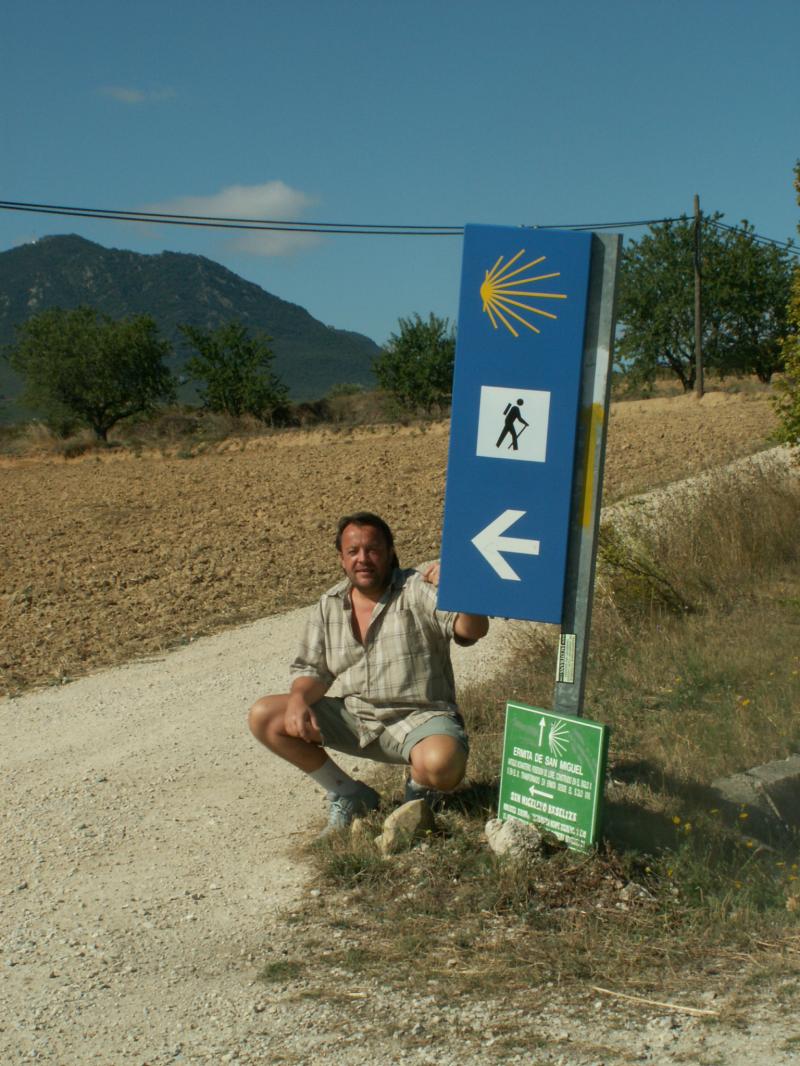
The Way of Jacob
The Camino de Santiago is not a single hiking trail, but a network of historical paths to Santiago de Compostela. For your own journey, therefore, not only the kilometers count, but also the suitable starting point, which Day stages, the luggage, the accommodation and the return journey. If you choose a manageable section, you can also start the pilgrimage route with a few holiday days.
Brief facts on the subject
- The Camino Francés traditionally begins in Saint-Jean-Pied-de-Port; However, many pilgrims only start in Spain or at a part that is easily accessible to them.
- Stages should be planned according to altitude, underground, weather, luggage and personal condition, not according to a flat-rate number of kilometres.
- The pilgrimage pass is stamped on the way in the designated places and is important for the Compostela in Santiago.
- Hostels are often located directly on the way; Apartments are particularly suitable for several nights, self-catering or a relaxation break.
- Addresses, barriers, opening hours, traffic connections and reception conditions must be checked again shortly before the start.
- A short section with a fixed arrival and departure is often better suited for beginners than planning the entire route.
Choose the right path and starting location
The most famous section is the Camino Francés across the Pyrenees, Navarre, La Rioja, Castile and León to Galicia. The traditional French starting point is the Porte Saint-Jacques, 64220 Saint-Jean-Pied-de-Port, France. Those who want to avoid the border crossing and the first climb can start in Roncesvalles at the Real Colegiata de Roncesvalles, 31650 Orreaga-Roncesvalles, Navarra, Spain. For A short journey with good transport connections is also possible the last 100 kilometers from Sarria or a section around Santiago.
Other paths have a different character. The Camino del Norte leads along the northern Spanish coast, the Primitivo crosses the mountainous Asturias and the Portuguese way can be found, for example, on the Sé do Porto, Terreiro da Sé, 4050-573 Porto, Portugal. If you plan only a few hiking days, you should set the arrival to the start and the return from the destination first. The overview of Pilgrimages and other pilgrimages helps to compare objectives; for a European long-distance route to Rome, the Via Francigena Compare with the Camino de Santiago. For a more sporty journey, the Walking holidays A suitable orientation.
Plan stages between Pyrenees and Santiago
On the Camino Francés are important landmarks in different landscapes. In Pamplona, the Catedral de Santa María la Real, Calle Dormitalería 1, 31001 Pamplona, Navarra, is an easy to find Reference point. In Burgos, the Cathedral of Santa María is located in Plaza Santa María, s/n, 09003 Burgos. In León, the Cathedral of Santa María de Regla is located in Plaza de Regla, s/n, 24003 León. These cities are suitable for themselves as stage or break locations, but do not replace an examination of the actual part of the day.
For day planning, 15 to 25 kilometres is a rough starting area for many hikers, but not a binding value. Elevation meters, heat, rocky paths and a full backpack can be a shorter section Make it more strenuous than a long, level distance. The first day should be consciously moderate. A reserve day makes sense if bubbles, thunderstorms, exhaustion or a short-term diversion occur. Before Booking should also be determined whether the luggage itself is carried, transported or left at a fixed location.
Pilgrim passport, equipment and daily routine
A pilgrim's passport, identity card or passport, European health insurance card, personal medicines and an emergency number should be at hand. shoes should have run in; A test with the Fully packed backpack shows early on whether weight and seat fit. Light rain clothing, drinking bottle, sunscreen, bladder supply and a dry change fitting are more practical than an extensive equipment. The Holiday checklist Support for documents and equipment, but must be adapted to the specific route.
Plan the arrival so that the accommodation is reached within their recording or check-in time. In the case of a hostel, opening hours, bed allocation, washing facilities and rules shall be checked. In the case of a Holiday apartments, on the other hand, include the distance to the path, key handover, luggage storage and an early departure. For several nights or a rest period, a Apartment at the destination provide more space and self-sufficiency; Notes on Secure rentals Help with selection.
Accommodation on important sections
The search for accommodation should not start until the evening before the stage. For Navarre there is Holiday accommodation in Navarra for the Basque Country Accommodation in the Basque Country and for the long crossing of Castile and León Apartments in Castile and Leon. In Galicia, the trail ends in the surroundings of Santiago; Suitable Holiday accommodation in Galicia may be checked for the final stages or additional rest days. The links show accommodation regions, but do not replace the control of location, availability, arrival and equipment of the specific offer.
Santiago de Compostela and the last formalities
The destination of the Camino is the Cathedral of Santiago de Compostela at Praza do Obradoiro, s/n, 15704 Santiago de Compostela, A Coruña, Spain. For the Pilgrimage Pass and the Compostela is the Pilgrimage Office in Rúa Carretas, no 33, 15705 Santiago de Compostela, A Coruña, Spain, an important point of contact. Anyone planning the last few kilometers on foot should take into account that Santiago after arrival is not only a destination, but also a location with waiting times and additional route planning.
Up-to-date information on routes, stages, services and regional features should be provided before departure via the Official portal of the Camino de Santiago in Galicia and the relevant regional authorities are audited. For the return journey, train station, airport or a planned onward journey are just as much part of the travel plan as the outward journey; Information from older travel reports is Not enough for that.
Frequent questions about the Camino de Santiago
Do you have to walk the entire Camino de Santiago?
No. A single section with suitable stages can be a complete pilgrimage. What is crucial is a realistic schedule and a safe return journey.
Which starting location is suitable for beginners?
An easily accessible section with moderate inclines and reliable accommodation usually makes more sense than a full start in Saint-Jean-Pied-de-Port. The first days should not be planned too long.
How far should a day stage be?
This depends on condition, altitude meters, underground and luggage. Rather, start shorter and leave a reserve for breaks and unplanned changes.
When do accommodations need to be booked?
In heavily visited times and at popular stage locations, an early booking makes sense. Those who want to remain flexible should know several possible overnight places and an alternative solution.
Can you connect the Camino de Santiago with a holiday apartment?
Yes. A holiday apartment is particularly suitable for a fixed location, several days of rest or a trip with several people. Directly on the way, short distances and early departure are often more important.
Photo: Voyagemedia - RRinnau