Via Francigena to Rome

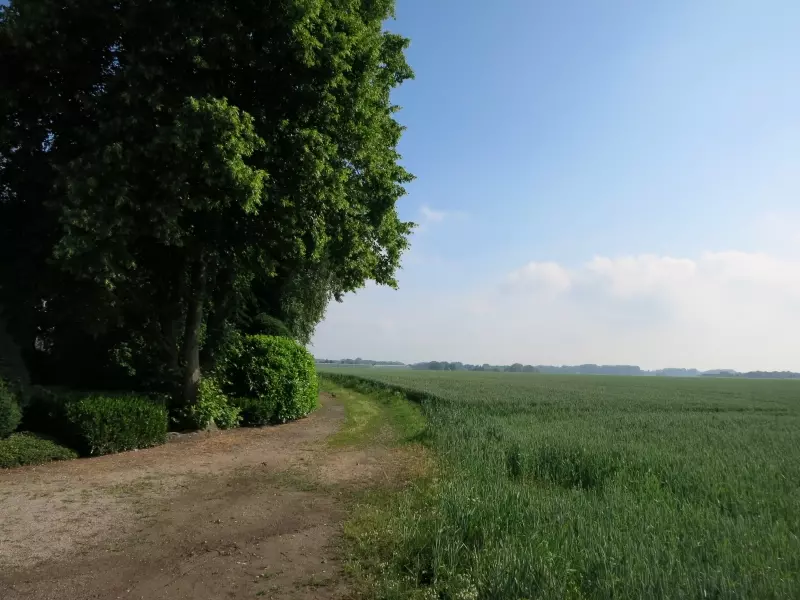
Path through fields Unpaved path on the edge of a green field under trees. The neutral path image does not show a particular section of the Via Francigena.

The Via Francigena is a historic long-distance route from Canterbury to Rome. For your own pilgrimage, no one has to complete the entire route: an Italian section, an extended weekend or several Stages up to St. Peter's Basilica can be selected according to time, condition, arrival and accommodation.

Brief facts on the subject

  • The Via Francigena connects Canterbury with Rome and runs through five countries.
  • According to the European Association of Via-Francigena Trails, the entire trail is about 3,000 kilometres long and crosses 16 regions and more than 600 municipalities.
  • The route can be travelled on foot, by bicycle or on horseback; the stages must be adapted to the means of transport.
  • Important orientation addresses are the Cathedral of Canterbury, the hospice on the Great Saint Bernard, the Cathedral of Fidenza and St. Peter's Basilica.
  • Markings, path condition, accommodation, weather and return travel belong before each section in the concrete planning.
  • A holiday apartment fits especially for several nights in one place; With daily changing stages, the short distance to the path counts stronger.

From Canterbury to Rome via the Alps

The Via Francigena follows a historic connection through England, France, Switzerland, Italy and the Vatican. The Overview of pilgrimages and religious goals Alongside other paths and places of pilgrimage. The northern starting point is at theCanterbury Cathedral, The Precincts, Canterbury CT1 2EH, United Kingdom. The path crosses the English Channel and leads via France and Western Switzerland towards the Alps. A striking transition is thatHospice du Grand-Saint-Bernard, 1946 Bourg-Saint-Pierre, Switzerland. Weather, snow conditions and the actual opening of alpine sections must be checked before a trip.

In Italy, several historic cities are on the route. TheDome of Fidenza, Piazza Duomo, 43036 Fidenza PR, Italy, is a descriptive card anchor in Emilia-Romagna. The route continues through further sections towards Tuscany and Lazio. A suitable destination address isSt. Peter’s Basilica, Piazza San Pietro, 00120 Città del Vaticano. These points mark the direction, but do not replace a current stage or path test.

Select the appropriate section

The entire route is a long-term project. For a first trip, two to four hiking days with a clear starting and destination are often easier to organize. An Italian section offers the advantage of that historical places, railway connections and fixed overnight places can be connected. Who has only one weekend, should not the longest scenic, but the most accessible by traffic Choose part.

The decision for the section depends on altitude meters, underground, luggage and daylight. A path through the plain can be strenuous in heat, while a shorter stretch of the Alps can be strenuous due to weather and slopes. becomes demanding. For comparison with other Christian long distances, the Camino de Santiago with stages, pilgrimage pass and accommodation to another line structure. The Pilgrimage Routes in Germany are suitable if the arrival is shorter and first a German section is to be chosen. Whoever does not plan a daily stage will find in the Pilgrimage Cities in Germany fixed goals for a short stay.

Plan stages, maps and pilgrimage evidence

Before booking, start address, destination address, daily performance, altitude meters, break possibilities and the return journey should be fixed. Rather share long sections in an accessible location and keep a reserve day Free. Markings and digital maps are complementary; For remote pathways, maps should be available offline and the phone should not remain the only orientation.

Depending on the chosen section and current organisation, different practical indications apply to the pilgrimage certificate. The European Association of Via-Francigena-Ways provides information about the route, travel preparation and current offers. Check the current route status, the official planner and the instructions for the selected travel type before the start. Opening hours, accommodation options and local diversions may change.

Accommodation on the way or holiday apartment in Italy

With daily changing stages, a short walking distance, a reliable check-in and the possibility of drying clothes are particularly important. If you stay two or more nights in a city, you can Apartment or a holiday home Compare with kitchen and more space. Standing for Regional Search Holiday accommodation in Italy ready; the specific distance to the path, train station or bus must be checked for the individual offer.

A fixed location can be useful if individual path sections can be reached by train or bus. Then pilgrimage days can be combined with a rest day and a visit. For a short section without frequent Accommodation change also fits Short break with a clear return. Before booking, key handover, luggage, shopping, laundry and the first connection should be clarified in the morning.

Arrival, luggage and return

For a section to Rome, the return journey is already planned at the start. Note the nearest train station or bus connection to the destination and check how the luggage gets there from the quarter. At the end of Rome is the Roma Termini station atPiazza dei Cinquecento, 00185 Roma RM, Italy, an important transport hub; However, the actual connection depends on the chosen stage and the day of return.

A light rucksack, run-in shoes, rain clothes, drinking water, sun protection, personal medicines and an offline stored card are part of the basic equipment. The Travel arrangements and the Holiday checklist Help with documents and equipment. Anyone who uses baggage transport should clarify handover times, liability and the handling of rest days in advance in writing.

Those who want to combine the path in Rome with a stay of several days can visit Rome and Vatican as pilgrimage destinations check the main destination addresses and order of visits.

Frequent questions about Via Francigena

Do you have to go the Via Francigena completely?

No. The route can be divided into individual stages and regional sections. Decisive are an achievable start, a realistic day planning and a secure return journey.

Where does the Via Francigena begin and end?

The historic long-distance route begins in Canterbury and leads to Rome. The destination is St. Peter’s Basilica in the Vatican. For the specific journey, individual sections are usually selected.

Is the Via Francigena suitable for beginners?

A short, easily accessible section may be suitable. Alpine crossings and long day stages demand more experience; Altitude meters, weather and luggage should be realistically estimated in advance.

Which accommodation is suitable for a pilgrimage?

For daily changing stages, short distances and flexible arrival times are important. A holiday apartment is more suitable for several nights in one place or at a fixed location with excursions.

What needs to be checked before the start?

Check route guidance, marking, closures, weather, border and traffic conditions, accommodation, luggage transport, as well as the opening hours and rules of the visited facilities.

Photo: Markus Lenk

Advertisement