
Olive oil holidays
Find accommodation
Olive oil can be the starting point for a holiday combining local food, rural landscapes and visits to mills or markets. Before booking, check whether the mill is open on your dates, how the visit works and how far it is from your accommodation.
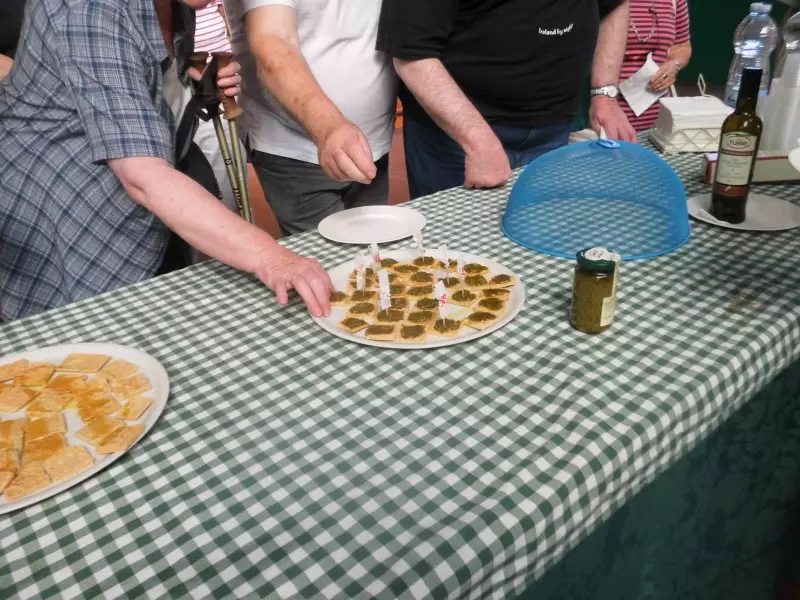 Several people taste olive oil at a table with regional products and a bottle of olive oil.
Photo: Bernd Herman, neandertours.com
Several people taste olive oil at a table with regional products and a bottle of olive oil.
Photo: Bernd Herman, neandertours.com
At a glance
- Mill visits, tastings and farm shops are organised differently by each business.
- Harvest and bottling periods vary by region and year.
- Opening times, languages, booking requirements and access should be checked directly.
- A holiday home with a usable kitchen can make it easier to try small quantities of local products.
- Oil and other food products need suitable packaging and protection from heat and light during transport.
Choose a region and a type of visit
Decide whether you want a guided mill visit, a tasting, a market stop, a meal in a restaurant or simply a scenic drive through olive-growing country. Tuscany, Umbria, Mallorca, Greece, Portugal and parts of France offer different combinations of food, landscapes and cultural activities. The current visitor offer depends on the individual business and travel date.
A guided visit may have a fixed meeting point, duration, language and group size. A farm shop may be more flexible but may not offer a tour. Ask what is included, whether registration is needed and what happens if weather or operating conditions change.
Plan the route and accommodation
Olive mills are often outside larger towns. Check driving times, parking, public transport and the last return journey before booking. If you want to visit several places, choose a base and compare the actual distances rather than relying on nearby-sounding place names.
A holiday home can suit a food-focused trip if the fridge, hob, worktop, tableware and dining area match your plans. A property in a town may make restaurants and markets easier to reach, while a rural property may offer a quieter base but require more transport planning.
Buy, store and transport olive oil
When buying, check the producer, origin, crop or bottling information, pack size and storage advice. Taste is personal and can vary with the variety, harvest and storage conditions; a tasting is not a guarantee of a particular preference.
Buy only what you can transport safely and use during the trip. Keep bottles protected from damage, heat and strong light, and follow the information on the label. If you have an allergy or a particular diet, ask the producer or restaurant directly about ingredients and preparation.
Combine the tasting with other activities
A mill visit can be combined with a village, market, museum or walk, but leave time for parking, orientation and delays. The guide to culinary markets and market halls offers practical ideas for buying and storing regional products.
For a broader food-focused trip, compare regional specialities, truffle holidays and fish and seafood holidays. Choose activities that fit the route, budget and interests of everyone travelling.
Frequently asked questions
Can every olive mill be visited?
No. Tours, tastings and farm shops depend on the individual business and date. Check and book directly where necessary.
Is harvest time always the best time to travel?
Harvest can offer a special atmosphere, but public visits are not guaranteed. Agricultural work and visitor arrangements vary by region and year.
How should I store olive oil?
Follow the product label and protect the oil from unnecessary heat and strong light.
Do I need a car?
It depends on the location. Rural mills may require a car or a carefully checked taxi or public-transport connection.
What should I ask before booking?
Check the date, duration, language, price, accessibility, meeting point, sales offer and cancellation arrangements.
