
Artigas: Samba, Gemstones and Mining History
Accommodation in Artigas
Artigas brings together carnival culture and the history of gemstones. These distinct themes provide a concrete starting point for planning your vacation. If you’re looking for a vacation rental in Artigas, they can help you choose the focus of your trip.
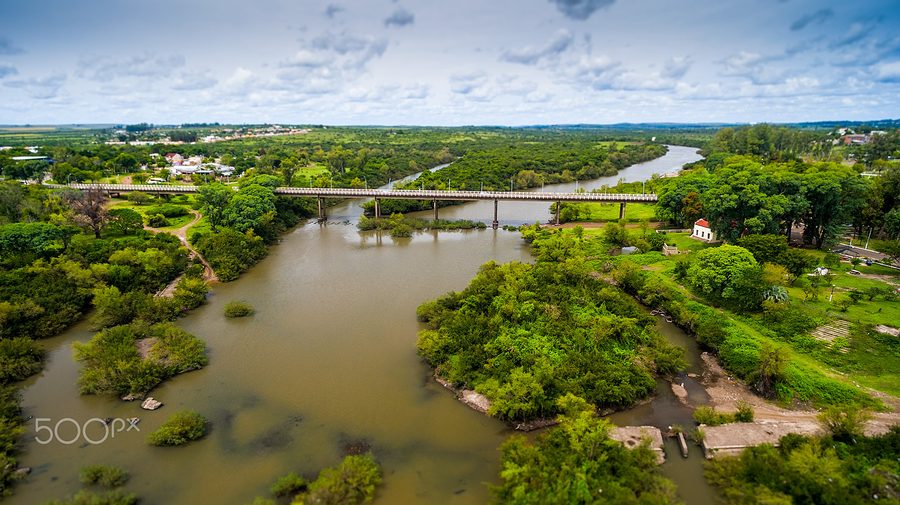 Die internationale Brücke La Concordia verbindet Artigas in Uruguay mit Quaraí in Brasilien über den Cuareim.
Photo: Marcelo Campi via Wikimedia Commons, CC BY-SA 3.0
Carnival, Samba, and Historic Gemstones
The Artigas Carnival is shaped by its connection to Brazilian samba. Gemstones offer another perspective on the department’s history: documents from 1860 attest to the presence of Artigas’s “Piedras Brillantes” and the Crown’s interest in them. This date provides a specific historical reference for the gemstones. In Artigas, festival culture and a gemstone history documented as far back as the 19th century offer two distinct points of interest.
Geology and Mining Tradition
The Centro Cultural Museo de la Piedra Preciosa opened in Artigas in November 2025. The museum explores geology, how gemstones form, mining in the Los Catalanes gemstone area, and the region’s mining tradition. Interactive exhibits bring these topics to life. The museum also covers the history of the former “Casona,” a building recognized as a National Historic Monument. The amethyst deposit in the Los Catalanes area near Catalán in the Department of Artigas was recognized as “Patrimonio Geológico Mundial” by the International Union of Geological Sciences, an organization of UNESCO. The museum’s themes thus complement the recognition of a specific deposit.
When looking for a vacation rental in Artigas, you can use these themes to guide your choice: would you like carnival and its connection to samba to be the cultural focus of your trip, or are you especially interested in geology, gemstones, and mining history? The first offers a way to explore a tradition; the second brings together natural formation, extraction, and historical context. You can shape your stay around the topics you’d like to discover.
Uruguay in the Wider Travel Picture
Uruguay’s wider travel picture also features distinct points of interest. Grutas del Palacio is the geopark’s most emblematic site and gives it its name. The caves were formed by water erosion: a roof around 70 centimeters thick is supported by reddish, hardened sandstone columns averaging two meters in height. The site has scientific, educational, and tourist value. Colonia del Sacramento was founded by the Portuguese on the Río de la Plata in 1680 and was strategically important in resisting the Spanish. Colonia’s Historic Quarter is the region’s only example of an urban plan that does not follow the rigid grid pattern prescribed by the “Leyes de Indias.” Parque Nacional Cabo Polonio represents another of Uruguay’s landscapes: the protected area preserves a particularly distinctive coastal landscape.
Discover More Destinations
Discover more subregions: Bella Unión, Artigas.
Discover more destinations: Cerro Largo, Rivera, Paysandú, Florida, Department of Salto, Canelones.
Back to the main travel overview: Uruguay.

