
Vârciorog – Caves, Wooden Church and Holiday Apartments
Accommodation in Vârciorog
Peștera Osoi shapes the natural landscape of Vârciorog with a length of 3,177 m. The speleokarst protected area is located in the upper basin of the Valea Topa, near the forest road between Vârciorog and the Alesd–Beiuș road. It belongs to the administrative area of the municipality of Vârciorog and lies within the Natura 2000 site “Defileul Crișului-Pădurea Craiului” in Bihor County. Thus, at this location, the underground landscape of the cave, the Valea Topa river basin and its administrative affiliation with Bihor County come together.
The location of Peștera Osoi is defined by several named reference points: the upper basin of the Valea Topa, the forest road between Vârciorog and the Alesd–Beiuș road, and the municipal boundary of Vârciorog. The Natura 2000 designation supplements this geographical description with the name “Defileul Crișului-Pădurea Craiului”.
Nature
The cave and its surroundings combine geological formations with distinctive wildlife. Together with two fossil shelters, Peștera Osoi occasionally serves as a refuge for at least seven bat species. Six of these species are considered species of Community interest.
The number of bat species involved and the two fossil shelters are therefore just as much part of the description of the cave environment as its length and its location in the Valea Topa basin. The municipality also lists Peștera din Dealul Osoiului, Peștera din Valea Peștișului and Peștera de la Țiclu as natural monuments. Peștera Copilului lies on the watershed between the Valea Țiclului and the Valea Copilului. Both valleys are left-bank tributaries of the Valea Topa; this cave is also located in the municipality of Vârciorog.
Landscape
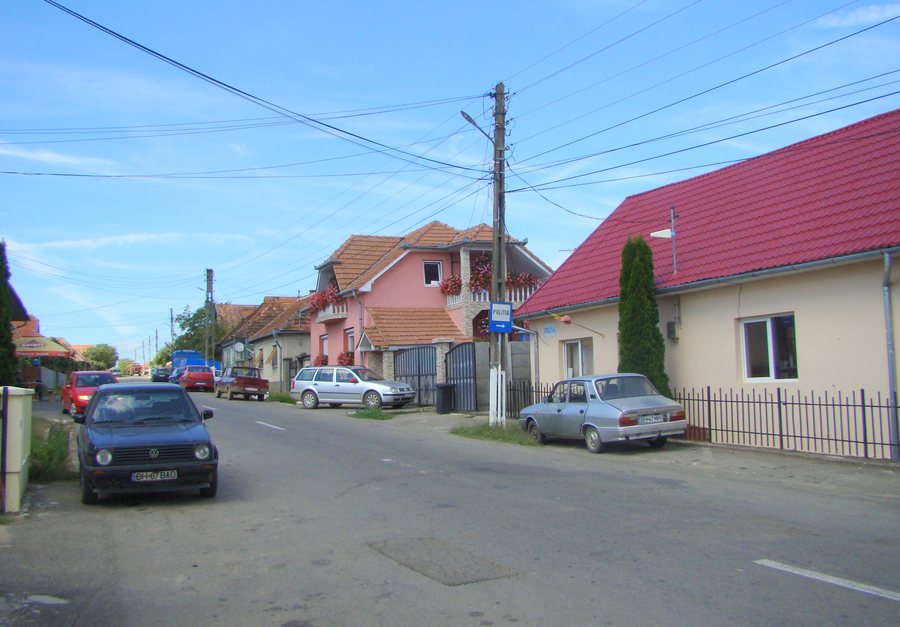
Vârciorog is located in the Depresiunea Vârciorogului, a contact depression between the Munții Pădurea Craiului and the Dealurile Șerghișului and Dealurile Tașnadului. The upper course of the Râul Topa and its tributaries drain the depression. The watershed of Peștera Copilului marks the division between two valleys, both of which drain into the same Valea Topa river system.
The landscape description therefore includes both the surrounding mountain and hill regions and the watercourses and their drainage relationships. Peștera Copilului is not located on a single tributary, but on the watershed between two valleys, both of which belong to the Valea Topa.
History
Vârciorog was first documented in 1492. In the Middle Ages, the villages of Vârciorog, Șerghiș, Fasca and Surduc were organized into a powerful knesate. Local knezes led this union; a castle stood in Vârciorog.
Culture
Vârciorog is home to the wooden church “Sfinții Arhangheli Mihail și Gavril”. Its nave and tower are covered with shingles. The tower is approximately 16 m high and has the shape of an octagonal helmet. The wooden church is part of a cultural tourism route through Bihor with ten stops featuring wooden churches.
The architectural features thus focus on the shingled nave and shingled tower. Added to this is the tower’s distinctive octagonal helmet shape, as well as the church’s inclusion in a route connecting ten stops featuring wooden churches throughout Bihor.
Activities and Accommodation
Mountain biking is classified as a sporting activity and adventure tourism in the Vârciorog area. For accommodation, Vârciorog has a campsite with three cabins, as well as pitches for tents and motorhomes.
For the general travel overview: Varciorog.

.jpg)