
Holiday apartment in Lunca: Nature, Churches and Local Traditions
Accommodation in Lunca
Lunca combines different types of landscape with a remarkably diverse cultural history. The municipality in Bihor County encompasses plains, rolling hills and mountain areas: 25 percent of its territory consists of plains, 40 percent of rolling hills and 35 percent of mountain areas. Half of the municipality’s territory is forested. Choosing a holiday apartment in Lunca therefore means staying in a place where observing nature, exploring historical traces and experiencing regional traditions offer different focal points for planning a trip.
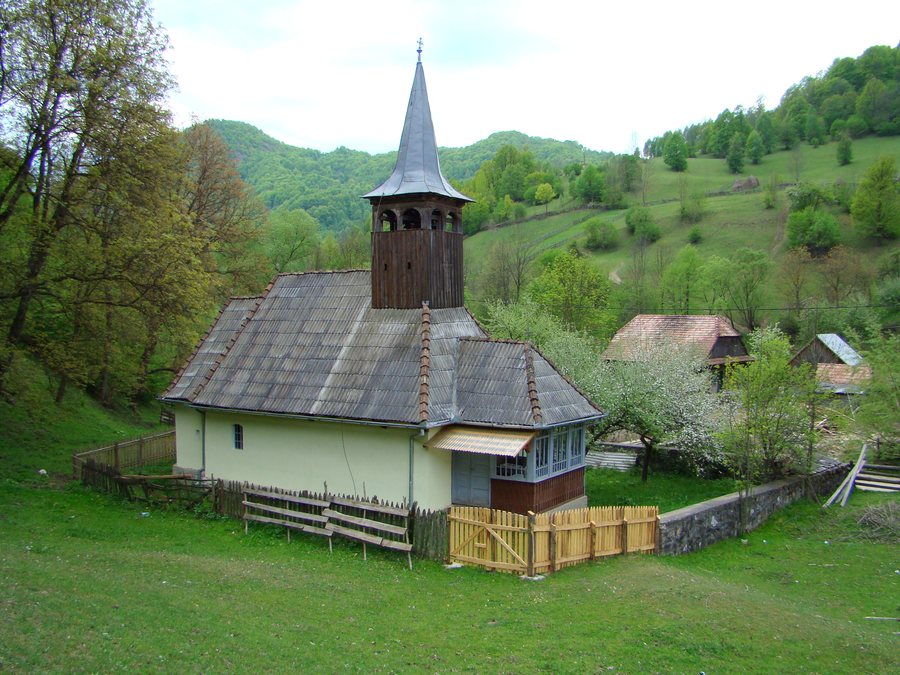 File:Biserica de lemn din Lunca Largă (10).jpg
Photo: Țetcu Mircea Rareș via Wikimedia Commons, CC BY-SA 4.0
File:Biserica de lemn din Lunca Largă (10).jpg
Photo: Țetcu Mircea Rareș via Wikimedia Commons, CC BY-SA 4.0
Nature Between Forest, River and Open Landscapes
The Lunca administrative unit also includes the ROSCI0042 Codru Moma Natura 2000 site. Its compact forest habitats serve as an ecological corridor for wolves, bears and lynxes. Within the village itself, there is floodplain and steppe vegetation. In the floodplain of the Crișul Negru, the terrain is flat and characterised by alluvial soils. This combination of forest, river landscape and open vegetation forms makes the natural environment particularly varied.
Travellers with different interests can mentally choose their surroundings according to landscape character: the forested Codru Moma represents a different natural setting from the flat areas along the Crișul Negru, which are characterised by alluvial soils. A holiday apartment in Lunca is therefore particularly appealing to travellers who do not want to limit their days to a single type of landscape, but instead wish to combine nature and culture.
Churches and Historical Traces
The village of Lunca has been documented since 1588. In Șuștiu stands the masonry Church of Saints Michael and Gabriel, built in 1902 and consecrated on 29 December 1902. Another Orthodox Church of Saints Michael and Gabriel is located in Lunca at DJ764F 129, Lunca 417320, Romania. The two churches are among the municipality’s specific religious and historical points of reference.
Seghiște also preserves older evidence: the local cemetery contains the ruins of Orthodox churches from the Middle Ages, dating from the 15th to the 17th century. One of these churches was destroyed by a storm in the summer of 1910. Those interested in regional architectural history will therefore find different historical periods in Lunca and its associated villages – from medieval ruins to the church dating from the early 20th century.
Transport Routes and Regional Orientation
The Oradea–Vașcău railway line runs through Lunca parallel to the Crișul Negru. Along the part of the village bordering the road, the DN 76 national road from Oradea to Deva also passes through. These two transport axes are distinctive features of the local landscape and help place Lunca within the regional setting between Oradea and Deva.
Traditions, Crafts and Flavours
The history of the municipality also includes the former working world of the smelting works. The residents of Șuștiu, Briheni and Sîrbești were formerly assigned work in smelting works. The historic forge operated five days a week and produced 25 Măji of iron per week. These details point to an industrial past that, alongside churches and landscapes, offers another perspective on the history of Lunca.
Living customs complement these historical themes. In Lunca, Easter eggs are decorated in April and Toacă rhythms are maintained. The Festivalul Plăcintelor has been held in Briheni since 2017 and reached its eighth edition. When planning a holiday apartment in Lunca, such cultural points of connection can be just as important as the landscape: they give the trip a regional character without requiring nature, history and local cuisine to be considered separately.
For the overarching travel overview: Lunca.

.jpg)