
Oleśnica: City Layout, Market Square and Church History
Accommodation in Oleśnica
Oleśnica preserves a city layout dating from the 15th century. Together with the market square, the Church of the Assumption of the Blessed Virgin Mary and the cultural centre, it forms a cultural picture that ranges from the town’s layout to individual architectural and commemorative details. If you enjoy understanding how such historical layers sit alongside one another when you travel, you will find several specific points of interest here. The town’s history and architecture can therefore become the focus of a stay.
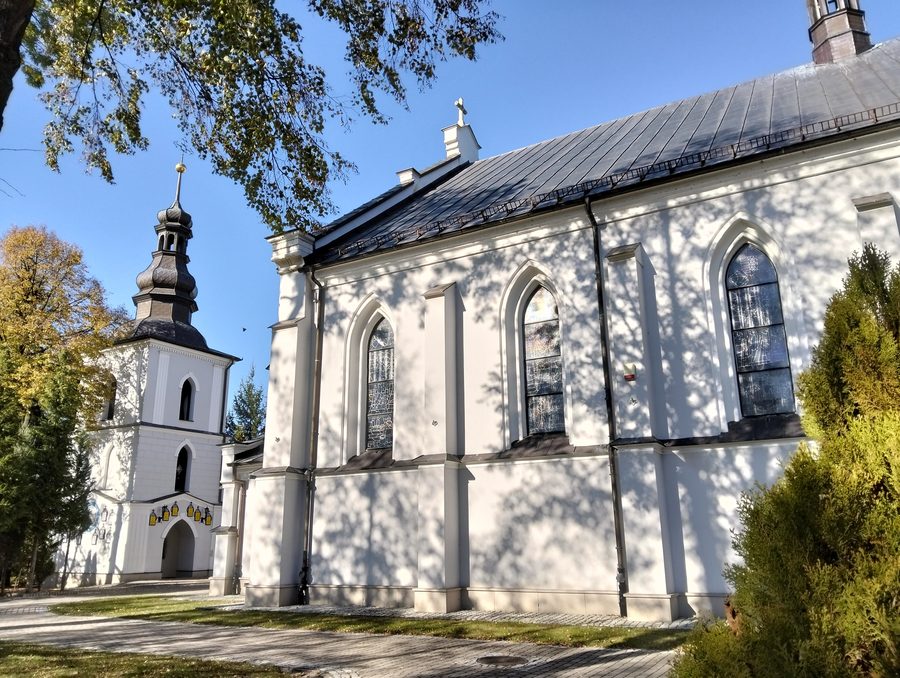 Kościół Wniebowzięcia Najświętszej Maryi Panny w Oleśnicy.
Photo: MOs810 via Wikimedia Commons, CC BY 4.0
Town Layout and Market Square
A city layout describes the arrangement of a town as a whole and draws the eye beyond individual buildings. Oleśnica has preserved an interesting layout dating from the 15th century. The structure of the town itself is therefore also a cultural theme: it stands alongside individual buildings rather than being reduced to a single monument. For travellers who like to consider a townscape in context, this offers a different approach from focusing exclusively on individual buildings.
The market square has several additional points of interest. Notable buildings shape the square; above it rises the clock tower of the fire station, built in 1948. At the centre of the market square stands a statue of Our Lady of the Rosary, donated by the Zaborowski family in 1911. The tower and statue tell different aspects of the square’s story: the tower is associated with a specific year of construction, while the statue has a history of its own as a donation. These dates help distinguish the features; they do not indicate that they were created during the same period.
The Parish Church and Its Layers of History
The Church of the Assumption of the Blessed Virgin Mary adds another architectural and historical focus. It is neo-Gothic and underwent extensive reconstruction in the second half of the 19th century. The term Neo-Gothic classifies the style as a later revival of Gothic forms; the reconstruction gives the church’s history its own point of reference in time. This building history can thus be distinguished from earlier dates associated with other commemorative objects.
Inside the church, above the baptismal font, there is a sandstone plaque commemorating the founding of St Florian’s Church in 1406. The date refers to that founding, not to the neo-Gothic reconstruction of the parish church. The plaque’s material and precise location make it a distinctive detail of the church’s history. Beside the parish church there is also a bell tower containing the “Antonii” bell, made by the Felczyński bell foundry. The reconstruction, plaque and bell point to different aspects: the building history of the parish church, the founding history of St Florian’s Church, and a bell with its own name and maker.
The Cultural Centre and Choosing a Destination
Another cultural point of interest is the building of the Miejsko-Gminne Centrum Kultury. The building, reconstructed in 2019, houses Oleśnica’s cultural centre; it is also considered a distinctive feature of the local architecture. The 2019 reconstruction provides a more recent time marker alongside the historical details about the market square and parish church. The town’s cultural picture thus brings together different themes and periods rather than belonging to a single era.
If you are looking for a holiday apartment, this focus can help you choose a destination: Oleśnica is suited to a stay where the historic town layout, market square and church history appeal to you. First consider whether you are more interested in the city as a whole or in individual architectural and commemorative details. If you are travelling with children, you can think together about which of these topics will spark your family’s curiosity. You can then choose accommodation according to your own requirements.
Compare hotels and holiday rentals in Oleśnica by price and availability for your travel dates.
Advertisement · We may receive a commission if you book.Discover More Destinations
Discover more destinations: Rytwiany, Osiek, Budy, Skarżysko-Kamienna, Staszów, Korytnica, Wiązownica Mała, Kurozwęki
Return to the main travel overview: Staszów.

