
Pilszcz: Cycling Route and History
Accommodation in Pilszcz
In Pilszcz, a specifically named cycling route and historical traces from different eras come together as reasons to visit. The themes range from a Bronze Age find to an event from the 17th century and buildings from later centuries. When planning your stay, you can decide whether cycling or cultural history should be its main focus.
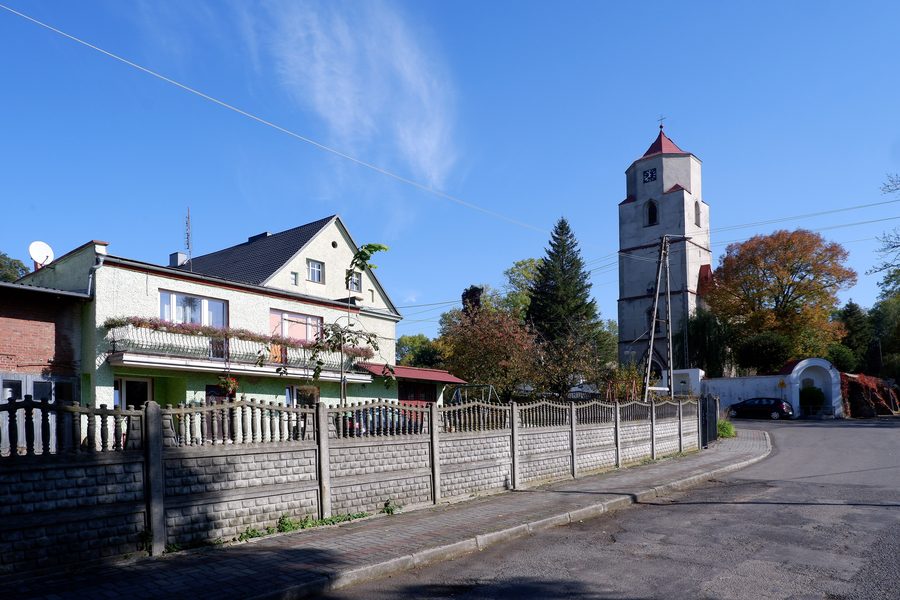 Allee Schumana 2 und die katholische Kirche in Pilszcz
Photo: Kamil Czaiński via Wikimedia Commons, CC BY-SA 4.0
Allee Schumana 2 und die katholische Kirche in Pilszcz
Photo: Kamil Czaiński via Wikimedia Commons, CC BY-SA 4.0
A cycling route through Pilszcz
The “Opava – Pilszcz – Kietrz” cycling route runs from the border with the Czech Republic through Pilszcz, Ludmierzyce, Lubotyń and Dzierżysław, as well as through the “Góra Gipsowa” nature reserve, to the town of Kietrz. This makes the route a specific starting point for anyone considering Pilszcz as a cycling destination. The route is established; check local conditions before setting out. When planning your holiday, you can weigh this focus on cycling against the town’s historical themes and decide what matters more to you when choosing a holiday apartment.
Traces from different eras
One historical connection takes us back to 1683: Pilszcz lies on the historic march route of King Jan III Sobieski’s army as it went to relieve Vienna. A painting in the NMP Church commemorates the relief of Vienna. The link between the march route and the painting brings the same historical event into focus from two perspectives: as the army’s route and as the subject of a work of art in the church.
The so-called Pilszcz treasure represents a different period. It was discovered in the village’s surroundings in 1884 and dates from the Bronze Age. The objects described included neck rings and bracelets. The find points to a much earlier period than the events of 1683; its story also places it in the area around the village. Pilszcz and its immediate surroundings thus offer different historical points of interest side by side, without needing to combine them into a single narrative.
Sanctuary, granary and potato steamer
The Sanctuary of Matki Boskiej Pilszczańskiej dates from 1593 and is considered Gothic-Renaissance in style. It is also a destination for numerous pilgrimages. This architectural classification combines the terms for two periods, while the specific date provides a clear point of reference in time. For travellers interested in the history of religious architecture, this offers a different focus from the memory of the 1683 campaign.
Other named historical features in Pilszcz include a 19th-century grain granary built using timber-and-clay construction and a potato steamer from the same century. Both the construction method and the material are specified for the granary; the potato steamer stands alongside it as a different kind of object. Together with the sanctuary and the historical accounts, these features offer a range of themes: architecture, an object associated with food processing, and events from local history. This variety can help you weigh the interests of your travel group when planning your holiday.
Choosing Pilszcz as a holiday destination
If you are looking for a holiday apartment in Pilszcz, the named cycling route and historical themes can help guide your choice of destination. First, consider whether you want to focus your stay mainly on a cycling trip or on history and architecture. The route passes through several named places and runs through the nature reserve to Kietrz; check local conditions before setting out. The stories and buildings, meanwhile, offer a variety of points of interest across different periods and themes. This lets you plan your trip around your interests without having to give equal weight to cycling and cultural history.
Discover more destinations: Kietrz, Głubczyce, Debrzyca.
Return to the parent travel overview: Głubczyce.

