
Głubczyce – Town History and Park
Accommodation in Głubczyce
Głubczyce showcases history in many forms: in its Renaissance town hall, surviving towers of the town walls, Early Gothic church portals and a Baroque monastery complex. The town also has a park on the left bank of the Psina. For families who enjoy discovering different historical sights during a stay, the town brings together architecture, remembrance and a green urban space.
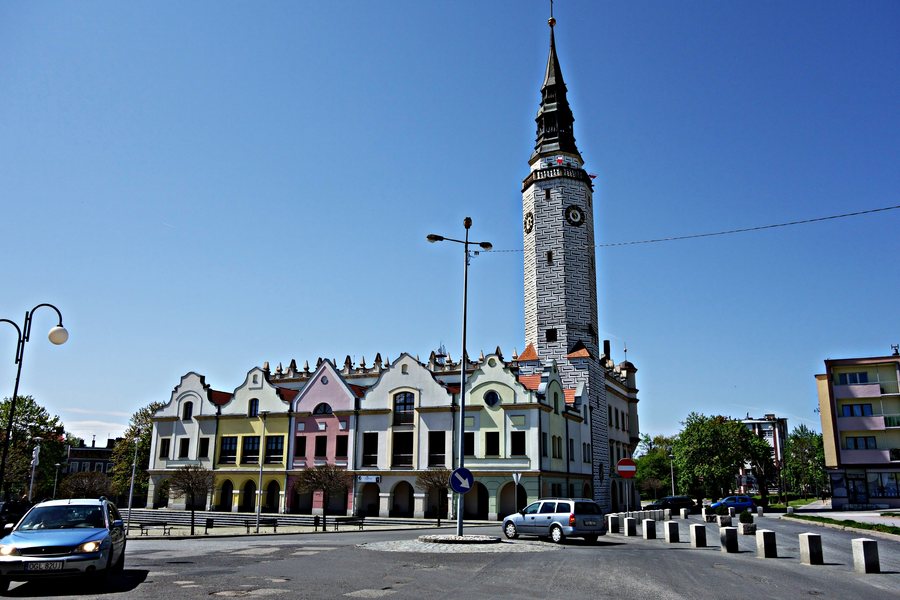
Town Hall, Town Walls and Early Building History
Głubczyce’s Renaissance town hall was built in 1570 on the site of a former merchant’s house dating from the 14th century. The site thus brings together two dates that are far apart: the earlier merchant’s house and the construction of the town hall. Renaissance architecture forms a distinctive part of the town’s history; the older building on the same site also connects the square to the 14th century.
The town walls also date back a long way: they were first mentioned in 1282. They had 19 towers, nine of which survive to this day in varying states of preservation. The surviving towers therefore represent part of the former fortifications, while the number 19 describes the walls’ original features. Anyone interested in the town’s older traces can set this historical feature alongside buildings erected later.
Portals and Baroque Monastery Complex
The parish church dedicated to the Nativity of the Blessed Virgin Mary has three surviving Early Gothic portals with plant decoration dating from the third quarter of the 13th century. There is also stonework inside the church. The portals and the interior work offer different examples of how stone was shaped: plant forms on the outside and other stonework inside. They thus complement the medieval traces of the town walls with sacred art from the 13th century.
The Franciscan monastery complex represents a different era. It was built as a new Baroque complex between 1751 and 1758 on the site of the previous complex. It was designed by Jan Innocenty Töpper and furnished in the Rococo style. The Baroque architectural style and Rococo furnishings refer to two distinct aspects of the complex. Together with the town hall, town walls and church portals, the complex showcases Głubczyce’s diverse historical and artistic influences.
Remembrance and the Town Park
The Jewish cemetery on Wrocławska Street is the only surviving site connected with the modern history of Głubczyce’s Jewish community. It dates back to 1892; the last burial took place in January 1941. These precise dates give the cemetery its own place in the town’s history. The history of the Jewish community is therefore another theme, alongside architectural history and sacred art, that can shape a stay in Głubczyce.
Those who enjoy a park as another point of interest alongside historic buildings will find a different kind of urban space in the town park. It stretches from east to west through the southern part of Głubczyce, on the left bank of the Psina. The park features a fountain with stone animals dating from 1911–1912. Brewery owner Eduard Beyer donated it to the town. Its stone animal figures give the fountain a distinctive sculptural touch.
When choosing a holiday apartment in Głubczyce, you can consider whether you would like to focus your stay on architectural history, sacred art, remembrance or the town park. The town brings these different interests together, so you do not have to limit yourself to just one historical period.
More places: Debrzyca, Pilszcz and Kietrz.
Go to the broader travel overview: Głubczyce.

