
History
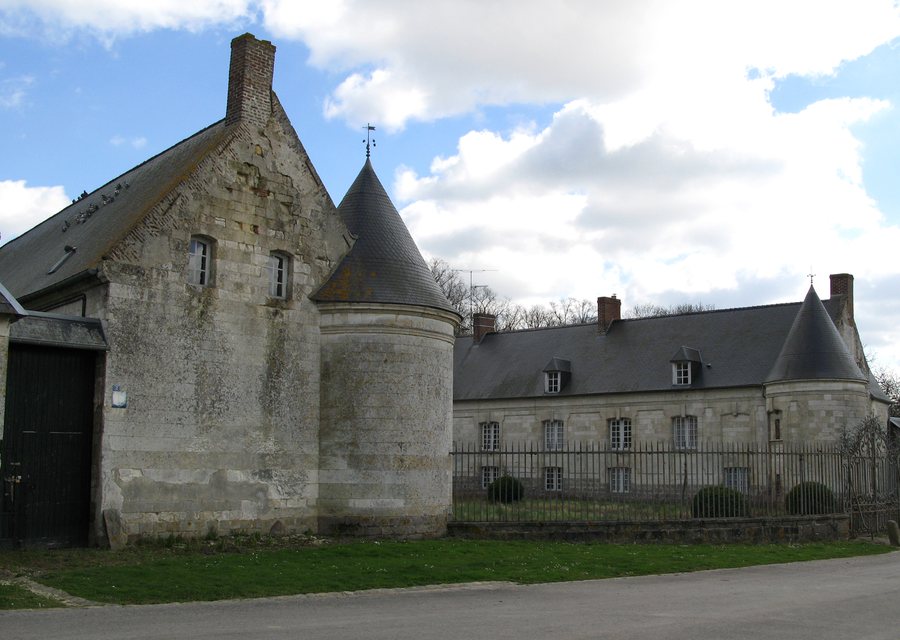
The rectangular central building of the Château de Vadencourt is complemented by two long wings set back at right angles. These end in two round towers with conical roofs and are connected by a wrought-iron grille attributed to Vivarais.
The Vadencourt cemetery also still preserves a 19th-century burial enclosure belonging to the château's lords. Vadencourt has been the seat of an important seigneurie since the Middle Ages.
Landscape
Vadencourt lies at the sources of the Hallue; the Hallue, a small tributary of the Somme, rises in Vadencourt.
Anyone wishing to discover the Château de Vadencourt and the Église Saint-Martin in Vadencourt might consider renting a holiday apartment in Vadencourt.
Culture
The Église Saint-Martin was built in the 18th century. It consists of a single nave without aisles or a transept.
A tombstone inside the Église Saint-Martin commemorates the donations made by Marie-Josèphe Pingré, who died in 1734, for the benefit of the church of Vadencourt.
On the Road
A storytelling walk in the Hallue Valley around Contay and Vadencourt follows a well-preserved section of the historic Way of St. James with an oral tradition. The storytelling walk in the Hallue Valley lasts approximately 2 hours and 30 minutes.
Other destinations: Vaux-Marquenneville, Mailly-Maillet, Machy, Poix, Lucheux, Cayeux-Sur-Mer, Vauchelles-Lès-Domart, Outrebois.

