
Fransu: Holiday apartments and holiday homes
Accommodation in Fransu
The Château de Fransu combines the 18th-century type of the single-storey pleasure château with two short wings set back at right angles. The main building was erected in 1737; around 1830, a stone central avant-corps was added. The Château de Fransu is partially protected as a historic monument. The protected elements include the façades and roofs, the wrought-iron entrance gate, the entire park, the former walled kitchen garden and the gardener’s house. The château is privately owned.
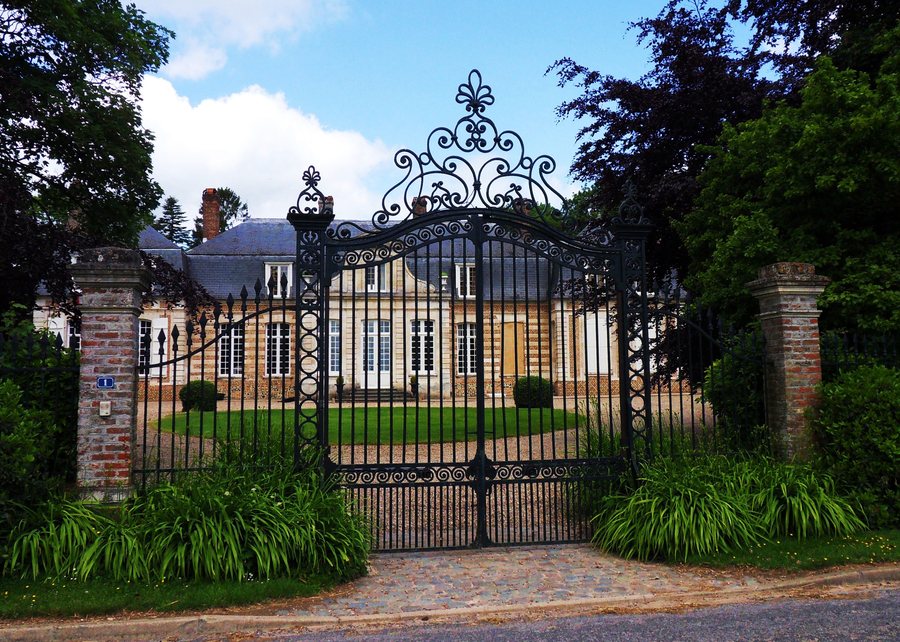 File:Fransu château 1a.jpg
Photo: isamiga76 + Markus3 (Marc ROUSSEL) (retaillage/"crop" et traitement numérique) via Source, CC BY 2.0
File:Fransu château 1a.jpg
Photo: isamiga76 + Markus3 (Marc ROUSSEL) (retaillage/"crop" et traitement numérique) via Source, CC BY 2.0
Anyone wishing to explore Fransu’s architectural and landscape heritage may consider renting a holiday apartment for the purpose.
Landscape and traces of the past
Fransu lies mostly on a plateau. To the west, the village extends into a vast cultivated area called La Plaine. To the north and east, Fransu is bordered by the continuous Bois de Ribeaucourt and Monsieur-de-Berny woodland, while the Vallée Biset forms the commune’s natural southern boundary. Aerial archaeology identified the site of a Gallo-Roman villa on the plateau west of the present-day village.
Below the site of the former medieval château near Rue Madame lies the Muche of Fransu, with an angled gallery and chambers. The Buis de Fransu site is not open to the public. The oldest box tree in Fransu is more than 211 years old, over 3 metres tall and has an artificially shaped form created by topiary pruning.
Church, crosses and memorial sites
Graffiti has been preserved on the exterior of the Church of Saint-Ferréol, some of which presumably dates from the 17th and 18th centuries. The polygonal choir can be dated to the 16th century and is considered characteristic of Picardy’s religious architecture. Four airmen from the crew of the Lancaster that crashed on 24 June 1944 are buried in the Fransu cemetery.
The local architectural and commemorative heritage also includes two crosses. The so-called Croix dite de la Jeunesse was erected in 1863 by the Lesueur family to mark their daughter’s wedding. The Croix de la route de Franqueville at the southern entrance to the village was erected by Marie Robillard at the end of the 19th century.
Village character and geographical setting
Fransu is structured around a north–south axis consisting of Rue du Bon-Blé, Grande-Rue and Rue Heurtevent. In Fransu, Rue du Bon Blé widens in front of the church and opens up a view in the village centre; the preserved usoir and the church form a local sequence of heritage elements.
The D 130 connects Franqueville with Mesnil-Domqueur and is part of the road network of the commune of Fransu.
Other village pages in this selection: Mailly-Maillet, Doullens, Suzanne, Ponches-Estruval, Frettecuisse, Crécy-En-Ponthieu, Camon, Fossemanant
For the overarching travel overview: Somme.

