
Anyone wishing to rent a holiday apartment in Oigny-en-Valois can keep the village in mind as a destination when planning their trip.
Culture and History
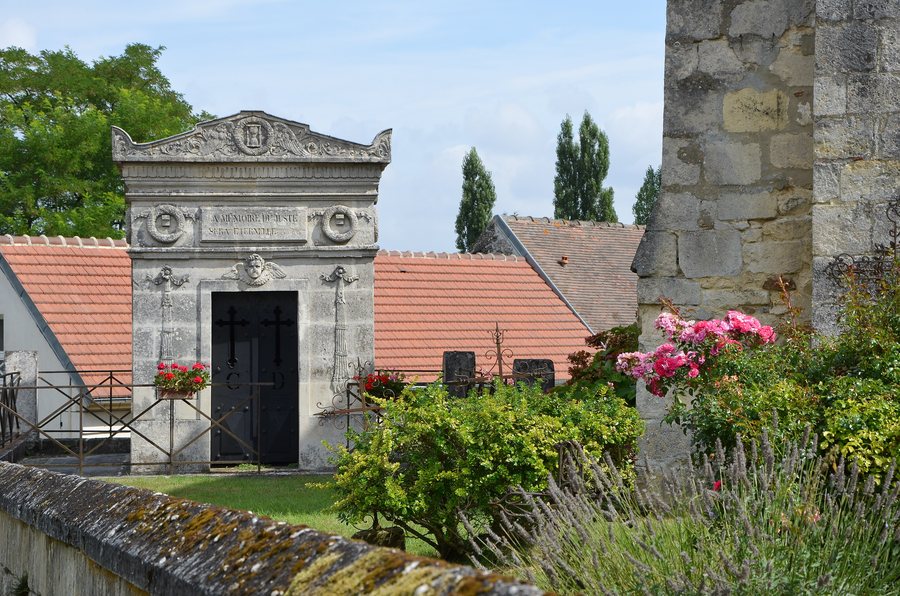
The Chapelle funéraire du Général Charpentier was built in the early 19th century to house the remains of the imperial general Henri François Charpentier, who died in 1831. The Church of Saint Martin has an elongated layout with a three-bay nave, a choir, a south aisle and a single chapel.
The Croix de Cimetière (ancien Calvaire) is also one of the village's historic landmarks. The 14th-century work is classified as a historic monument and was probably moved to the new cemetery at the end of the 19th century. It is decorated with a crucified Christ and the Virgin Mary. The painting “L’Éducation de la Vierge” was created in the first half of the 19th century.
The municipal lavoir of Oigny-en-Valois dates from the 19th century, is located at the southern exit of the village along the D 1380 and is fed by a spring. Visitors can walk around the lavoir and take photographs.
Landscape and Trails
Oigny-en-Valois is located in a clearing in the Massif de Retz. Agricultural plains surround the village of Oigny-en-Valois. From here, numerous hikes lead to the forest paths and the Ourcq Canal.
Several named trails connect the village with its surroundings: the Route Européenne D'Artagnan passes through the village of Oigny-en-Valois. The GR 11, also known as the Tour d'Ile de France, is one of the hiking trails connected with Oigny-en-Valois.
The Laie de la Poudrerie (chemin de la Briquetterie) leads to Les Fonds and offers an impressive sunrise early in the morning as well as a beautiful view of the village of Dampleux.
More village pages: Monthenault, Rosay, Martigny-Courpierre, Rogny, Caulaincourt, Merval, Ostel, Craonnelle

