
Those who have chosen Troarn as their travel destination may wish to rent a holiday apartment.
Nature
The Marais de la Dives offer walks and nature experiences in every season. At the end of the 13th century, the monks of Troarn had the Divette and other drainage channels dug. Along the Dives, they built dykes to contain flooding.
Trails and Leisure
The 156-kilometre route “Caen la mer et ses rivages 2” is described as the largest loop. It passes the Abbey of Saint-Martin de Troarn and is signposted with blue markings by Caen la mer.
Le Vallon has a children’s playground and a boules court.
Le Vallon is ideal for walking, picnicking and outdoor activities.
Culture and History
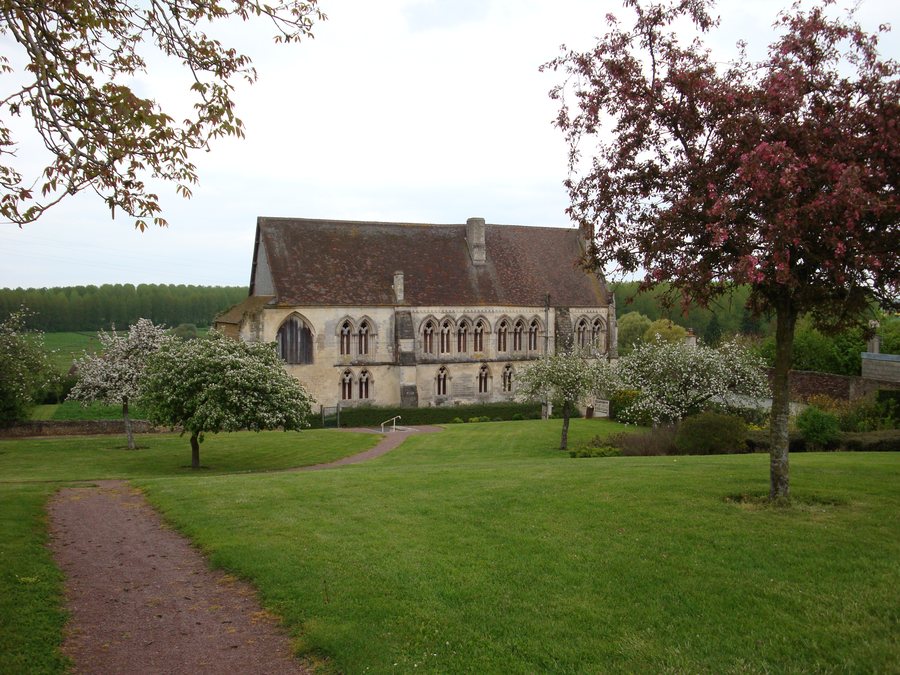
The Abbey of Saint-Martin de Troarn was founded in 1048 and dismantled during the French Revolution. The most important surviving relic of the abbey is the building adjoining the southwestern part of the former cloister.
The Church of Sainte-Croix is the only surviving relic of Troarn’s three historic religious buildings. It was built in the 19th century according to plans by the architect Alphonse Simil and is open to the public. The church contains the tomb of the knight Hugues. This tomb is a sarcophagus that was found in 1909 among the remains of the abbey church of Saint-Martin.
The Manoir de Tourpes in Bures-sur-Dives near Troarn, in the Calvados département, dates from the 16th century and is partially listed as a historic monument.

