
The confessional of the Eglise Saint-Martin is particularly rich in detail: it is made of profiled, carved and pierced oak wood. The pilasters feature Composite capitals, the upper part of the door contains pierced foliage, and a curved pediment is topped by a bust with a cross.
Anyone wishing to rent a holiday apartment in Autingues has the village in mind as a travel destination.
The historic site Abbaye Saint-Médard d'Andres is located in the immediate vicinity of Autingues. The wider surrounding region is also home to Fort Nieulay, a fort, Calais Harbour, a historic site, and Fort Risban, a fort.
Landscape
Autingues lies at the gateway to the Parc Naturel Régional des Caps et Marais d’Opale. The wider surrounding region of Autingues includes Plage du Cap Blanc-Nez, a beach, Plage de Petit-Fort-Philippe, a beach, and Plage des Bains, a beach. Cap Blanc-Nez, a cape, is also located there.
Tours
The tour “Chapelle St Louis en partant d'Autingues” begins at Place d'Autingues; a car park is indicated there.

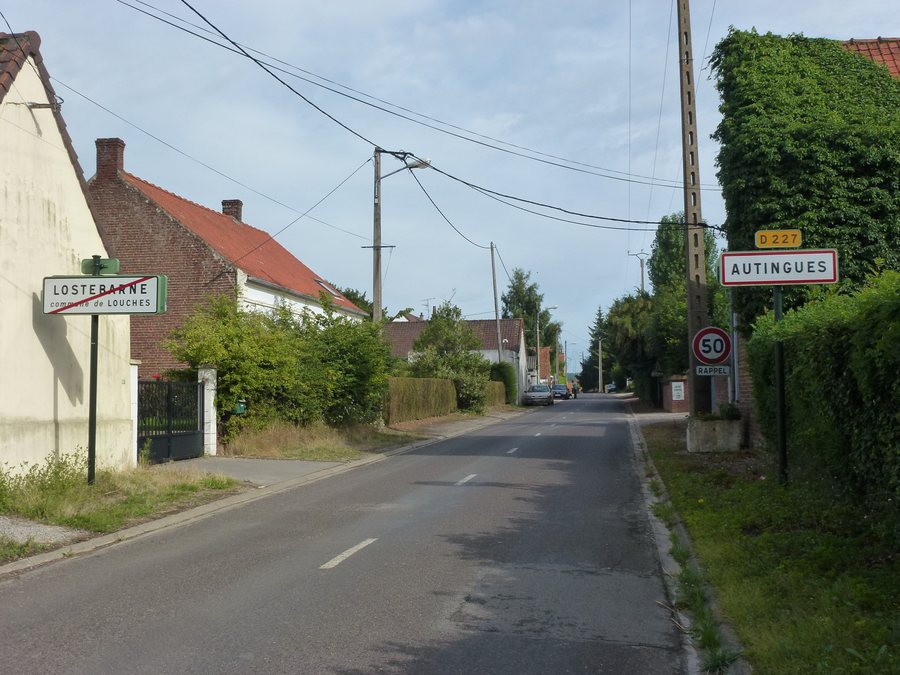
_city_limit_sign.JPG)