
Culture
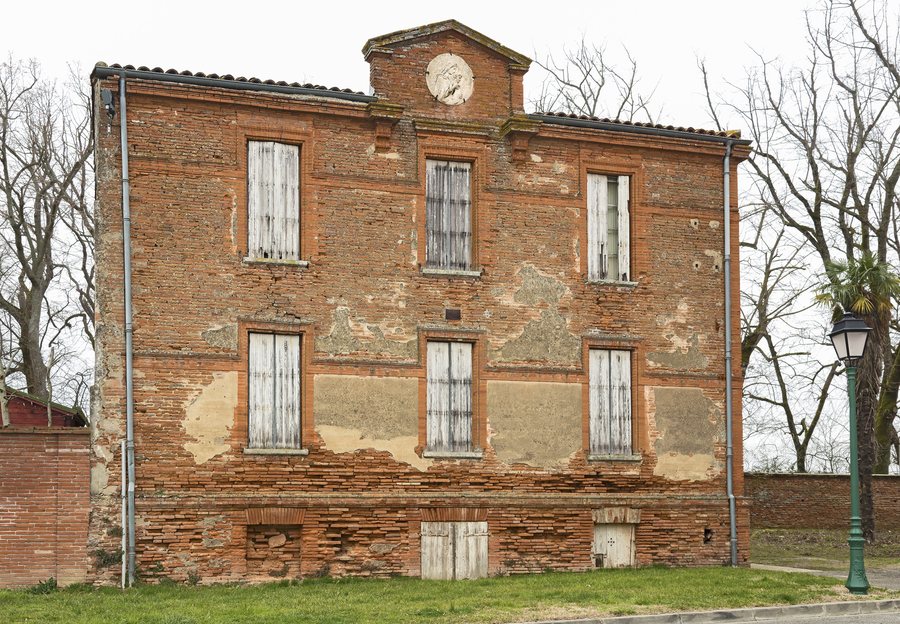
Lanta is a village built of Toulouse bricks. In the Middle Ages, it was the suburb of the castrum of Hunaud de Lanta, of which only the castle mound complex remains today. The village’s former castle church, Notre-Dame de l’Assomption, was first mentioned in 1217; the present-day Church of Notre-Dame de l’Assomption was completed in 1852 under the direction of the architect Urbain Vitry.
In the Church of Saint-Sernin de Sanissac, a bell mould discovered during the 1998 excavations has been preserved on site. The present-day Church of Saint-Anatoly dates predominantly in its entirety from the 16th century. It is built of brick and has a façade bell tower with three sound openings, typical of the Lauragais. A Stations of the Cross ensemble created by Régis Vialaret, consisting of wooden crosses arranged in a square, also surrounds the church.
History
The Cathar-related heritage of the Hunaud family in Lanta is connected with the tragedy of Montségur. The history of the village can be explored along the Rue de la République as far as the Place de la Marianne. The railway line from Lanta was closed in 1947 and dismantled in 1950.
Events
The Lanta BD Festival has been held since 2016. It is organised annually as an open event for everyone by the Lantabulles association and brings together national, international and local authors. The Saint-Anatoly community also celebrates its own patronal festival.

