
When planning a stay in Brax, you may wish to focus on renting a holiday apartment.
Culture and History
The Château de Brax has been listed as a Monument historique since 26 November 1946. During the Second World War, it was the headquarters of a resistance network led by M. Taillandier.
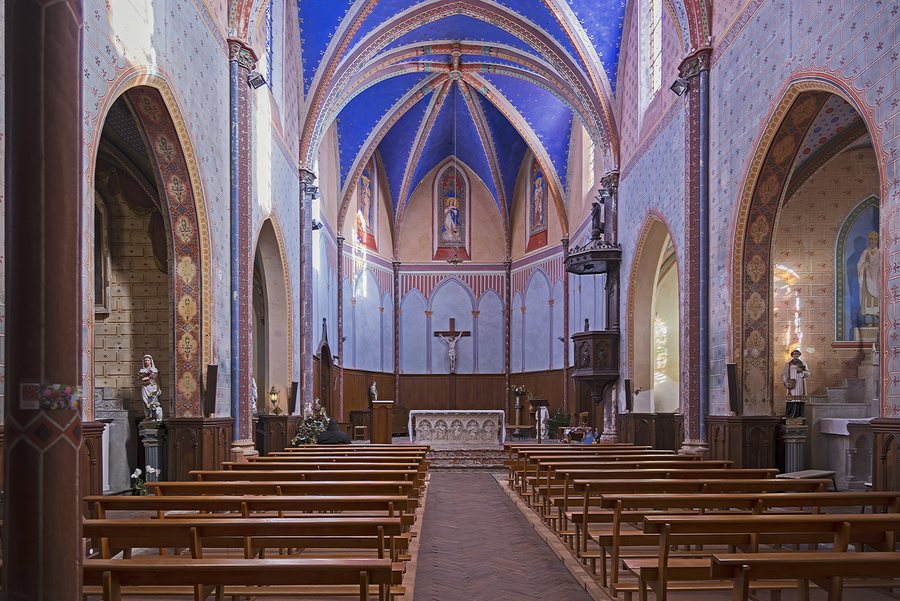
Brax Church was inaugurated in its present form in 1865. Its largest bell was cast in 1903 and bears the inscription „Maria SPES Nostra“.
The Stèle Morhange in Brax was inaugurated on 28 October 1990. It commemorates the activities of the intelligence group codenamed „MORHANGE“ at the Château de Brax from 1940 to 1945.
The washhouse in Brax dates from 1895. At Couget, a former undeveloped washhouse in Brax also served as a watering place for animals.
Geographical Setting
Brax is connected to the rail network via Brax-Léguevin railway station on the Toulouse–Auch line.
Nature
The designation of the Forêt communale de Brax dates from 11 February 2021; its area is 11.34 hectares. It is regarded as a reservoir of biological diversity and is managed in a way that reconciles nature conservation, forestry, and public access.
The ENS „Forêt de Bouconne“ consists of five sections and also includes the municipality of Brax.
Surroundings
The surroundings of Brax include the Saint-Michel-du-Touch archaeological site, the Musée campanaire de L'Isle-Jourdain, and the Base de loisirs de Bouconne.
The wider regional area around Brax includes the Bazacle archaeological site, the Saint-Raymond Museum, the Jardin botanique Henri Gaussen, the Jardin Royal, and the Jardin des plantes.

