
Vacation apartment in Rio Grande do Sul
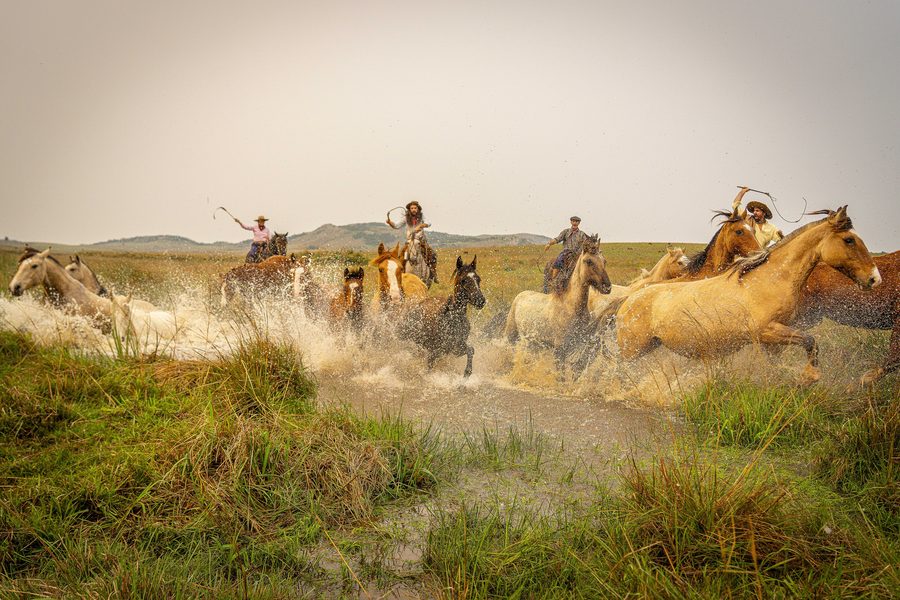 Gauchos lead horses across the open Pampa landscape in Rio Grande do Sul.
Photo: Jorge Lansarin via Wikimedia Commons, CC BY-SA 4.0
Gauchos lead horses across the open Pampa landscape in Rio Grande do Sul.
Photo: Jorge Lansarin via Wikimedia Commons, CC BY-SA 4.0
Rio Grande do Sul is interesting for families because, in a state with a strong identity of its own, you can choose very different kinds of travel: the coast and lagoons, Serra Gaúcha, the Pampa, and the cities each mean different days, different routes, and different priorities. That is exactly why it pays to choose your base according to the landscape and the kind of trip you want, rather than by place name alone.
Quick facts about Rio Grande do Sul
- Brazil’s southernmost state.
- Known for Gaucho traditions, chimarrão, churrasco, and a blended cultural identity.
- The landscape ranges from coast and lagoons to hills, wine country, and the Pampa.
- Porto Alegre is a useful urban starting point for culture and logistics.
How to choose the right family base
If you are traveling with children, the key question is what you want your holiday to be about: beach and water, views and excursions, open landscapes, or a practical city anchor. In Rio Grande do Sul, each of these choices leads to a different way of experiencing the state.
- Choose the coast if beaches and lagoons should shape the daily rhythm.
- Choose Serra Gaúcha if hills, wine country, and outings should come first.
- Choose the Pampa if open landscapes and a slower pace matter.
- Choose a city base if you want to combine culture with easier travel.
That makes the accommodation part of the travel experience: a coastal town keeps you closer to the sea and lagoons, a Serra location keeps you closer to views and landscape, and a city base gives you more structure for culture and route planning.
Regions and places in Rio Grande do Sul
Coast and lagoons
If you are looking for sea, wind, and a relaxed daily rhythm, the coast is the obvious choice. Places for beach and lagoon days include Arambaré, Arroio do Sal, Capão da Canoa, Cidreira, and Imbé.
Also part of this coastal choice are Osório, Rio Grande, Rio Grande, Santa Vitória do Palmar, and São José do Norte.
Other places with a coastal or lagoon rhythm are São Lourenço do Sul, Tavares, Torres, Tramandaí, and Xangri-Lá.
Serra Gaúcha, wine country, and hills
If you would rather combine hills, wine country, and excursions, Serra Gaúcha is the right side of the state. Places that fit this choice include Ametista do Sul, Bento Gonçalves, Cambará do Sul, Canela, Carlos Barbosa, Caxias do Sul, and Caxias do Sul.
Added to these are Farroupilha, Flores da Cunha, Garibaldi, Gramado, Igrejinha, Igrejinha, Ivoti, Nova Hartz, and Nova Pádua.
Other Serra places are Nova Petrópolis, Nova Prata, Picada Café, Pinto Bandeira, Soledade, São Francisco de Paula, Três Coroas, Taquara, and Veranópolis.
Pampa and open inland areas
The Pampa stands for open grassland and is closely linked to Gaucho culture and cattle ranching. It suits families looking for a quieter, more expansive side of the state.
That open side can be seen in Alegrete, Bagé, Caçapava do Sul, Candiota, Chuí, and Jaguarão.
Also suitable are Maçambara, Manuel Viana, Palmitinho, Quebracho, Rosário do Sul, and Santana do Livramento.
Further open-land places include São Borja, São Gabriel, São Luiz Gonzaga, São Pedro do Sul, and Uruguaiana.
Cities and central bases
If you want to combine culture with a practical location, you will find many good anchors for a family-friendly stay here. This selection is mainly intended as a base for culture and easier travel.
Useful first bases include Alto Uruguai, Antônio Prado, Arroio do Meio, Arroio dos Ratos, Barreto, Bom Princípio, Cachoeira do Sul, Cachoeirinha, Camaquã, Campo Bom, Canguçu, Canoas, Caraá, and Carazinho.
Other central bases are Chapada, Colinas, Coronel Bicaco, Cotiporã, Cristal, Cruz Alta, Dois Irmãos, Eldorado do Sul, Encantado, Engenho Velho, Erechim, Estância Velha, Esteio, and Estrela.
Also useful are Feliz, Floriano Peixoto, Frederico Westphalen, Getúlio Vargas, Giruá, Gravataí, Guaíba, Guaporé, Ibirubá, Ijuí, Itapuã, Itaqui, Itati, and Lagoa Vermelha.
In addition, Lajeado, Machadinho, Marcelino Ramos, Montenegro, Morro Redondo, Muçum, Não-Me-Toque, Nova Bassano, Novo Hamburgo, Novo Machado, Palmeira das Missões, Passo do Cação, Passo Fundo, and Pelotas fit well.
In addition, Pinhal, Pontão, Portão, Porto Alegre, Porto Alegre, Protásio Alves, Restinga Seca, Rodeio Bonito, Santa Cruz do Sul, Santa Maria, Santa Rosa, Santiago, Santo Ângelo, São Jerônimo, and São João do Polêsine are good anchors for a family-friendly stay.
Finally, São Jorge, São Leopoldo, São Miguel das Missões, Sapiranga, Sarandi, Tapejara, Tapera, Taquari, Telmo Fontoura, Teutônia, Triunfo, Várzea do Cedro, Venâncio Aires, Vera Cruz, and, as another practical anchor, Viamão are included.
What this means for choosing your accommodation
For families, the choice in Rio Grande do Sul becomes clearer when you pick accommodation according to the landscape feeling you want: coast for beaches and lagoons, Serra for hills and outings, Pampa for space and calm, city for culture and more practical routes. That way, the base becomes part of the travel experience rather than just an address on the map.
- Coast: good if beaches and lagoons should shape the daily rhythm.
- Serra Gaúcha: good if hills, wine country, and outings should shape the stay.
- Pampa: good if open landscapes and more peace matter.
- City: good if culture and easier routes are the priority.
Frequently asked questions about Rio Grande do Sul
Is Serra Gaúcha suitable for wine, views, and excursions?
Yes. Serra Gaúcha combines hills, wine country, and excursion options, making it a fitting choice for families who want to experience the landscape.
What does the Pampa represent in Rio Grande do Sul?
The Pampa is the state’s open grassland. It is closely tied to Gaucho culture and cattle ranching and creates a very wide landscape feeling.
What role do churrasco and chimarrão play in Rio Grande do Sul?
They are part of the region’s identity and make the culture of Rio Grande do Sul very tangible. Together with Gaucho traditions, they shape the state’s image.
Is Porto Alegre a practical base for a cultural trip in Rio Grande do Sul?
Yes. Porto Alegre is a useful urban starting point if you want to combine culture with a practical location.
Are the coast, lagoons, and Serra Gaúcha clearly different in Rio Grande do Sul?
Yes. The coast and lagoons offer their own beach-and-water atmosphere, while the Serra is more shaped by hills, wine country, and excursions.

