
Discover Torrevieja: Salt Lagoons, Coast and Culture
Accommodation in Torrevieja
The almost 7-kilometre-long Vía Verde de Torrevieja connects an urban promenade with a nature trail along the Laguna Rosa. In the Parque Natural de las Lagunas de La Mata y Torrevieja, signposted paths lead through saltwater habitats; viewpoints for birdwatching and picnic areas complement the natural setting. The protected wetland consists of two saltwater lagoons: the Laguna de Torrevieja, known as the Laguna Rosa, and the Laguna de La Mata. The pink colour of the Laguna de Torrevieja is caused by the high salt concentration and microorganisms such as Dunaliella salina and Artemia salina.
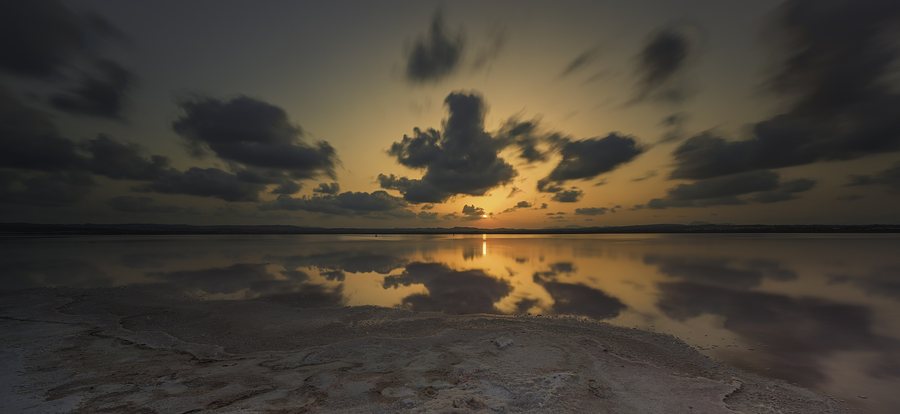 File:Sunset reflections of Torrevieja (Unsplash).jpg
Photo: Clemente Ruiz Abenza netwalker via Wikimedia Commons, CC0
File:Sunset reflections of Torrevieja (Unsplash).jpg
Photo: Clemente Ruiz Abenza netwalker via Wikimedia Commons, CC0
Nature
The landscape also includes the 17-hectare Paraje Natural Molino del Agua, with mobile coastal dunes as well as stabilised areas covered with pine trees. The Mirador Turístico Torre del Moro is located in a 23,000-square-metre park and offers extensive views over the Mediterranean coast, Isla de Tabarca and Isla Grosa. The coast of Torrevieja combines urban beaches with comprehensive facilities and bathing areas in natural surroundings. Many beaches are accessible and some have quality awards such as the Q de Calidad Turística or ISO certifications. The Senda Peatonal de La Mata connects the centre of La Mata with Parque Molino del Agua and has adapted sections for walking and sports activities. Different trail lengths, landscapes and means of transport help you organise your daily planning around different priorities.
History and Salt
Salt production in the Salinas de Torrevieja is still active. The La Mata lagoon is used to concentrate the brine, while crystallisation and salt extraction take place in the Torrevieja lagoon. The Eras de la Sal are a historic salt storage and loading complex dating from the 18th century, which remained in operation until 1958. The Certamen Internacional de Habaneras y Polifonía was traditionally held at the Eras de la Sal and is recognised as an event of international tourist interest. The Salinas de Torrevieja can be visited by tourist salt train, on foot or by bicycle; advance reservations are required for the walking and cycling tours.
The Torre de la Mata formed part of the coastal defence system and also served to protect the saltworks and control the former landing site where salt and other products were loaded. The Torre del Moro is a round coastal watchtower dating from the 14th to the 16th century and has been protected as a Bien de Interés Cultural since 1985.
Culture
The Museo del Mar y la Sal displays objects related to salt production, artisanal fishing, coastal shipping and boatbuilding. The collection also includes archaeological material, historical photographs, ship models and salt-related handicrafts such as traditional salt boats. In the floating museums, visitors can go inside the S-61 Delfín submarine and learn about life on board; the Albatros III patrol boat is moored alongside it.
The Casino de Torrevieja Cultural Society was founded in 1867, while its present building, dating from 1896, is an example of late 19th-century architecture. Visitors can see a coffered ceiling in the main hall, a room dedicated to the “Generation of 1898” and a Neo-Nasrid Moorish hall built in 1901 by Andalusian craftsmen. The Iglesia de la Inmaculada Concepción was first built in 1789 and rebuilt from 1844 onwards after the 1829 earthquake, using materials from the former watchtower that gave Torrevieja its name. The neoclassical church contains works of art; the Purísima Concepción, the patron saint of Torrevieja, is venerated there.
The Iglesia del Sagrado Corazón de Jesús stands on the site of a chapel built in 1922. The present building was inaugurated in 2009 and reinterprets traditional elements in a contemporary way. The Iglesia de Nuestra Señora del Rosario in La Mata has origins in the 18th century; the Fiestas held there annually around 7 October in honour of the Virgen del Rosario include religious events, offerings and a traditional procession through the streets of La Mata.
Festivals and Traditions
Semana Santa in Torrevieja is recognised by the Generalitat Valenciana as being of tourist interest. It involves 14 brotherhoods and is distinguished by religious processions through the town centre as well as by its artistic heritage. The Feria de Mayo is recognised as a festival of tourist interest by the Valencian Community and takes the form of an Andalusian-style celebration with marquees, Sevillanas, flamenco clothing and equestrian performances.
A celebration in honour of the patron saint of fishermen includes a maritime procession through Torrevieja Bay, during which the statue is accompanied by boats, reflecting the town’s close connection with the sea. Torrevieja’s major festivals include concerts, cultural activities, paella competitions, parades with giant figures and other traditional events.
City Parks and Cuisine
Parque de las Naciones is an urban green space of more than 35,000 square metres, designed in the shape of a map of Europe. An artificial lake, landscaped gardens, footpaths and a children’s play area with a well-known dragon slide characterise the park. Parque de Doña Sinforosa combines landscaped gardens, trees and quiet areas in an urban setting near the sea. The accessible public facility includes an ornamental pavilion, a children’s area and benches.
Typical dishes from Torrevieja include Caldero, a creamy rice dish prepared with rock fish and served with aioli, and Pulpo seco, a traditional preparation made from dried octopus that is closely connected with the town’s maritime identity. Torrevieja’s year-round gastronomic events programme includes, among others, Pastel y Café, Menús de Cuaresma, De Tapas and Arroces de Torrevieja.
As another destination in the location selection, Torre La Mata is included. Other places on the same higher-level tier are Polop, La Vall De Gallinera, Granja De Rocamora, Monóvar, El Mojón, El Tosalet and Orihuela.
To the higher-level travel overview: Alicante.

.jpg)