
Pinoso – Marble, Wine and Nature Inland
Accommodation in Pinoso
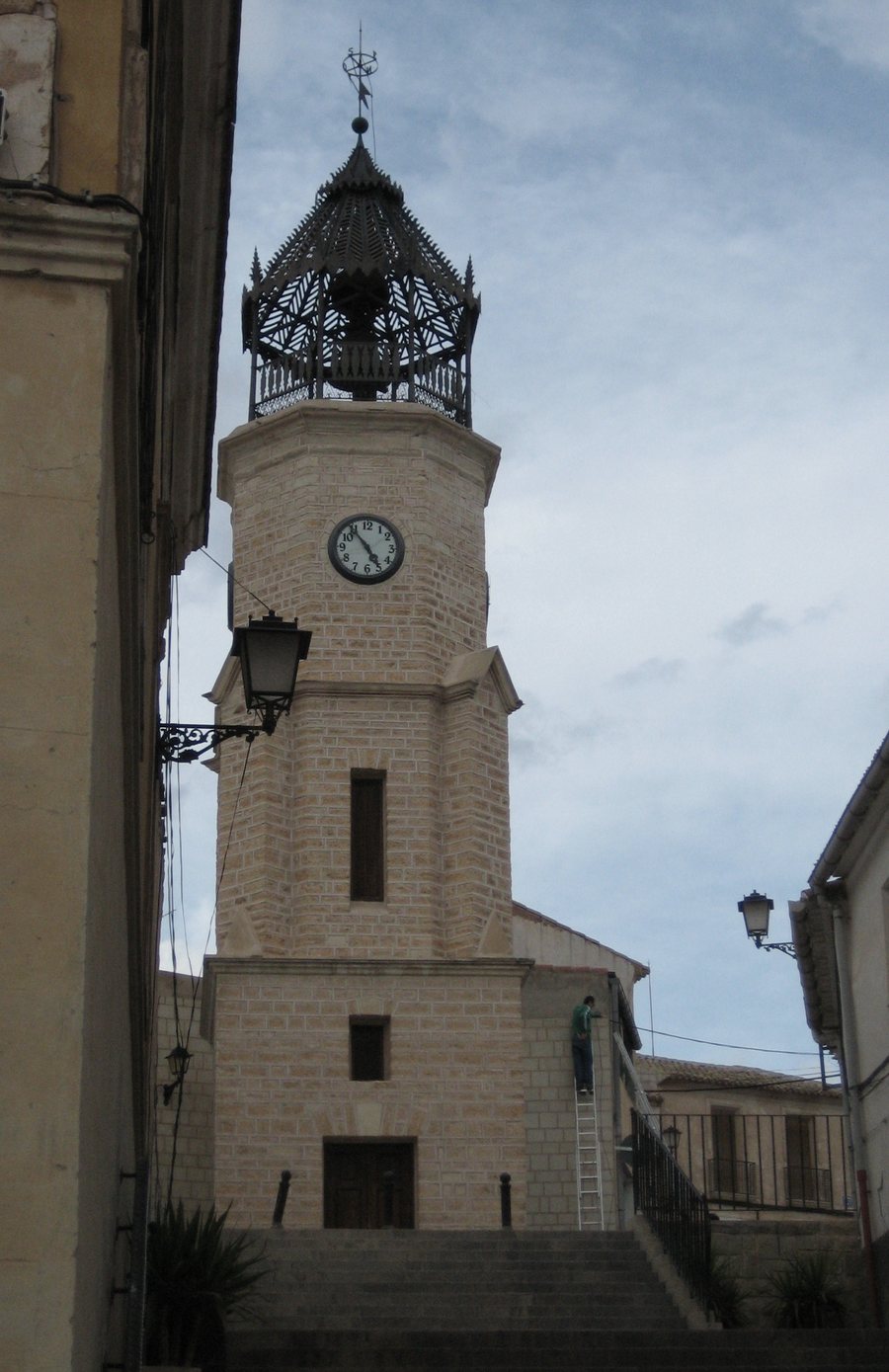
In the historic centre of Pinoso stands the Torre del Reloj, built at the beginning of the 20th century. Inside, a clock dating from 1889 still operates with its original mechanism; its weights are wound by hand every 24 hours. During a visit inside, you can experience the impressions and sounds of the hundred-year-old clock at close quarters.
Culture
The Iglesia Parroquial de San Pedro Apóstol was founded in 1739 and acquired its current appearance in 1888. Casa de Don Pedro houses the Tourist Information Office, the Cuina Didáctica, a training space for gastronomy, an inner courtyard and a multipurpose room for events. The Ermita de Santa Catalina is carved into the rock of a small hill and houses the image of the neighbourhood's patron saint, Santa Catalina.
Pinoso's dry-stone heritage includes retaining walls and shelters for agricultural or quarry workers associated with former mining. The traditional construction of dry-stone walls is represented in Pinoso, among other features, by retaining walls and Cucos, and is included on UNESCO's Representative List of the Intangible Cultural Heritage of Humanity.
Nature
The botanically fascinating Senda dels Gal·lers begins at the Aula de la Naturaleza on Monte Coto. The marked, almost level circular route is 3 km long. The Centro de Interpretación Ambiental Monte Coto includes a specially protected zone incorporated into a project for the conservation and protection of amphibian habitats.
At the Centro de Interpretación Ambiental Monte Coto, there are interconnected ponds where you can observe, among other species, midwife toads, common toads, Iberian painted frogs and common frogs. Every weekend, the Aula de la Naturaleza on Monte Coto organises workshops, walks and environmental days for the whole family. On designated paths, you can walk through restored quarries in Pinoso and observe native species used for revegetation, as well as water points for wildlife.
Some former mining pits have been adapted for ecological restoration, environmental interpretation and environmental education, as well as for sociocultural activities, including theatre performances. A visitor route on Monte Cabezo de la Sal leads to salt-bearing gullies, flora micro-reserves and caves, while presenting the area's natural and cultural-historical values.
Wine and Cuisine
La Mostra de la Cuina del Pinós is a gastronomic event held annually in February, featuring traditional cuisine and products from local, seasonal production. Local dishes such as Gachamiga, Cocido con faseguras, Ajos pinoseros with Picat, Gazpachos and the particularly well-known Arroz con conejo y caracoles are presented.
Visitors can tour the facilities of various wineries in Pinoso and the surrounding area and learn about the wine-making process, from receiving the grapes to bottling. Wine tastings are available during visits to the wineries in Pinoso and the surrounding area.
The Casa del Mármol y del Vino offers visitors sensory experiences centred on Pinoso's marble and wine traditions, including grape harvesting, stone extraction, cellars and the properties of marble. Visits to the Casa del Mármol y del Vino must be booked at least 15 days in advance; groups must consist of at least 10 people.
Routes
The Ruta de Maxi Banegas passes through places and buildings of tourist and cultural interest in the centre of Pinoso and is associated with the work of the local poet Maxi Banegas. The circular route, visitor route and multi-location connection offer different formats that you can consider alongside one another when planning your own day.
When selecting another location, Rodriguillo can also be considered. The Ruta de los Tres Pueblos del Interior connects La Romana, Pinoso and Algueña and passes through landscapes with vineyards and craft traditions inland in the province of Alicante.
For the overarching travel overview: Alicante.
More destinations
More places at the same destination:

