
El Verger – Nature, Culture and Holiday Apartments
Accommodation in El Verger
El Verger occupies part of the delta of the Girona River. The nutrient-rich, water-rich soils there favour the cultivation of citrus fruits and vegetables.
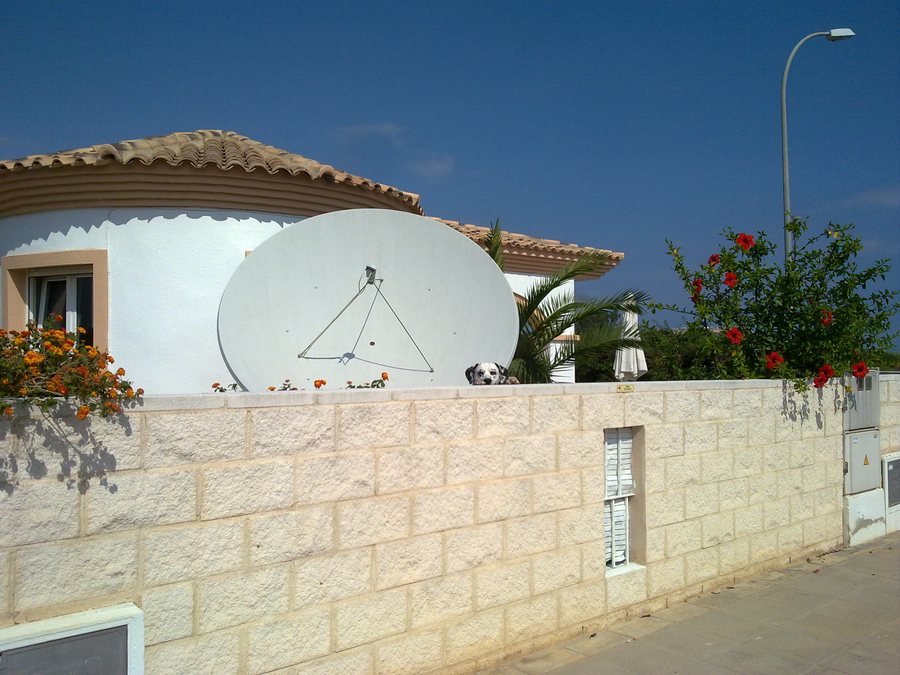 File:El Verger, 03770, Alicante, Spain - panoramio (1).jpg
Photo: wetcrow via Wikimedia Commons, CC BY 3.0
File:El Verger, 03770, Alicante, Spain - panoramio (1).jpg
Photo: wetcrow via Wikimedia Commons, CC BY 3.0
Nature
The Serra de Segària extends for six kilometres and offers views of the Girona River, the Vall de Gallinera and the Marjal de Pego-Oliva Nature Park. The Serra de Segària is home to protected, endemic, rare or endangered flora. The area is covered by the LIC Valls de la Marina and ZEPA Montañas de la Marina protection designations.
The Parc Públic L’Ombria de la Segària has several picnic areas and a children’s play area and serves as a starting point for hiking trails in the Serra de Segària. The PR-CV 415 trail runs through the Serra de Segària; together with the local trails SL-CV 109 and SL-CV 161, these paths connect the natural areas of the sierra. Visitors use them to access caves, shafts, summits and settlement sites, as well as for hiking.
Paths
The climbing area of the Serra de Segària has an information board showing the locations, names, difficulty levels and average heights of the routes. Two signs point the way from the public park and the car park to the climbing area.
The climbing area at Penya Roja in the La Cara de l’Indi section has twelve climbing routes. A local circular trail from the Parc Públic L’Ombria de la Segària runs through the Penya Roja area and close to the Penya Roja Iberian settlement; it also provides access to the La Cara de l’Indi climbing school.
The Camino de Santiago passes through El Verger and then continues to Almansa. The Camino de Santiago passing through El Verger is signposted; places where pilgrims can have their pilgrim credentials stamped are located at the town hall, tourist information office, church and some businesses.
Routes
The Camino Natural Vía Verde de Dénia follows the disused Carcaixent–Dénia railway line and passes through an agricultural landscape dominated by citrus cultivation. The Vía Verde de Dénia is an approximately 6.5-kilometre route along a former railway line connecting Dénia and El Verger, which can be used on foot or by bicycle. There are rest areas and viewpoints along the Vía Verde de Dénia.
The Entre Tarongers route experience passes through Pedreguer, Ondara and El Verger and suggests an easy walk along lightly trafficked paths and roads through agricultural citrus-growing landscapes.
The Ruta dels Riuraus of Marina Alta, which includes El Verger among its participating municipalities, is a rural, cultural and gastronomic route showcasing the heritage of raisin production in the province of Alicante. Its local route includes around ten riuraus in different architectural forms.
Other places
Other places for planning your own trip: Montesol, Altea, Relleu, Beniarbeig, Murla, Daya Nueva, Pedreguer, Jacarilla.
Culture
The Cova Fosca lies at the eastern end of the Serra de Segària and comprises a cave chamber approximately four metres wide and seven metres high, with two chambers, a long, wide gallery and further side passages. In the Neolithic period, it was used as a dwelling; in the Chalcolithic period, as a burial cave; and later, during the Iberian period through to Roman times, as a sanctuary.
The Casa del Trapig was a 16th-century sugar mill where sugar cane grown locally was processed into molasses; it was later used as an oil mill. Remains of sugar-cane processing found at the Casa del Trapig include clay containers and three millstones, one of which has a diameter of more than 1.70 metres.
The Torre del Palau dels Medinaceli is the only surviving remnant of the vanished palace of the Duke of Medinaceli. The Església Neoclàssica dates from the early 18th century; its façade is dated 1732, and it has a single-nave layout with five interconnected side chapels.
The Torre del Blanch de Morell, also known as Torre de la Cremadella, probably dates from the late 13th or 14th century and was designed more as a residence than as a defensive tower. The Mur àrab are the surviving remains of a rectangular complex dating from the 14th to the 16th century on the Girona River.
The Casa de la Senyoreta de la Bassa is an early-20th-century building with a ground floor and two upper floors, as well as an inner courtyard adjoining the Mare de Déu del Rosari church. The Fàbrica de Sabó is now used as a cultural centre where various activities are organised.
For the higher-level travel overview: Alicante.

.jpg)