
Discover Calpe: Peñón de Ifach, Coast and Holiday Apartments
Accommodation in Calpe
The Peñón de Ifach is a limestone rock covering approximately 50,000 m², rising to a height of 332 metres and extending for one kilometre. Its plant community comprises nearly 300 species, including Valencian endemics that are among the most endangered plants in the Iberian flora.
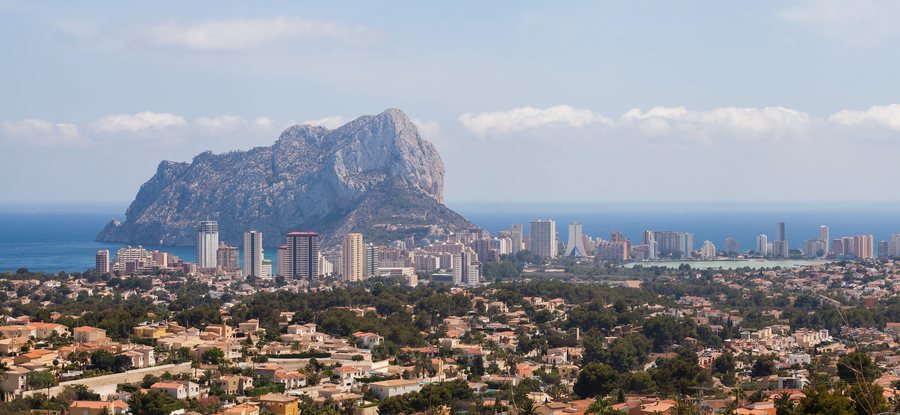 File:Peñón de Ifach, Calpe, España, 2014-07-01, DD 07.JPG
Photo: Diego Delso via Wikimedia Commons, CC BY-SA 4.0
File:Peñón de Ifach, Calpe, España, 2014-07-01, DD 07.JPG
Photo: Diego Delso via Wikimedia Commons, CC BY-SA 4.0
Nature and Trails
The Paseo Ecológico is made of natural stone, covers 30,600 m² and runs for almost one kilometre. Along the route, planted areas, palm trees and various plant species alternate with viewpoints on natural breakwaters. The Paseo Ecológico offers views of the steep walls of the Peñón de Ifach, the native flora and fauna, and the Mediterranean Sea.
The route around the Peñón de Ifach takes approximately 2 hours and 30 minutes and comprises two sections. The Paseo Princesa de Asturias begins at Cala El Racó, at the foot of the Peñón de Ifach near the fishing port. Different route lengths and the approximate duration of the route give the excursions a clear timeframe.
Las Salinas de Calpe is a lagoon of tombolo origin, formed through the development of a double beach barrier. Up to 173 breeding and migratory bird species have been recorded in the surrounding area. For birdwatching, the site has an adapted, easily accessible semicircular path.
Coast and Water
At Cala El Racó, at the foot of the Peñón de Ifach, an adapted underwater trail can be used during the summer season. The trail is 120 metres long and has nine information panels located approximately one metre below the water's surface. A one-hour boat trip from the port of Calp passes through the bay and offers views of the Peñón de Ifach and the town of Calp from the sea.
History and Culture
Forat de la Mar consists of openings in the walls of Calp dating from the 18th century. They were opened after the threat of piracy had ended and provided access to the Arrabal. In the past, the fishing skippers gathered there every morning to assess the condition of the sea and then decide whether they could set out.
The name Torreó de la Peça derives from a fort demolished in the 20th century, which once housed a cannon. The Iglesia Antigua was built at the beginning of the 15th century over an older chapel. The fortified building displays Gothic and Mudejar styles and originally combined religious and defensive functions. Inside is a 15th-century tempera panel depicting Saint Anthony the Abbot and Saints Cosmas and Damian.
Baños de la Reina is a Roman coastal archaeological site in a quiet bay sheltered by the Peñón de Ifach. The site is distinguished by its Roman architectural design and mosaics. The pools carved into the coastal rocks were used to supply fresh fish and gave the site its name.
The Museo de Historia de Calp preserves Bronze Age materials from the Cosentari archaeological site, including bowls, millstones and sickles. The archaeological remains of La Pobla d'Ifac have been extensively prepared for visits in collaboration with the Museo Arqueológico de Alicante (MARQ). The alquería of Calp was fortified between the 13th and 14th centuries; access to the citadel was through a single gateway called “El Portalet”.
Fishing and Festivals
At the Lonja y subasta de pescado in Calp, visitors can watch the wholesale auction of fresh fish caught daily by the Calp fishing fleet. The Moros y Cristianos Santísimo Cristo del Sudor festival has been celebrated in Calp since 1977.
Another place in this selection is La Canuta.
To the overarching travel overview: Alicante.
More Destinations
More places within the same destination:

