
Callosa D'en Sarrià: Les Fonts d'Algar, Mountain Trails and Festivals
Accommodation in Callosa D'en Sarrià
In Callosa d'en Sarrià, Les Fonts d'Algar was designated a protected wetland in 2002. A 1.5-kilometre circular route follows the course of the Algar River.
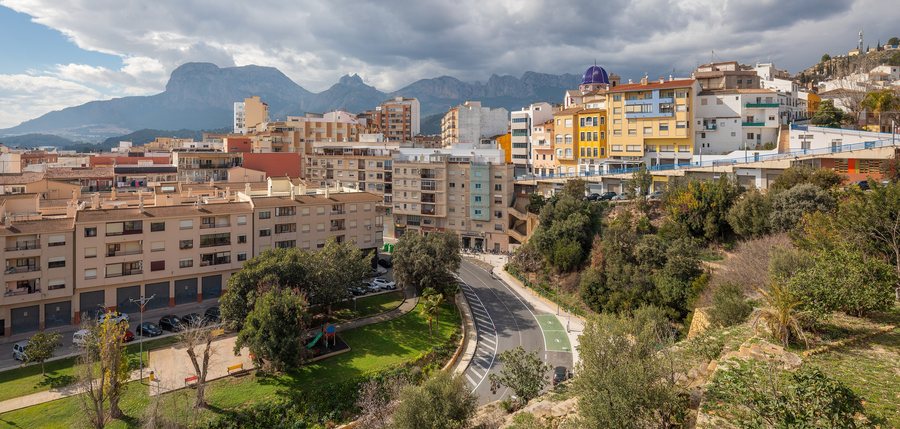 File:View over Callosa d'en Sarrià from Carrer Barceloneta, la Marina Baixa, Alicante, Valencia, Spain, 2025 February.jpg
Photo: Ximonic (Simo Räsänen) via Source, CC BY-SA 4.0
File:View over Callosa d'en Sarrià from Carrer Barceloneta, la Marina Baixa, Alicante, Valencia, Spain, 2025 February.jpg
Photo: Ximonic (Simo Räsänen) via Source, CC BY-SA 4.0
Nature
The route passes through a limestone karst landscape with waterfalls, springs and the pools known as “tolls”. Visitors can swim in the clear water of these pools. Les Fonts d'Algar has a tourist office, parking, toilets, first aid, an arboretum, a picnic area and a second-category campsite.
Trails and Mountain Landscape
The PR-CV 49 passes through a mountain landscape characterised by deep gorges and mountain passes with wide-ranging views. The hiking trail begins in the upper part of Callosa d'en Sarrià, near the IES. El camino al Fort de Bèrnia connects Les Fonts d'Algar with Fort de Bèrnia.
The ascent to Fort de Bèrnia offers views of the Aitana and Xortà mountain ranges. At Fort de Bèrnia, the arches, moat, bastion, cistern and remains of the walls can still be seen. Fort de Bèrnia has been classified as a BIC (Bien de Interés Cultural, Asset of Cultural Interest) since 1997.
El Calvari is an approximately 700-metre-long peri-urban zigzag climb that begins at the last house in the historic centre of Callosa d'en Sarrià and ends at a hermitage on Calvari Hill. The circular route, mountain trail, connecting path and zigzag climb can be viewed as different formats for planning a day trip.
Culture
The Museo de Etnología y Arqueología de Callosa displays and explains objects that shaped the local folk culture and customs of the various societies that lived in the town and its natural and urban surroundings throughout recent history. The museum also documents local rural activities, crafts, occupations and products.
The Iglesia Parroquial de San Juan Bautista has a monumental façade made of marble from local quarries. El Poador de la Font Major is an 18th-century washhouse and livestock watering trough with twelve spouts. El Portal is now the only surviving gate of Callosa d'en Sarrià.
Festivals
The Moros y Cristianos festivals in honour of the Virgen de las Injurias include special dances such as the “ball de les pastoretes” and the “ball dels nanos”.
During the Danses de Sant Jaume, people dance every year at midnight for three days in Plaza de España. The dance begins with several pairs, known as the “caps de dança”, and continues until dawn with the participation of local residents and the audience present. The festivals in honour of Sant Jaume in Callosa d'en Sarrià have been documented since 1819.
More Places to Visit
More places to visit: Tangel, Lorcha, El Fondó De Les Neus, Barbarroja, Orihuela, Orito, Els Poblets, El Verger
Local Cuisine
The Mostra de Cuina del Nyespro begins in early May and lasts until June. At weekends, various restaurants in Callosa d'en Sarrià prepare dishes and specialities based on or complemented by the local Níspero fruit.
For the main travel overview: Alicante.

