
Discover Biar: Castle, Ceramics and Hiking Trails
Accommodation in Biar
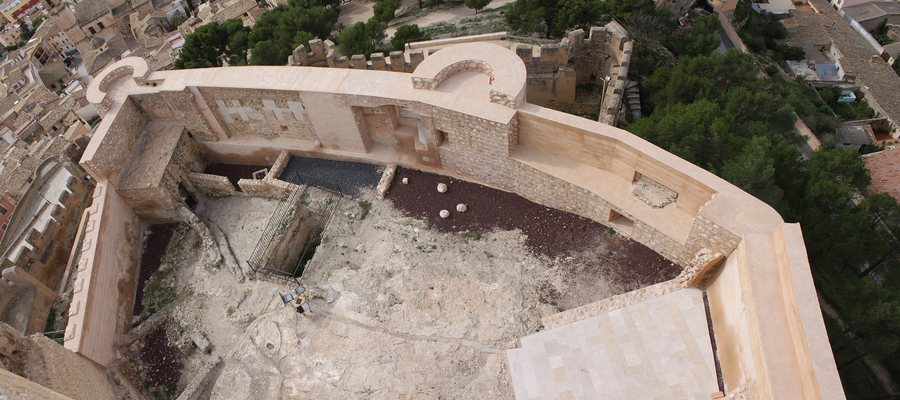
The Castillo de Biar dates from the 12th century and preserves an Almohad vault from the same period. The museum exhibition, opened in 2024, comprises four themed areas, information panels, explanatory models and a viewing platform.
If you are looking for a holiday apartment in Biar, you can compare travel dates, room categories and cancellation policies. For daily planning, different route lengths are available alongside dates tied to specific months or weekends.
More places: Muro De Alcoy, Tormos, Cocentaina, Daya Vieja, Montesol, La Mandarina, Quatretondeta and El Campello.
Culture
The Museo Etnográfico Municipal Miguel Maestre Castelló is dedicated to Biar’s cultural heritage, traditions and crafts, particularly its pottery tradition and the production of glazed ceramics. The museum includes more than 1,000 objects on display and items held in storage.
The Iglesia Parroquial de Nuestra Señora de la Asunción combines an original Renaissance construction phase from the 15th and 16th centuries with Baroque extensions from the end of the 17th century. The Santuario de Biar has three naves; the central nave is decorated with ribbed vaults featuring stucco and frescoes.
The Santuario de Nuestra Señora de Gracia features an overall Neoclassical interior and a Rococo façade. Its transept contains four pendentives with frescoes by Tomas Belando from 1757.
The Ruta de los Arcos includes the Arco de Jesús, a stone arch from the 13th century. The Acueducto Medieval dates from 1490 and has three arches: two pointed arches and a flattened round arch. The medieval aqueduct can be visited on a hiking route through the natural landscape around Biar. The Castillo de Biar is also included in the Ruta de los Castillos del Vinalopó.
Nature
Biar’s mountain areas lie in a predominantly wooded setting and offer opportunities for outdoor sports, landscape observation and hikes accessible from the town. Reconco de Biar is designated as a micro-reserve and is home to numerous plant species of the Mediterranean landscape.
Fontanella, Reconco and Penya Tallà are popular areas for day-trippers and are easily accessible from Biar town centre. Most hiking trails begin at the Santuario de Nuestra Señora de Gracia, a well-equipped recreational area near the town.
Festivals and Traditions
The Moros y Cristianos festival takes place every year in May and includes music, arquebus fire and parades by marching bands and Comparsas. The Medio Año Festero follows on the first weekend of November with communal dinners and social activities. In January, the dances known as Balls de Jesús or Volteta de la Reina are performed; since their revival in 2017, they have been a public, participatory event.
Routes
On Sundays, guided cultural walks through Biar’s old town are offered, visiting small hermitages and an ice cellar or snow well. These cultural walks require a reservation and are free of charge.
The urban section of the Ruta de las Ermitas is designated as a 40-minute walk and leads to the hermitages of San Ramón, San Roque and Loreto. The complete Ruta de las Ermitas is designated as a 2.5-hour hike.
The Ruta de las Fuentes is an urban route that visits 15 fountains. It runs for approximately 4 to 5 kilometres through Biar’s old town and its surroundings; allowing about five minutes at each spring, a total of two hours is planned.
The PRV-155 Sierra del Frare is a 13.8-kilometre circular hiking trail in Biar with a stated duration of 3 hours and 40 minutes and a moderate difficulty level. The Vía Verde del Xixarra can be used on foot, by bicycle and in a wheelchair.
For the main travel overview: Alicante.

