
Discover La Aceña – Holiday Apartment, Trails and Rural Village Character
Accommodation in La Aceña
The Río Villoruebo runs through La Aceña and divides the village into two parts. La Aceña has a distinctly rural character and preserves traditional architecture.
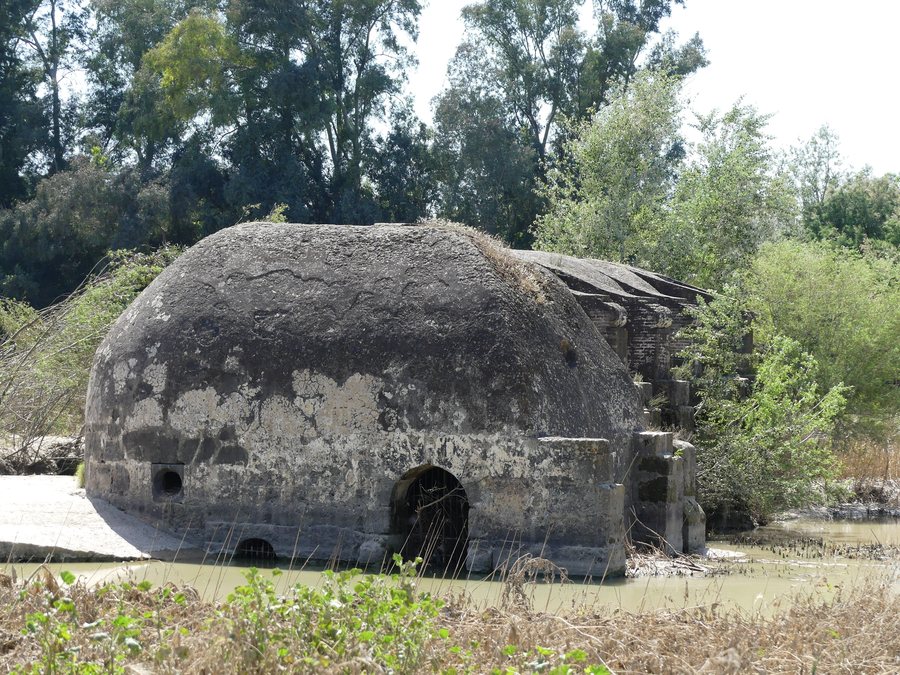
Water, settlement patterns and architectural heritage are closely connected here in spatial terms. As a result, La Aceña is not merely a place to pass through, but also a village with its own historical character.
Nature and Trails
The streams and small waterways in the landscape around Aceña de Lara rise near the peaks of the Sierra de la Demanda. A riverside trail runs between La Aceña and Villoruebo. The Santander-Mediterráneo route is intended for hikers and cyclists and can be used with children and by people with reduced mobility. It follows the former railway line of the same name. The Revilla del Campo–Cascajares de la Sierra stage of the Camino Natural crosses the access road to Aceña de Lara.
These features are associated with different landscape contexts: waterways shape the natural surroundings, while the trails connect the village with its environment. The riverside trail and the route known by its regional name represent different forms of travel. The crossing of the access road, by contrast, belongs to a described stage of the Camino Natural. This information makes the trail network in and around Aceña de Lara clearly distinguishable.
History
La Aceña de Lara originated as a hamlet that developed around a watermill. The name Aceña de Lara comes from Arabic and means “water wheel.” Four water-powered grain mills and two water-powered fulling mills are documented in Aceña de Lara for the 19th century. Aceña de Lara has caves that were probably inhabited during the Bronze Age. The church of Santa María de Quintanilla de las Viñas is located in the vicinity of La Aceña.
Its historical development thus brings together several clearly distinguishable periods and layers of significance. The place name linguistically points to the history of milling, while the documented mills provide concrete evidence of the earlier use of water power. The caves reach back to a considerably older, and moreover only probable, period of use. Santa María de Quintanilla de las Viñas adds a religious connection from the nearby area.
Culture and Landscape
The CAREX Centro De Arqueología Experimental museum is located in the wider regional surroundings of La Aceña. The Parque Arqueológico de Atapuerca archaeological site is also located in the wider regional surroundings. The Monasterio de San Pedro de Cardeña monastery is located there as well. The Playa fluvial Fuente del Prior river beach is also situated in the wider regional surroundings. The Pico de San Millán hill is located there too. The “Félix Rodríguez de la Fuente Park” is also part of the wider regional surroundings.
The regional surroundings therefore include named destinations relating to archaeology, monastic culture, waterscapes, landforms and parks. The list deliberately remains open to different cultural and landscape focuses, without grouping the individual places into a single category of excursion. In this way, the museum, archaeological site, monastery, river beach, hill and park each retain their own character.
When choosing a holiday apartment in La Aceña, travel dates, apartment size and cancellation conditions can be compared as practical details in the respective listing. This guidance supplements the information about the village without presupposing a particular property, its availability, amenities or location.
For the overarching travel overview: Jurisdicción De Lara.

