
O Vicedo: Beaches, Coastal Paths and Churches
Accommodation in O Vicedo
In O Vicedo lies the 950-metre-long Playa de Abrela beach, which is natural, sheltered and has moderate waves. The beach offers good conditions for water sports and borders a wooded area with picnic and leisure facilities. At the fully sheltered Playa de Xilloi beach, there is a recreation area as well as toilets, showers and lifeguards.
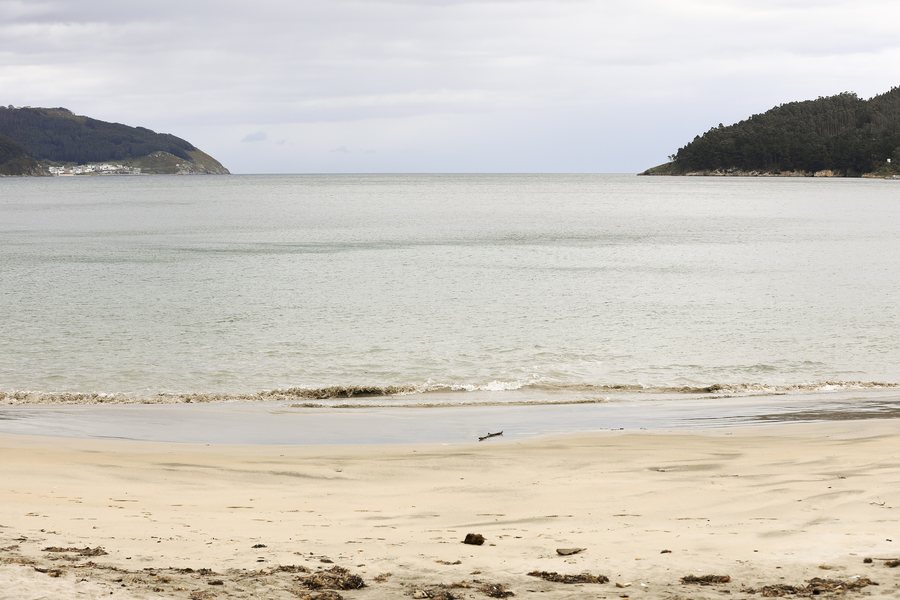 File:2025 Praia de Arealonga. O Vicedo. Galiza 2025 02.jpg
Photo: Lmbuga via Wikimedia Commons, CC BY-SA 4.0
File:2025 Praia de Arealonga. O Vicedo. Galiza 2025 02.jpg
Photo: Lmbuga via Wikimedia Commons, CC BY-SA 4.0
More local pages: Vilela.
Nature
The Mirador Tixoso viewpoint is located above the mouth of the Ría de Viveiro and the small Tixoso beach; it includes a small rest area. Moreiras is a rest area with a viewpoint over the Ría de Vivero and the coast of Area Grande beach in San Román. The Mirador y paseo de Moledos viewpoint and promenade offer panoramic views of the port of O Vicedo, the Ría de O Vicedo, Playa de Arealonga and the port of O Barqueiro.
From the Mirador de San Román, the view extends over San Román, Fuciño do Porco and the Ría de Viveiro; the rest area is equipped with tables and water. Isla Coelleira is home to one of the few breeding colonies of Cory's shearwater (Calonectris diomedea) in Galicia. The island is also a migration route for tens of thousands of migratory birds.
Paths
The Costa de O Vicedo coastal hiking trail (PR-G 156) begins at the port of O Vicedo and ends at Area Grande beach. The route is suitable for cycling and horse riding and has turn-offs to the Santo Estevo do Vicedo church and the A Cruz de Baltar viewpoint.
The steep Fuciño do Porco headland can be explored via a winding path across rugged cliffs and offers views of the Cantabrian Sea and the Atlantic Ocean. About 500 metres from the start of the path to Fuciño do Porco, there is a car park with space for 140 cars.
The Morgallón – Río Sor – Morgallón route (PR-G 8) largely follows a fishermen's path along the Sor River. Along the way, it passes the remains of a hydroelectric power station, an old fishermen's chairlift, a watermill and a fishermen's hut.
Culture
The remains of a former sardine salting factory have been preserved at O Caolín beach. The industry began to flourish from the 18th century and continued until the first third of the 20th century.
The San Esteban de O Vicedo church was extensively rebuilt in the 17th century and has three naves with round arches. The San Miguel de Negradas church is a Romanesque-style place of worship dating from the 12th and 13th centuries.
The Festas do Carme take place on the third Sunday in June and include a traditional maritime procession with fishing boats. The Romería Vikinga usually takes place at the end of July and recreates the settlement of Moutillós in San Román. The Fiesta del turismo rural was held in July.
For the overarching travel overview: Lugo.
More destinations
More places within the same destination:

