
El Durazno: Camino de El Ciprés and Canarian architecture
Accommodation in El Durazno
In El Durazno, the Camino de El Ciprés was designated a cultural asset of cultural interest (Bien de Interés Cultural) in the category of Historic Site (Sitio Histórico) in 2008. The approximately 800-metre-long path runs between the Cruz del Durazno and the La Palmita area on the former Carretera C-820, at the junction with the TF-5 motorway. At the same time, the Camino de El Ciprés is an important connecting route to neighbouring Puerto de la Cruz. For personal planning, the route and its cultural history can be considered as separate approaches: a route for movement and connection to the place alongside named buildings and their historical classification.
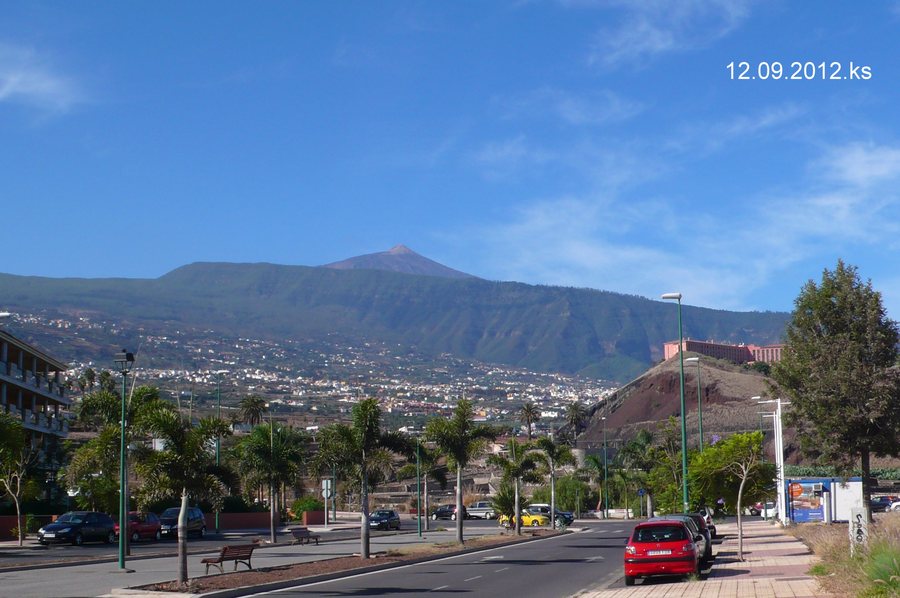 File:Sept.2012, Blick von El Durazno (obererer Teil vonPuerto de la Cruz) nach Süden - panoramio.jpg
Photo: Klaus61 via Source, CC BY-SA 3.0
File:Sept.2012, Blick von El Durazno (obererer Teil vonPuerto de la Cruz) nach Süden - panoramio.jpg
Photo: Klaus61 via Source, CC BY-SA 3.0
When comparing a holiday apartment in El Durazno, you can check travel dates, accommodation or room category, and cancellation conditions side by side on the respective listing page. This information helps you define the desired period and preferred type of accommodation clearly, while you weigh the cultural highlights of the place according to your own interests.
You can consider geographical, chronological and architectural questions separately. Different interests can be placed side by side in a shared travel plan when a path, a building or an individual detail serves as the starting point. The order of these focal points is up to your own planning.
Culture
The Ermita y Hacienda de San Bartolomé Apóstol is located at the junction of the Camino del Durazno and the Camino de San Bartolomé. The house and the Ermita y Hacienda de San Bartolomé Apóstol were built simultaneously in the 17th century on the orders of their then owner, D. Bartolomé de Molina Llarena. The building of the Ermita y Hacienda de San Bartolomé Apóstol is designed in the Mudéjar style.
If you have different interests, you can read this information separately: the location along the route, the century of construction and the Mudéjar style each provide a distinct focus for exploring the place.
Architecture
The agricultural complex was built to support banana cultivation. The Hacienda del Durazno corresponds to the characteristic model of Canarian rural architecture, particularly the model of large haciendas. The agricultural complex is located at Camino del Durazno 19, on the corner of El Ciprés. The complex was built at the beginning of the 20th century according to the agricultural typology then common for banana-growing houses.
To classify the architecture, you can consider agricultural use, the Canarian architectural model and building type as separate aspects. Anyone wishing to consider regional building forms and agricultural history side by side can read these two topics as separate focal points.
History
The Hacienda del Durazno was the retreat of D. J. de Herrera Ayala y Rojas (1714–1766), 11th Count of La Gomera and 6th Marquis of Adeje; he played a major role in its construction. At the Finca La Vizcaína, the small private oratory has a semicircular entrance arch made of millstone. It was established in the 17th century by José Llarena Calderón y Valcárcel as a religious auxiliary building of the finca.
For the general travel overview: Puerto De La Cruz.

_nach_S%C3%BCden_-_panoramio.jpg)