
Triquivijate – Culture, Festivals and Pilgrimage Route
Accommodation in Triquivijate
Triquivijate can be explored through tangible evidence of local history, faith and festival culture. The Ermita de San Isidro is a Bien de Interés Cultural in the Monument category. The Pozo de Los Vecinos is a structure of heritage interest and has an information panel about the history of its use and activity.
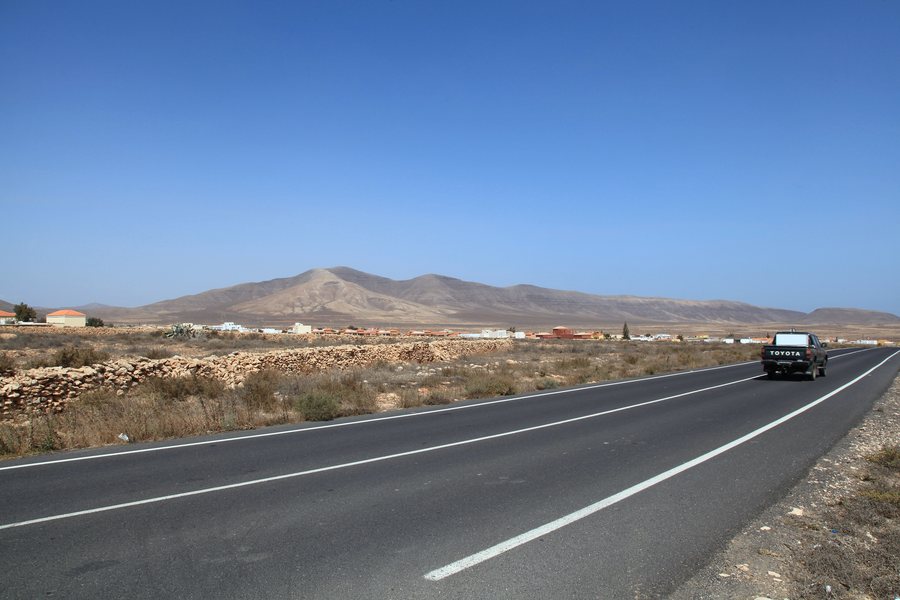 File:Antigua - Triquivijate - FV-413 01 ies.jpg
Photo: Frank Vincentz via Wikimedia Commons, CC BY-SA 3.0
File:Antigua - Triquivijate - FV-413 01 ies.jpg
Photo: Frank Vincentz via Wikimedia Commons, CC BY-SA 3.0
Further page about the area: Pozo Negro.
Culture
The origins of the Ermita de San Isidro can be traced through a precise sequence of events. The building was funded by the local residents, who received the bishop’s permission for its construction on 6 March 1713. The ermita was completed in 1715; it was blessed on 17 March of the same year.
The architectural form is also clearly defined: the ermita has a simple rectangular floor plan, a three-sided roof and an exterior roof covering made of tiles.
The municipality describes the Pozo de Los Vecinos as one of the most important heritage-related attractions in Triquivijate and the municipality of Antigua.
Those who wish to combine architecture and local history can view the two sites according to their different focuses: the ermita centres on its origins, dating and architectural form, while the pozo focuses on the history of its use and activity.
The dates associated with the ermita and the information panel at the pozo thus offer two different chronological approaches to the area’s cultural points of interest.
Tradition
Triquivijate’s patron saint festivals, held in honour of San Isidro Labrador and Santa María de la Cabeza, are organised by the municipality of Antigua and a local festival committee. The patron saint festivals include a romería, a baile de taifa and a verbena.
On the main day of the patron saint festivals, a religious service and a religious procession in honour of San Isidro Labrador and Santa María de la Cabeza take place at 7:00 p.m.
The August festivals in Triquivijate are regarded as an expression of the history and tradition of an agricultural village. Today, they include family gatherings, shared meals, music and dancing in the square.
Religious ceremonies, communal celebrations and the various forms of the festival programme each have their own focus. In terms of scheduling, the reference to August places one event within the season, while 7:00 p.m. marks a specific programme item on the main day.
When comparing a holiday apartment in Triquivijate, you can first compare travel dates, room category and cancellation conditions on the accommodation pages. The area’s history and festival traditions represent different thematic focuses alongside your personal travel plans.
Pilgrimage Route
The length and course of the route section can be considered separately: the distance indicates its extent, while its parallel alignment describes its spatial layout.
The 4-kilometre pilgrimage route section between Triquivijate and Antigua is part of the hiking trails accessible to pilgrims. It runs parallel to the road.
For the broader travel overview: Antigua.

