
Discover Millara: Architectural Heritage, Mining History and Circular Route
Accommodation in Millara
Millara between Architectural Heritage and Mining History
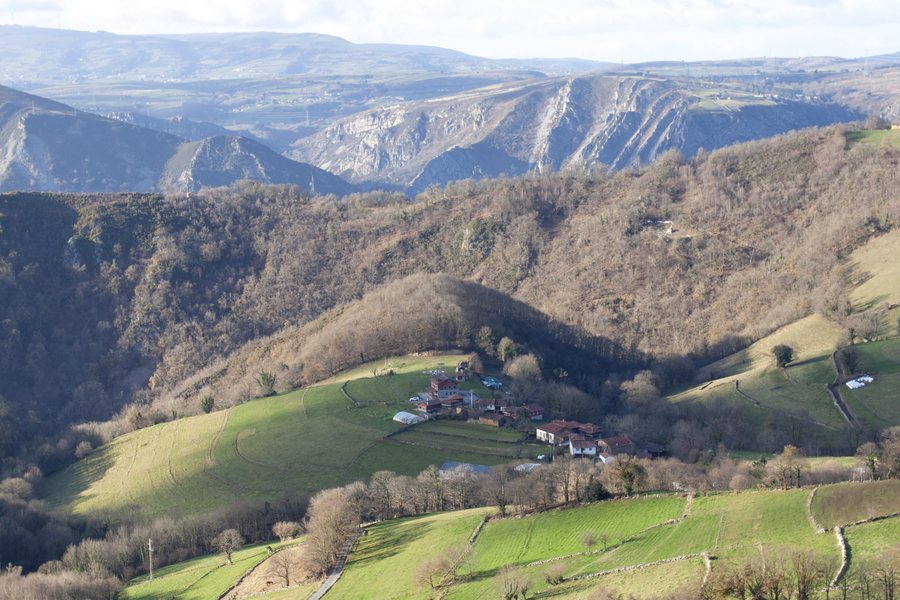
Millara lies on the foothills of the Sierra de Courío. Traditional architecture in Mílara, remains of Roman gold mining in the surrounding area and a circular route between Alto la Brueba and Mílara also stand out when choosing a destination. If you are looking for a holiday apartment in Millara, you can therefore tailor your trip to different interests: architectural styles and regional history, traces of earlier mining works or an active day along the circular route. These themes create a varied picture of the area without requiring you to limit yourself to just one type of experience.
Traditional Architectural Styles and Cultural Connections
Mansions are among the architectural styles found in Mílara, which also features examples of traditional architecture. Two large paneras with caramanchón illustrate the functional development of this traditional Asturian type of granary. These buildings make it particularly clear that regional architecture consists not only of individual forms, but is also connected to its original function. This gives you a vivid cultural focus that can be combined with other activities related to history.
The El Llano del Muñón tumulus is connected with the parish of Mílara. The parish church of Santa María in Salas belongs to Mílara or Miera. Together, these places complement the mansions and paneras with further cultural connections. If you are interested in regional ecclesiastical history and different historical traces, you can take these themes into account when planning your days in Millara alongside the traditional architecture.
Roman Gold Mining in the Surrounding Area
Mining history is present in Millara and its surroundings. Remains of Roman gold mining can be found there. The most important gold-mining areas are located around Villaverde, El Pontigo, Antoñana, Mílara and Alto de la Brueba. The mining works at Mílara are connected with the BERISO project. The mining complexes of Antoñana and Alto de la Brueba feature monumental remains and convenient access.
What is interesting here is not only where gold mining took place, but also how the work was carried out. In the area around Mílara, water and fire were used alternately in gold-mining operations. Slope channels carried water from peaks and mountain saddles to basins excavated above the mining face. This technical aspect gives the remains an additional layer of meaning: landscape and working methods are closely connected here. This allows you to focus an excursion more strongly on historical technology and traces of its use.
Circular Route with Roman Mine and Trenches
For hiking and walking interests, the circular route between Alto la Brueba, including a Roman mine, and Mílara offers a distinct focus. It also passes the remains of trenches. For a trip involving several interests, the route can be considered alongside Millara’s architectural and mining-history connections.
When choosing your holiday apartment in Millara, you can therefore first decide which daily rhythm should take priority. Would you mainly like to explore mansions, paneras and the parish church, follow the gold-mining areas through their various locations or make room for the circular route with its Roman mine and trenches?
More places for planning your trip: Cotariello, Valdredo, San Justo de la Dóriga, Villarín, Oneta, Calleras, Andés, Trevías
For the broader travel overview: Comarca Vaqueira.

.jpg)