
Faedo: Forest Paths, Waterfall and Sacred Architecture
Accommodation in Faedo
The Ruta a la Cascada de Gorgollón begins and ends in Faedo. The trail is 4.5 kilometres long and is classified as easy.
Nature
The route leads through chestnut and pine forest down to the Río Sangreña. An old mill and the waterfall are located there. The Cascada de Gorgollón forms a small natural pool surrounded by vegetation. Mixed vegetation of chestnut trees, eucalyptus and pines currently predominates in the Valle de Faedo; remnants of the native forest that once covered the entire area have been preserved. In this area, you can walk among forests, rivers and waterfalls.
In this way, the path connects several landscape features: the wooded descent, the course of the river, the mill and the waterfall. The pool is not detached from the surrounding area, but appears as part of the vegetation along the Río Sangreña. The view of the valley also remains characterised by different types of forest. Alongside the chestnut trees, eucalyptus and pines that predominate today, the preserved remnant of the former native forest points to an earlier phase of the landscape, without equating the present-day vegetation with the historical vegetation.
Culture
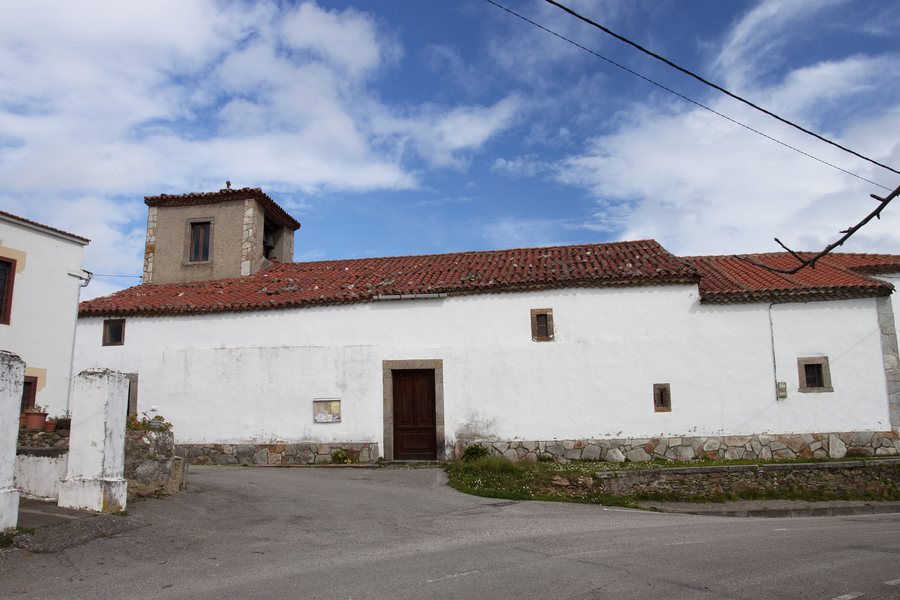
The Iglesia de San Andrés in Faedo houses a remarkable polychrome wooden altarpiece from the 17th century. The Iglesia de San Andrés de Faedo is an example of vernacular sacred architecture and dates from 1771. The Molino de Pin has also been preserved in good condition along the route through the Faedo forest.
The church thus brings together a sacred building from the 18th century and a considerably older item of furnishings. The polychrome wooden altarpiece belongs to the interior furnishings and reinforces the classification of the building as vernacular sacred architecture. The Molino de Pin, on the other hand, is located along the route through the forest; its preserved condition makes it an independent component of the cultural landscape described there.
Geographical context
The Valle de Faedo is regarded as an area of high scenic and ethnographic value. Access is via a winding road lined with dense native vegetation, including oaks, beeches and chestnut trees.
The geographical description thus leads from the valley area to the access road: the Valle de Faedo is characterised by its landscape and ethnographic character, while the road provides access through the vegetated area. The oaks, beeches and chestnut trees stand alongside the mixed vegetation mentioned in the valley and show the different tree species included in the description of the area.
The combination of forest, river course, waterfall, mill and sacred architectural details gives the route several clearly identified points of interest, without reducing it to a single landscape feature. The route remains connected to Faedo because both its starting point and its endpoint are located there.
Other directly associated places are Millara, San Justo de la Dóriga, Andés, Muñalén, Trevías, Villarín, Oneta and Calleras.
For the higher-level travel overview: Comarca Vaqueira.

.jpg)