
Arrojo: Mills, Mountain Views and Romanesque Architecture
Accommodation in Arrojo
Arrojo reveals its scenic side on the summit section of the Arrojo–Pico Mayor–Las Agüeras route: From there, you can enjoy a spectacular view of the Valdemurio reservoir and, above all, the Sierra del Aramo and Sobia mountain ranges.
Several options can be reviewed using the same details and compared more clearly for your travel planning.
Hiking
The Vega de Arrojo–Molinos de Corroriu hiking trail is easy, 3 km long and takes approximately 1 hour 30 minutes there and back. The combination of a named route, an approximate duration and an indication of the difficulty gives you a concise basis for organising your own daily schedule.
The GR 207, also known as the Camín Real del Puerto de Ventana or Camín Real de Las Reliquias, passes through Vega de Arrojo and continues via Arrojo towards Bermiego and Pedroveya. In your personal travel plan, you can organise such details either by time or by geographical sequence.
Landscape
The Senda del Oso follows the Quirós River to Vega de Arrojo and reaches the village at kilometre 19.5; there is a car park there.
The route to the Molinos de Corroriu includes three staggered mills where La Escanda, a mountain grain similar to wheat, is still milled. The route passes through chestnut forests with traditional Corrus used for storing chestnuts.
Anyone wishing to consider different natural and cultural highlights side by side in a single day can include the details about the river, forest and mills separately in their own plan. The combination of route names, references to places and landscape features provides several factual anchors for a personal note or map planning.
Culture
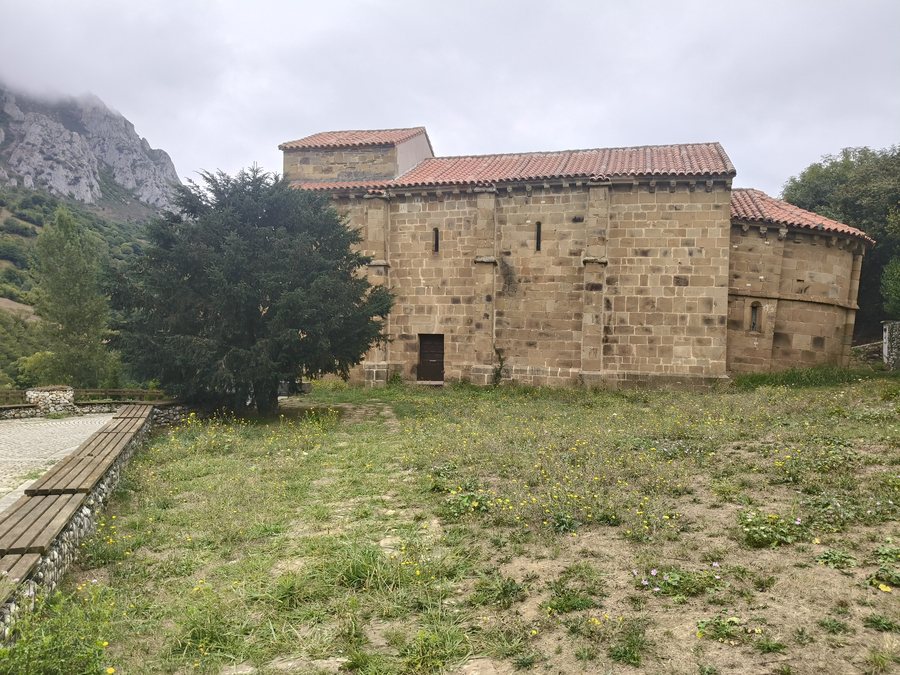
The present-day Church of San Pedro de Arroxo is a high-quality Romanesque building from the first half of the 13th century, with notable sculptural decoration. In Quirós, it is designated as a Bien de Interés Cultural in the Monument category.
The Casa de Quirós in Arrojo bears the family coat of arms with the motto “Después de Dios la Casa de Quirós”. The village of Arroxo preserves traditional architectural and agricultural characteristics.
For personal travel planning, architecture, the family coat of arms and the village landscape can be considered as separate cultural focal points.
History
The fortress belonged to the Asturian kings of the Reconquista and later served as a refuge for the nobleman Gonzalo Peláez during his conflict with the Castilian King Alfonso VII in 1132.
The remains of a fortress near Faedo can be reached from the village of Arrojo via the main road. When comparing historical sites, you can record the chronological context and the named individuals separately.
More destinations
More places: Carrea, Somiedo, Valle De Lago, El Coto, Villamarín, Santullano, Palacio, Leiguarda
To the higher-level travel overview: Camín Real De La Mesa.

