
Vrancea: Holiday Apartments and Holiday Homes
Accommodation in Vrancea
Putna-Vrancea Nature Park protects characteristic landscape complexes and offers the public opportunities for recreation and tourism. Covering 38,204 hectares, it encompasses 41.32% of the mountainous area of Vrancea County.
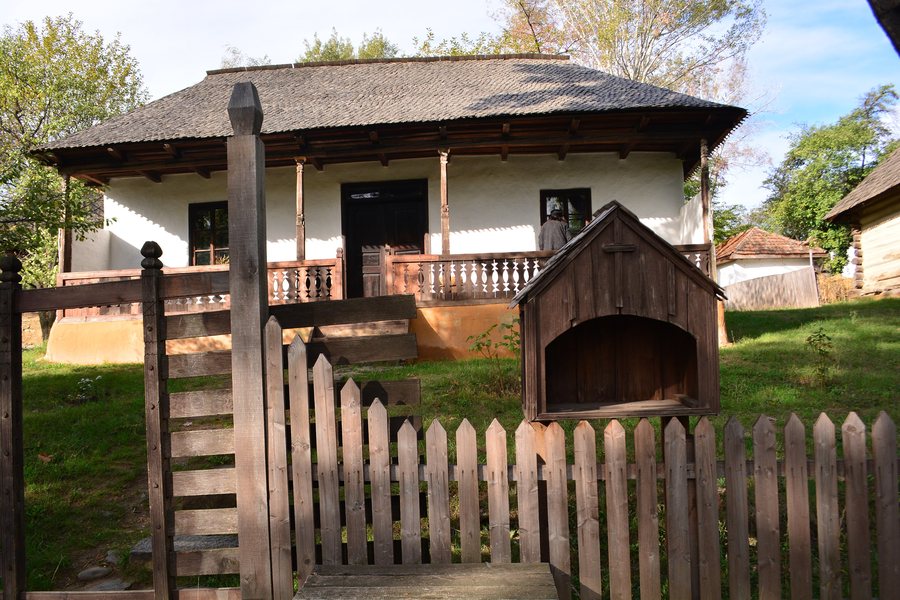 File:Homestead from Nereju Mic, Vrancea in Village Museum, Bucharest 01.jpg
Photo: Joe Mabel via Wikimedia Commons, CC BY-SA 4.0
File:Homestead from Nereju Mic, Vrancea in Village Museum, Bucharest 01.jpg
Photo: Joe Mabel via Wikimedia Commons, CC BY-SA 4.0
Renting a holiday apartment in Vrancea can be part of personal travel planning.
Nature and Landscape
The Măgura Odobeşti Mountain and the Dealul Odobeşti Hill are located in the surroundings of Vrancea. In the wider regional area are the Titila and Preluncu peaks.
Cascada Putnei is a national protected area in Vrancea County, within the administrative territory of the municipality of Tulnici, near the village of Lepșa. It forms a 76-metre-long waterfall with a vertical drop of 14 metres; the water collects in a lake approximately 12 metres deep. In Putna-Vrancea Nature Park, Cascada Putnei is designated as a sustainable management zone; visitors should observe the demarcated area and the information signs.
Lacul Negru comprises an active peat bog complex with sundews, salamanders and alpine newts. It is located in the Năruja Basin at an altitude of 1,250 metres, covers more than one hectare and reaches a maximum depth of 7.5 metres.
Focul Viu Protected Area is a geological site where natural gas rises through cracks in the Earth's crust and ignites into flames 30 to 50 centimetres high.
Trails and Geography
The E8 European long-distance path runs for 67 kilometres through the Vrancea Mountains. The trail through the Cheile Tișiței Nature Reserve is considered one of the most important tourist attractions in the Vrancea Mountains and leads seven kilometres upstream through the protected area.
Access to the Cheile Tișiței Nature Reserve is signposted from the DN2D between Focșani and Târgu Secuiesc and then continues for approximately 1.3 kilometres along a gravel road.
The marked trail to Lacul Negru leads via the DJ205D and then for approximately 16 kilometres along a forest road beside the Năruja Valley; approximately 8 to 10 hours should be allowed for the round trip.
Culture and History
The Muzeul Țării Vrancei de la Vidra comprises five rooms with traditional carpets from the Putna, Zăbala and Năruja valleys, as well as traditional folk costumes from Vrancea.
The Mărășești Mausoleum preserves the remains of 5,073 soldiers and officers in 154 individual crypts and nine communal crypts.
In the wider regional area of Vrancea is the Church of Saint George, a church. Also located there are Biserica Ortodoxă Ploştina and Biserica Ortodoxă Coza, both Orthodox churches.
Wine and Cuisine
The main route of the Drumul Vinului Vrancea leads from Focșani via Odobești and Tifești to Panciu.
Crama Pandora offers a guided cellar tour covering the wine-making process from grape to bottle, the wine cellar, the technologies used and the terroir of Cotești. Crama Pandora also offers an essential wine tasting with a guided cellar tour and three wines from the SECRETS line: Șarbă, Rose and Fetească Neagră.
Punct Gastronomic Local „La Moise“ serves freshly prepared home cooking daily as a set menu, including vegetables from its own garden.
Relaxation
Stațiunea Vizantea offers baths, galvanic baths, treatments using modern equipment, therapeutic or relaxing massages, as well as swimming pools.
More local pages: Tulnici, Focşani, Vidra, Valea Neagră, Soveja, Adjud, Vidra, Vulcăneasa, Odobești, Nănești, Comuna Tulnici, Golești.
To the higher-level travel overview: Romania.

