
Putna Monastery is approximately 1.5 kilometers from Putna railway station.
When traveling to Suceava, you may wish to rent a holiday apartment.
History
The Suceava Throne Fortress houses a permanent exhibition on medieval weapons, the coats of arms of Moldavian princes and boyars, and the medieval treasure of Moldavia. For almost 200 years, it was the most important residence of the Moldavian princes.
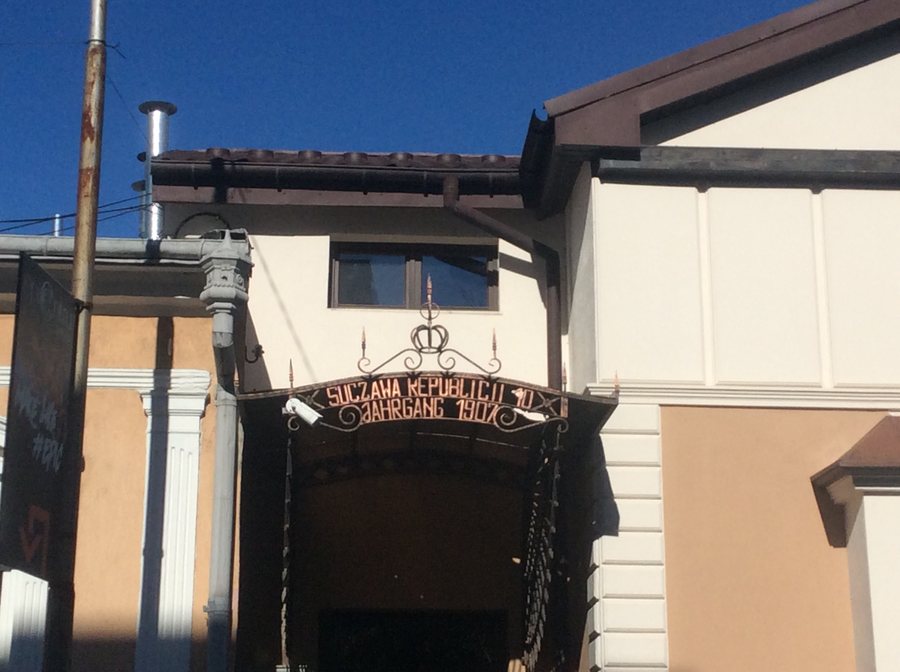
Hanul Domnesc is a historic building first documented in 1627 and originally the home of the Moldavian prince Miron Barnovschi. Its permanent exhibition presents six ethnographic zones of Suceava County: Fălticeni, Humor, Dorna, Rădăuți, Câmpulung Moldovenesc, and Suceava. On the ground floor, the museum reconstructs an 18th- and 19th-century inn with period furnishings, as well as objects related to transport and hunting.
Culture
The Bukovina Village Museum showcases traditional farmhouses and community buildings, regional occupations and crafts, as well as the way of life of the people of Bukovina. In its workshops, traditional craft techniques are demonstrated and taught to children and tourists.
The Roman Catholic church in Cacica was built in 1904 by the local Polish community and was granted the rank of minor basilica in 2000. The Cacica salt mine is one of the oldest European sites for extracting salt recrystallized from brine; the Ferdinand shaft was opened in 1791.
Arbore Monastery is a UNESCO World Heritage Site; the church was founded by Luca Arbore and initially used as a family burial church. Sucevița Monastery combines Byzantine and Gothic elements with architectural features of the old Moldavian wooden churches.
Moldovița Monastery is a fortified complex founded in 1532 and painted in 1537. Voroneț Monastery is known for the globally unique “Voroneț blue” in the background of its exterior frescoes.
Ciocănești is known for traditional motifs painted on the exterior façades of its houses. The “Arta Lemnului” Museum in Câmpulung Moldovenesc displays exhibits on traditional occupations in the region, woodworking, rafting, hunting, and fishing, as well as various household utensils.
Nature
The Slătioara primeval forest has been a UNESCO World Heritage Site since July 7, 2017, and is part of the Rarău–Giumalău Natura 2000 Site of Community Importance.
At 2,100 meters, Pietrosul is the highest peak in the Călimani Mountains and can be reached from Gura Haitii.
Trails
The Rarău Massif can be reached via three roads and offers opportunities for cycling, trekking, horseback riding, ski touring, freeriding, off-road activities, ice climbing, mountaineering, sport climbing, and paragliding.
Other regional destinations: Suceava, Rădăuţi, Gura Humorului, Dărmăneşti, Frasin, Vatra Dornei, Solca, Fundu Moldovei, Vama, Şcheia, Dragomirna Monastery, Pojorâta, Cârlibaba, Frumosu, Poiana Negrii, Sadova, Moldovița Municipality, Putna Municipality, Straja Municipality, Cornu Luncii Municipality, Câmpulung Moldovenesc, Arbore Municipality, Sucevița Municipality, Horodnic De Sus Municipality, Mănăstirea Humorului Municipality, Vatra Moldoviței Municipality, Baia Municipality, Cacica, Văleni-Stânișoara, Fălticeni, Dealu Floreni, Şaru Dornei, Crucea, Dorna - Arini Municipality, Podu Coșnei, Căsoi, Ciocănești, Păltinoasa Municipality, Brosteni, Poiana Stampei Municipality, Prisaca Dornei, Moldova-Sulița, Pârteștii de Sus.

