
Gîlgău between rolling hills and history
Accommodation in Gîlgău
Gîlgău can be explored from several specific perspectives: its rolling hills, its connection to UNESCO World Heritage, and the history of food. If you are looking for a holiday apartment, you can first decide whether the landscape, cultural history, or railway connection is most important to your stay. The watchtower, the named World Heritage component, historical foods, and the railway station offer different points of interest. Together, they create a more nuanced picture than relying on a single sight to represent the entire place.
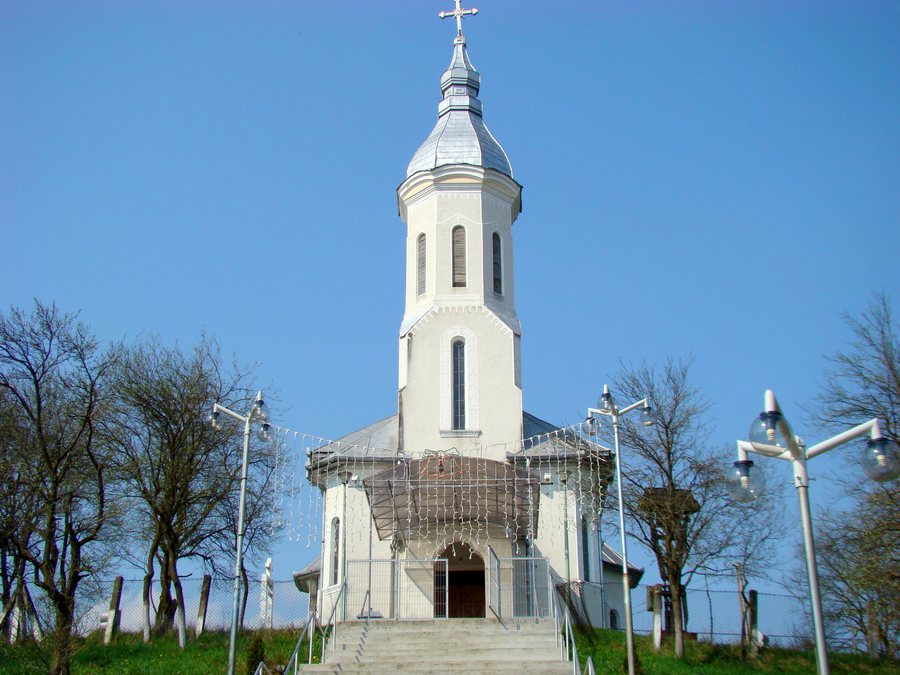 File:Biserica Biserica Pogorârea Sfântului Duh din Gâlgău (2).jpg
Photo: Țetcu Mircea Rareș via Wikimedia Commons, CC BY-SA 4.0
Hills and valleys around Gâlgău
The watchtower above Gâlgău is situated in a hollow between the Arsurei and Frânturi hills. From there, views extend over the Frânturi and Someș valleys and the lower section of the Poiana Valley. These names give the landscape a specific setting: two hills locate the tower, while the view takes in several valleys.
The hollow places the tower between two hills, while the views open up to three named valleys. For travellers who prefer to explore landscapes through specific features rather than general descriptions of nature, this is an illustrative focus. It offers a clear starting point for experiencing Gîlgău as a landscape of rolling hills, distinct from the cultural and historical perspective of the UNESCO component.
A precisely named UNESCO connection
UNESCO World Heritage component 1718-150 is called “Gâlgău – Șaua Dealul Arsurei” and belongs to “Frontiers of the Roman Empire – Dacia”. Its full name links Gâlgău to a specific part of the World Heritage site. If you are interested in history, this classification offers a concrete point of interest. It adds a cultural and historical perspective to the views of hills and valleys.
Gîlgău thus offers two distinct ways to explore the area: the watchtower brings the landscape and its named viewpoints to life, while the UNESCO component establishes a connection to World Heritage. You can consider both topics separately when planning your trip, or find their contrast particularly interesting.
Historical food in everyday life
In the associated municipality of Gâlgău, maize flour, milk, cheese, and vegetables were part of the traditional diet. This combination offers insight into various elements of the diet at the time: grains, dairy products, and vegetables. The focus is therefore on everyday life rather than a single building or viewpoint. For travellers who want to learn about a place through its everyday culture too, this aspect adds another historical perspective to the landscape and UNESCO connection.
Railway connection and travel planning
At Gâlgău railway station, at 252 Strada Gării, there is a platform for passengers to board and alight. The operating period is listed as “permanent”; nevertheless, check current passenger services and the timetable before your trip. The Căşei–Gâlgău section of the national railway network is six kilometres long.
If you are planning to travel by train, check the current connection in advance. The railway station is a practical point for planning your trip; the landscape, World Heritage, and historical food give you other reasons to consider Gîlgău as a destination. When looking for a holiday apartment, you can think about which of these aspects will shape your stay the most. This keeps your journey there as a separate consideration from the interests that bring you to the place.
For the main travel overview: Galgau.

