
Vălenii de Mureş between Churches, River and History
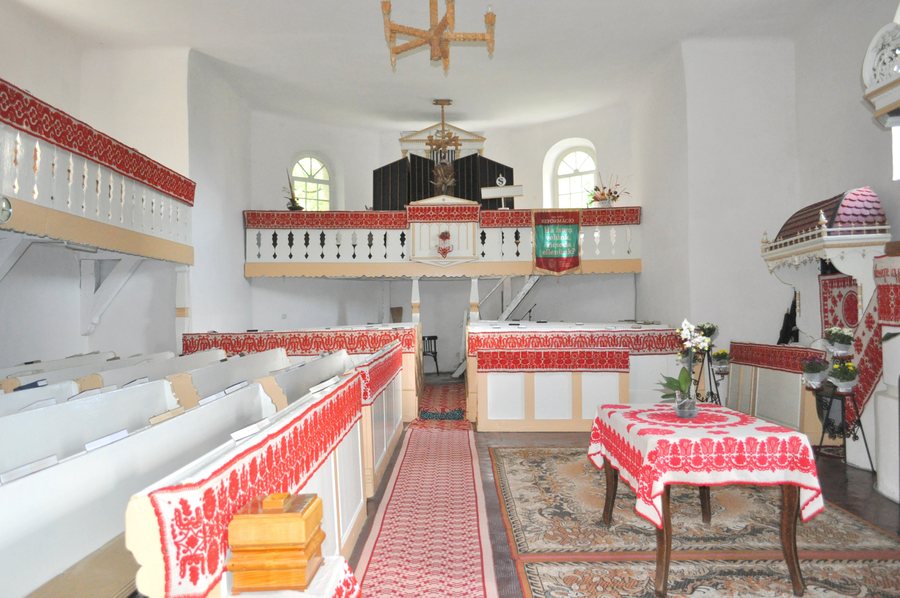 File:RO MS Biserica reformata din Valenii de Mures (1).jpg
Photo: Țetcu Mircea Rareș via Wikimedia Commons, CC BY-SA 4.0
File:RO MS Biserica reformata din Valenii de Mures (1).jpg
Photo: Țetcu Mircea Rareș via Wikimedia Commons, CC BY-SA 4.0
Vălenii de Mureș brings together sacred sites along the Mureș with a landscape whose history reaches back to medieval hunting grounds and a fortress dating from around 1420. Between the river terrace, saltwater wells, forest and valley lie tangible traces of different eras, giving the place a multifaceted character. Culture, river history and historic landscape areas meet within a closely connected thematic setting.
Culture
The Orthodox church of Vălenii de Mureș has a particular connection to the year 1981. Its interior was painted that year using the tempera technique by Eugen Patras from Bucharest. On 19 July 1981, Bishop Emilian Birdaș of Alba Iulia consecrated the church. The year connects the artistic design of the interior with the church’s consecration date. A second ecclesiastical landmark stands on the right bank of the Mureș: the Reformed church is situated there on a river terrace. Thus, the Orthodox and Reformed churches stand out in the river landscape with different religious traditions and clearly defined locations. Church visits should be planned with current opening and service times; such times are decisive for whether an interior visit is possible.
River and Everyday Life
Rafting on the Mureș is an old tradition that developed in the 19th century. On the outskirts of Vălenii de Mureș there is also Sóskút, a saltwater well. In the past, this water was used for cooking cornmeal and pickling cabbage. River-related activities require current route conditions to be checked before travelling; the historical tradition is no substitute for up-to-date planning. For wells with former uses, present-day use should not be assumed; current information should be checked in advance.
Nature and Hills
Extensive forests, pastures and clearings stretch around Vălenii de Mureș. These areas continue to be tourist destinations and are suitable for group excursions. The forests surrounding the Mureș also have a long historical significance: in the Middle Ages, as well as today, they were considered important hunting grounds. In the wider regional surroundings of Vălenii de Mureș lies the hill Dealul Neagra. Near the village, a steep hill is also known as Pasul Tătarilor. Its name is connected with local stories about the Tatars. Forests, pastures and clearings shape the changing landscape; Dealul Neagra and Pasul Tătarilor complement it as named hills. Group excursions through forest, pasture and clearing landscapes should be planned with current trail conditions in mind, while transport times can be checked in advance.
History of the Mureș Valley
The Mureș Valley in the section concerned was formerly a royal domain. Its centre was located in nearby Brâncovenești. Near Vălenii de Mureș there are also the ruins of a fortress built around 1420. Historic sites may have their own opening or visiting hours; current information should be checked before travelling.
For the overarching travel overview: Brâncovenești Commune.
Check prices, availability and amenities for your travel dates directly with Booking.com.
View accommodation and offersAdvertisement · Affiliate link to Booking.com
.jpg)