
Discover Praid: Salt, Landscape and Culture
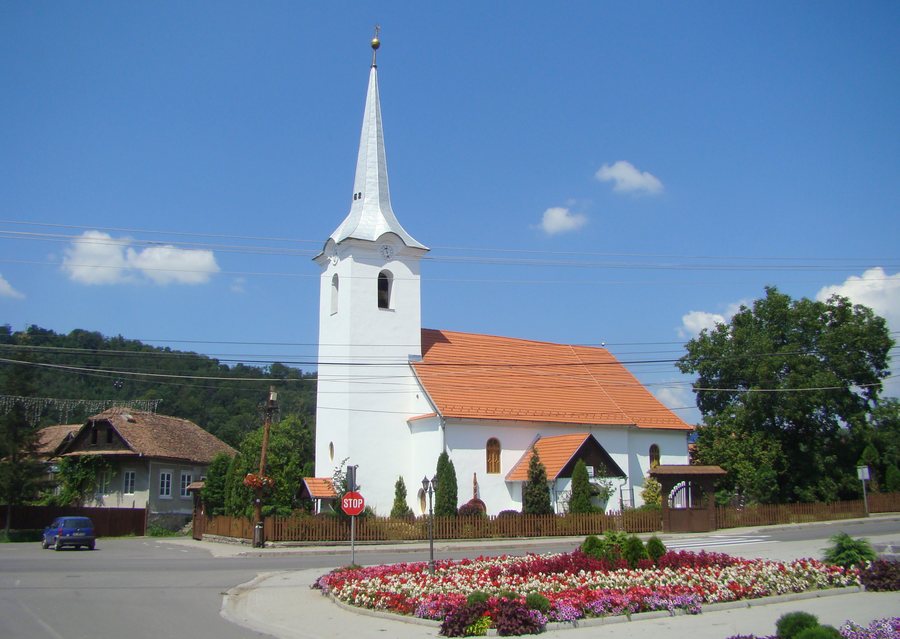 File:RO HR Biserica reformata din Praid (1).jpg
Photo: Țetcu Mircea Rareș via Wikimedia Commons, CC BY-SA 4.0
File:RO HR Biserica reformata din Praid (1).jpg
Photo: Țetcu Mircea Rareș via Wikimedia Commons, CC BY-SA 4.0
In Praid, the beginnings of salt mining date back to Roman times. Underground salt mining began in 1762. This means that Praid contains evidence of a very long history of using its salt deposits, alongside the beginning of later underground mining.
Landscape
The Praid salt massif is one of the largest salt deposits in Europe. It has a diameter of 1.2 to 1.4 kilometres and extends to a depth of 2,700 metres. The dimensions of the massif are evident both in its broad extent and in its exceptional depth.
The Salt Canyon was formed partly because rainwater filled and expanded the excavations left behind by salt mining. Its formation is therefore directly connected with earlier interventions in the salt. The Salt Canyon lies in a valley between lakes and was deepened by the Corund stream. Water therefore shapes both the former mining areas and the form of the valley here. Excavations, rainwater, lakes and the course of the stream consequently belong to the same landscape history. The canyon shape was not created solely by natural erosion, but is partly connected with the forms left behind by salt mining.
Halophytes grow among the salt formations, including Salicornia herbacea, also known as Bränca. The plants therefore grow in a landscape where salt formations, bodies of water, the valley and the stream are closely interconnected. The vegetation adds another visible distinctive feature to the canyon’s geological and water-shaped character.
Salt and Therapy
The Centre for Speleotherapy and Climate Therapy at Salina Praid is located 1,250 metres from the entrance and 120 metres below the surface. The centre is not located at the entrance, but deep within the underground section of the facility. Its location is thus defined by both a horizontal distance and an underground depth.
The Praid saltwater bath is also connected with salt extraction. It is supplied with salt water pumped up from a depth of 150 metres in the Gh. Doja mine. The brine therefore does not come from a surface body of water, but is extracted from the stated depth of the mine.
Culture
The Áprily Lajos Memorial House was inaugurated in 1991 and provides information about the life and work of the renowned poet and translator, as well as about the childhood he spent in Praid. The building is therefore dedicated both to his literary work and to his biographical connection with Praid.
In the courtyard stands a monument made from a block of stone, featuring a relief portrait of the poet and a quotation from his work. The monument therefore consists of the stone block, the relief portrait and the inscription as distinct elements.
Annual Events
The International Sarmale Festival in Praid takes place every year on the third weekend of September. This recurring date links the name of the event to a precisely defined point in the annual calendar.
Other places: Vlăhița, Dittersdorf, Subcetate, Baile Tusnad, Cotormani, Băile Homorod, Jigodin-Băi and Bălan.
To the main travel overview: Harghita.
Check prices, availability and amenities for your travel dates directly on Booking.com.
View accommodation and offersAdvertisement · Affiliate link to Booking.com
.jpg)