
Homorod: Fortified Church, Mud Volcanoes and Băile Homorod
Accommodation in Homorod
Culture and History
In Homorod, the Romanesque church had been fortified by at least the end of the 15th century, with a tower above the old altar and two surrounding walls. The tower reaches a height of 27.70 metres across more than seven levels. Its eighth level forms a defensive walkway with a wooden balustrade, to which three church bells are attached today. The Biserica-cetate din Homorod was heavily fortified after 1500 and equipped with two defensive structures. It was never conquered. The complex thus combines Romanesque church architecture with a clearly recognisable military function. The structural details make the church understandable as a historic building with several clearly identifiable levels and fortification elements.
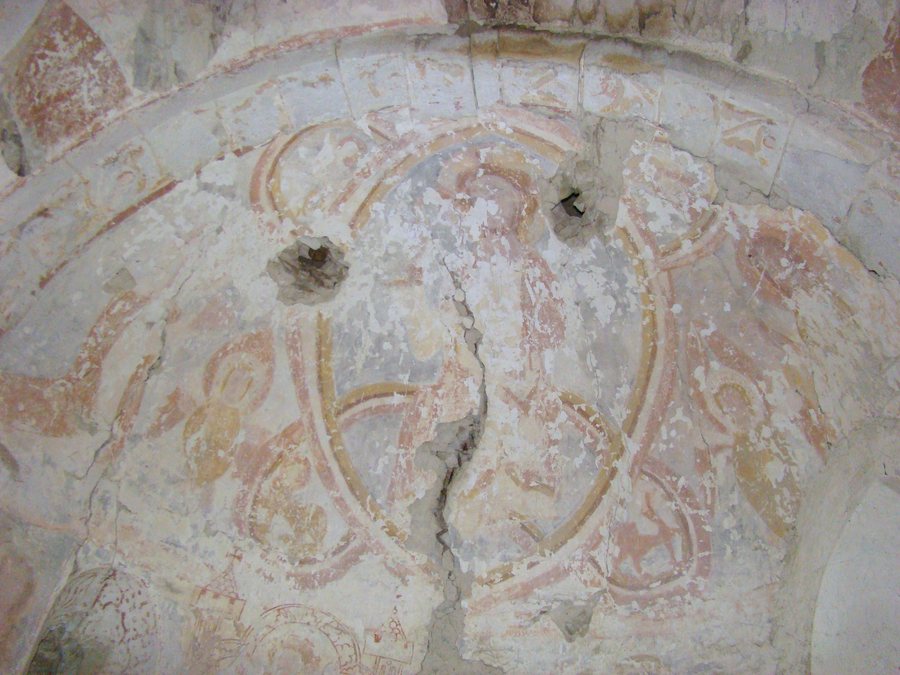 File:RO BV Biserica fortificata din Homorod (100).jpg
Photo: Țetcu Mircea Rareș via Wikimedia Commons, CC BY-SA 4.0
File:RO BV Biserica fortificata din Homorod (100).jpg
Photo: Țetcu Mircea Rareș via Wikimedia Commons, CC BY-SA 4.0
Nature
The Vulcanii Noroioși de la Băile Homorod are a geological reserve of national importance. The protected area lies east of Homorod. Access is from the edge of the village in the direction of the former Băile Homorod. Six mud volcanoes have been observed in the protected geological area. In relation to the geological characteristics of the region, the mud volcanoes are considered an extremely rare geological phenomenon. The name of the protected area refers to the connection between the village of Băile Homorod and the mud volcanoes. The location description and the stated access point place the protected area geographically in the eastern surroundings of the village and in the former spa resort.
Geology and Surroundings
The thematic trail at the mud volcanoes of Băile Homorod uses information panels and 3D elements to explain the geology of the area and the formation of the mud volcanoes. The biodiversity of the surrounding area is also one of the trail’s themes. Flora and birdlife are part of this biodiversity. The confluence of the Homorodul Mic and Homorodul Mare is also part of the route. The Homorod River begins at this confluence. The trail thus brings together geological explanations and the described natural features within a single route.
Băile Homorod
The Băile Homorod spa and climatic health resort was of local importance. It operated until 1975. Today, it is in an advanced state of disrepair that requires extensive investment. The mineral waters of Băile Homorod have been used therapeutically since the beginning of the 20th century. During the interwar period, six springs were channelled into two pools there. The history of the place therefore encompasses both its former function as a spa and climatic health resort and the therapeutic use of its mineral waters.
Cycling Tour and Traditions
The “Homorod – Mercheașa – 13 aprilie” cycling tour leads via Mercheașa and Racoș back to Homorod. The route covers 45 kilometres and takes approximately eight hours. As a self-contained day section, the tour connects the starting point with the two named places and then leads back to Homorod. At the end of August or the beginning of September, young people in Homorod and Jimbor organise the “Balul strugurilor” in Hungarian traditional dress. The event complements the landscape and historical themes with a tradition-based event held during a specific period.
To the overarching travel overview: Homorod.

.jpg)