
Discover Apața: Church Ensemble, Customs and Nature
Accommodation in Apața
Apața combines historic architecture, Hungarian customs and nature-related attractions. This creates a destination where cultural discoveries, seasonal traditions and observation in the landscape stand side by side. The character of the place is not defined by a single theme, but by several clearly distinguishable topics. Those initially interested in the history of the village will find a concrete starting point in the church ensemble; for nature observation, Valea Borzumului and Pădurea Bogății are available as separate points of reference.
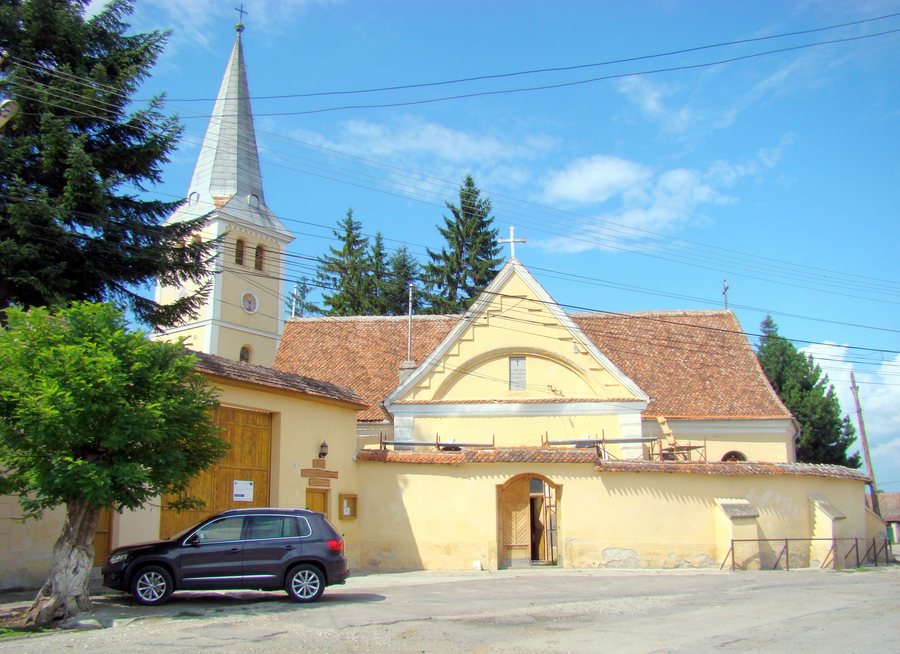 File:Ansamblul bisericii evanghelice din Apata.jpg
Photo: Țetcu Mircea Rareș via Wikimedia Commons, CC BY-SA 4.0
File:Ansamblul bisericii evanghelice din Apata.jpg
Photo: Țetcu Mircea Rareș via Wikimedia Commons, CC BY-SA 4.0
Church Ensemble and Historic Architecture
The Evangelical church ensemble of Apața stands at Str. Mare 380. The ensemble dates from the 18th and 19th centuries; the Evangelical church dates from the 18th century, while the ensemble’s bell tower dates from the 19th century. For visitors interested in culture, the appeal lies in this chronological layering: the church and tower belong to different centuries. The church and bell tower form two separate components of the same Evangelical ensemble. Those who take a focused interest in historic architecture can find two structures with different dates within one complex at Str. Mare 380.
Customs with Their Own Festival Culture
Împușcatul cocoșului is a traditional custom of Apața’s Hungarian community. The ceremony takes place on the first day of the Catholic Easter celebration. The festival ends with a meal featuring regional dishes. Its date on the first day of the Catholic Easter celebration makes the custom a fixed seasonal point of reference.
Carnavalul in Apața is also tied to a particular period of the year: it takes place before the Catholic and Reformed periods of Lent. Fărșang originated more than two centuries ago. During Fărșang, a procession of masked young people moves through the village and collects eggs and money. The masked young people move through the village rather than remaining in a single location. In Apața, Carnavalul and Fărșang represent different forms of festival culture alongside the ceremony of Împușcatul cocoșului.
Nature and Observation
The municipality of Apața owns 1% of the Pădurea Bogata nature reserve. Tracking is possible in the tourist area of Valea Borzumului and on the marked paths in its surroundings. The rich wildlife of Pădurea Bogății offers tourists opportunities for wildlife photography, also known as “photohunting.” Tracking is connected to the marked paths in Valea Borzumului; wildlife photography focuses on the fauna of Pădurea Bogății. Nature observation therefore involves two specific points of reference side by side: paths for tracking and wildlife for photography.
Peștera Bârlogul Ursului is another distinctive feature. The fossil cave is connected to galleries up to 400 m long. These galleries extend into the underground space and give the cave its own spatial dimension.
Further Cultural Attractions
Apața’s tourist attractions include the statue and memorial house of the philosopher Apaczai Csere Janos. Visitors interested in culture can consider these two attractions as a separate cultural point of reference alongside the Evangelical church ensemble and the festival customs. The statue and memorial house place Apaczai Csere Janos, an individual historical figure, alongside Apața’s architectural and festival themes.
For the overarching travel overview: Apata.

