
Valea Mare-Podgoria: Architectural Heritage and Viticulture
Accommodation in Valea Mare-Podgoria
Valea Mare-Podgoria combines historic architecture with viticulture in a hilly area that reaches an altitude of about 400 metres. The town’s history extends from the brâncovenesc wine estate complex dating from 1688–1714, through churches, to villas and historic buildings from the early 20th century. When looking for a holiday apartment, a useful first step is to decide whether the town’s architectural history or viticulture in the surrounding commune will be the focus of your stay.
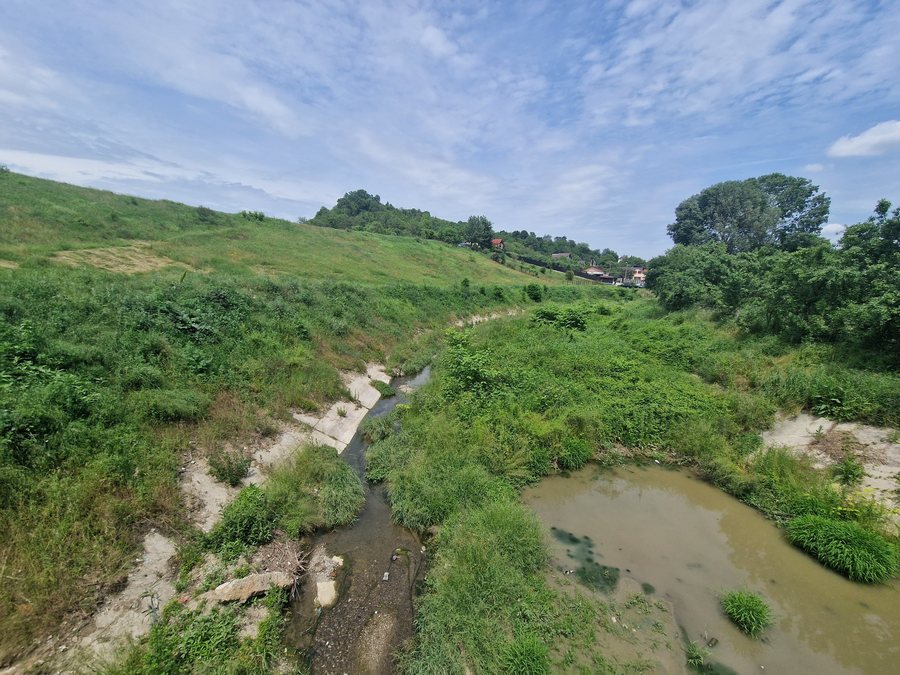 File:Râul Valea Mare aproape de Valea Mare-Podgoria.jpg
Photo: Romanichthys Valsanicola via Wikimedia Commons, CC BY-SA 4.0
Churches, Manor Houses and Literature
The brâncovenesc wine estate complex “Ansamblul conacului de vie brâncovenesc” dates from 1688–1714. It comprises the ruins of the manor house, a gate and the surrounding wall. The “Sf. Ioan Bogoslovul” church dates from 1765 and was rebuilt in 1789. Its date of construction and its rebuilding belong to two different points in time; this distinction makes its architectural history particularly notable.
Vila Bulandra is a historic building from the early 20th century. Conacul Mihail Ghelmegeanu dates from around 1930 and is also among the town’s historic buildings. Together with the older wine estate complex, they form a timeline spanning from the late 17th century to around 1930. The historic buildings therefore represent several periods in the town’s history, rather than just one era.
Literary history is also connected to a specific place: the writer penned the novel “Răscoala” in the house of Liviu Rebreanu, where he died on 1 September 1944. The work and this biographical turning point are thus tied to the same house. For travellers interested in literary history as well as buildings, Valea Mare-Podgoria offers another cultural point of interest.
Villa and Viticulture
Vila Turturica adds another architectural note: it is located in Ștefănești, Valea Mare-Podgoria, and is a historic villa in the Mediterranean style. It belongs to Domeniul Florescu and the old Crama Florescu. This winery was founded about 100 years ago on the Leșcioarele viticultural slope. The villa, winery and named viticultural slope are thus linked by their history.
Viticulture itself can also be illustrated with specific examples. New vineyards covering a total area of 25 hectares were planted on the Marcea Plateau at Casa de Vinuri Ștefănești. In the surrounding commune, a walk through the vineyards of Ștefănești and a wine tasting at Casa de vinuri Ștefănești (Crama Marcea) are considered part of the wine route. The history of viticulture, a planted vineyard area and a wine-route experience thus come together in different ways.
Choosing the Right Focus
When looking for a holiday apartment or holiday home, your preferred focus can be a helpful guide. If you are mainly interested in architectural history, the town’s churches, historic complexes and literary history can shape your stay. If you would also like to include viticulture, consider the surrounding commune as an additional point of interest.
For the broader travel overview: Orașul Ștefănești.

